Quantum chip survives a year of reboots express
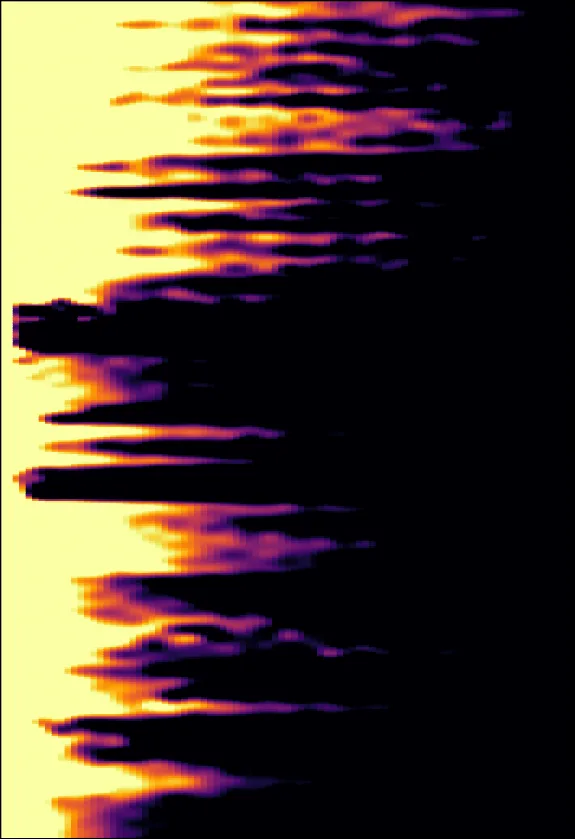
A quantum computer is like an orchestra where every musician must play with precision down to a billionth of a second. If one instrument goes out of tune, the whole symphony collapses. So scientists spent a year watching 27 qubits — the simplest cells of quantum memory. Four times, they powered the system down, warmed it to room temperature, and then froze it again to near absolute zero.
The qubits themselves withstood this jolt surprisingly well. Their main frequency, the one they 'sing' at, shifted by less than half a percent. The time a qubit can hold information also didn't degrade. But the qubits' environment changed beyond recognition each time. Tiny defects in the material, called two-level systems, that cause noise were reshuffled after every cycle, like a deck of cards.
It's like a house that stands firm, but after each winter, new floorboards creak. The walls are intact, but you have to get used to the sounds all over again. For quantum computers, this means that after every power-up, each qubit must be automatically recalibrated. Without such adjustments, a large quantum computer simply cannot run stably.
Original abstract
as written by the authors arXiv:2602.07522
The temporal stability and reproducibility of qubit parameters are critical for the long-term operation and maintenance of superconducting quantum processors. In this work, we present a comprehensive longitudinal characterization of 27 frequency-tunable transmon qubits spanning over one year across four thermal cycles. Our results establish a distinct hierarchy of stability for superconducting hardware. We find that the intrinsic device parameters determining the qubit frequency and the baseline energy relaxation times ($$T_1$$) exhibit high robustness against thermal stress, characterized by frequency deviations typically confined within 0.5\% and non-degraded coherence baselines. In stark contrast, the environmental variables, specifically the background magnetic flux offsets and the microscopic landscape of two-level system (TLS) defects, undergo a significant stochastic reconfiguration after each cycle. By employing frequency-dependent relaxation spectroscopy and a quantitative metric, the $$T_1$$ Spectral Topography Fidelity, we demonstrate that thermal cycling acts as a ``hard reset'' for the local defect environment. This process introduces a level of spectral randomization equivalent to thousands of hours of continuous low-temperature evolution. These findings confirm that while the fabrication quality is preserved, the specific noise realization is statistically distinct for each thermal cycle, necessitating automated recalibration strategies for large-scale quantum systems.
Two-level defects are tiny patches of material that behave like miniature magnets, randomly flipping their orientation. They are the main source of noise in modern quantum chips.