Real-time control refers to the ability of a system to adjust its behavior within milliseconds based on live sensor measurements, enabling it to respond to changing conditions almost instantly. In physics and engineering, this is crucial for stabilizing systems that are inherently unstable or subject to rapid fluctuations, such as quantum devices, soft materials, or autonomous vehicles. The titles in the corpus highlight applications ranging from superconducting chips to self-organizing fleets, all of which rely on feedback loops that operate faster than the system's natural timescale of change.
History
The concept of real-time control emerged with the development of feedback control theory in the 19th century, notably with James Clerk Maxwell's analysis of governors. The term 'real-time' became prominent with the advent of digital computers in the 1950s, when systems could process data and respond within a single machine cycle.
How it works
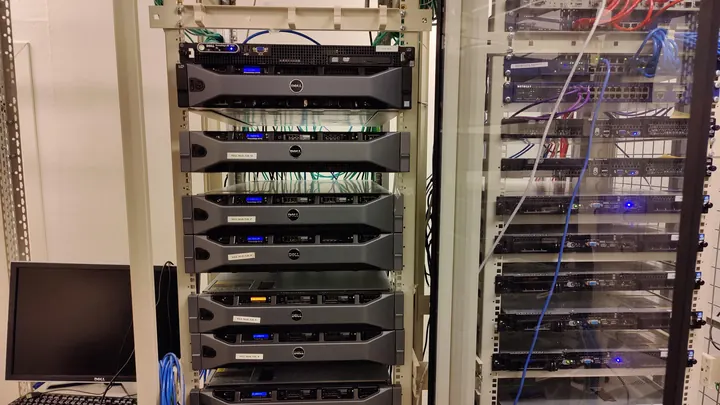
A real-time control system typically consists of sensors that continuously measure the system's state, a processor that compares these measurements to a desired target, and actuators that apply corrections. The key is the feedback loop: the measurement-to-correction cycle must be completed within a few milliseconds, which requires fast electronics, efficient algorithms, and low-latency communication. In quantum systems, this often involves cryogenic electronics and field-programmable gate arrays (FPGAs) that process signals in parallel to minimize delay.
In the human brain, real-time control of movement operates with a delay of about 100 milliseconds, which is why catching a falling object feels 'instant' but is actually a predictive process.
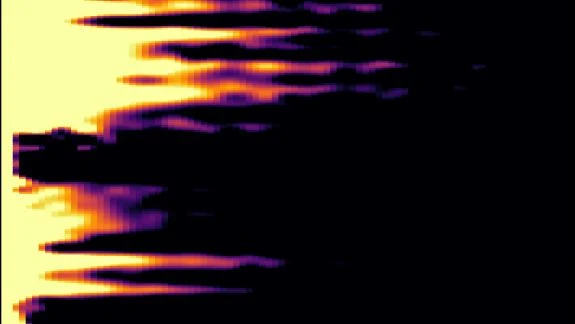
In a nine-story building with a thousand rooms on each floor, some people whisper and others shout. Neighbors pass the message along, but if everyone speaks too softly, the message fades by the third floor. If too loudly, by the top floor it becomes an unintelligible roar. Between these extremes, there is a regime where a whisper makes it all the way through without distortion.
A navigator with a paper chart plots the route before setting sail. If the ocean changes—the current shifts, the wind picks up—the chart stays the same. The ship follows an outdated path, and the crew has to correct the course by hand.
A quantum computer is like an orchestra where each instrument is a qubit and the conductor is the control processor. The conductor must not only set the tempo but also change the score on the fly if a soloist plays something unexpected.
Inside an ultracold chamber, two atomic clouds collide: a few dozen cesium atoms acting as the working fluid, and thousands of rubidium atoms serving as the heat reservoir.
A superconducting qubit is like a finicky musical instrument: until you tune it, you won't get a clean note. But even after tuning, the pitch drifts. The culprits are tiny defects in the material that physicists call two-level systems. They're like invisible cracks that appear and disappear, throwing off the processor's rhythm.
A kitchen mixer runs at a single speed, but start jabbing the button and the mixture whips up differently. Chemical reactions behave much the same way when the rates of their individual steps are not constant but pulse over time.
A mirror can direct a reflected beam onto one spot, even as it rotates. Engineers borrowed this trick for radio waves, building a smart mirror on a drone. It cancels out shakes and vibrations on the fly: it anticipates the drone's movements and instantly re-aims to keep the signal crisp.
Wireless communication for robots is like a conversation in a noisy workshop, where every word can get lost in the din or arrive too late. In this mess, entropy of the channel, robots fail to yield in time, and coordination breaks down.
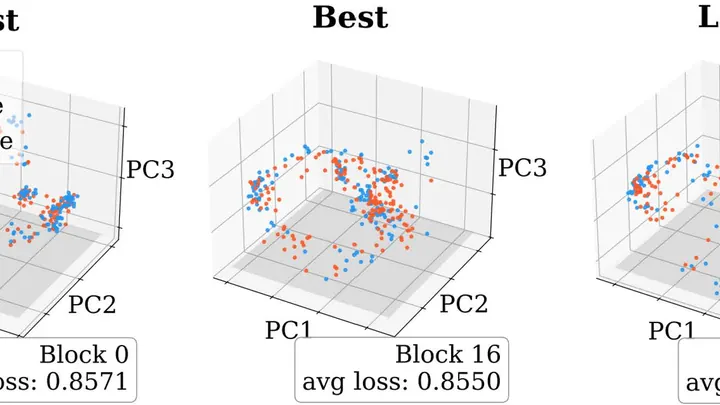
A twitch of the robot's camera and it drops the part: its neural network is thrown off. But if you peek at its signals, they resemble constellations in a galaxy: when things go smoothly, they cluster in one sector, and just before an error, they abruptly shift to another. The boundary between them is as clear as a safe channel through reefs.
You're standing in the shower: you turn the tap, and the water is either freezing or scalding. The pipes have a mind of their own — the pressure jumps unpredictably. The new controller learns on the go: it doesn't know the plumbing layout, but within minutes it adapts and gently guides the temperature to comfort, without breaching safety limits.
In calm water, the route is clear. But in turbulent flows, a robot needs a different strategy. Typical approaches demand an accurate map of currents, but in reality, you can't get one. Nature does it differently: fish feel pressure and vortices right against their bodies.
A search party combs a foggy field. At first, people spread out wide: a high 'temperature' of search means a great variety of attempts. Upon finding a trace, they close in. But the speed of convergence is critical — narrow the circle too early, and the best find stays aside. The coordinator assesses the spread of searchers and commands when to speed up or slow down.
A person in a boat turns by shifting their body weight. An unmanned vessel uses the same trick: a sliding weight inside the hull does the steering. Its movement is controlled by a neural network, anticipating the chaos of waves and gusts of wind. The propeller pushes the boat forward, while the weight shifts balance — like moving from one foot to the other.
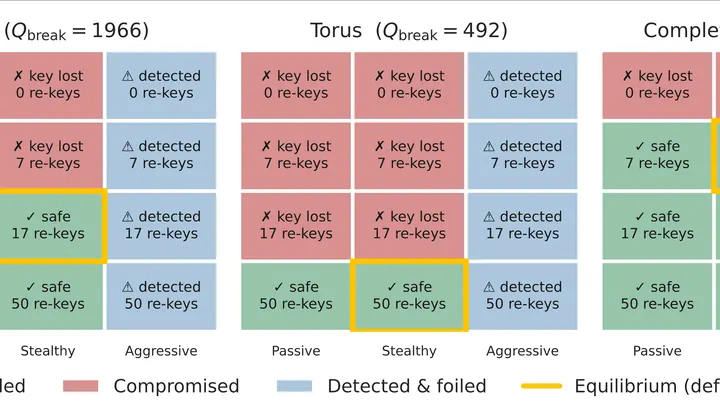
A cloud service dishes out commands to a drone swarm without any knowledge of their movements. The signals are encrypted, but each maneuver leaves a barely visible trace in the cipher, like ink bleeding through paper from the pressure of a pen. Over time, these ink stains coalesce into a pattern, and the hidden data is no longer a secret.
Imagine a fleet of many ships, resembling a galaxy — a vast stellar system where every element follows the overall dynamics. From time to time, one ship breaks down, exploding like a supernova — a catastrophic event that can disrupt the integrity of the entire formation. If the damaged unit isn't replaced in time, the fleet loses combat capability.
Complex machinery, from drones to surgical robots, sometimes behaves like a wild mustang: full of disorder and whims, where the slightest touch triggers a storm. Instead of rote memorization of formulas, the new method observes the system like a horse breaker.
In embryonic development, a cell resembles a musician in a vast orchestra: it must play its part, following a conductor — the gradient of signaling molecules. But the conductor is unreliable: morphogen concentrations constantly fluctuate. How then does a cellist not veer into a violin melody?
In pursuit of gravitational waves, ripples in spacetime left by black holes and neutron stars, detectors like LIGO pump their arms with light of dazzling intensity.
In the lab, there's a trap, an invisible 'pit' made of electric fields, where a charged dust grain about a hundred nanometers across levitates. It oscillates back and forth like a pendulum in a clock.
A quantum computer is like an orchestra where each musician, a qubit, must play their part accurately and on time. Usually, musicians are seated in fixed positions and connected by conductors' consoles. But what if we let them move freely across the stage and turn the movement itself into part of the music?
A pendulum that swings on its own, without any winding — in the quantum world, such 'pendulums' are called time crystals. In them, rhythmic motion arises spontaneously and does not decay. But until now, controlling this rhythm was nearly impossible: any intervention threatened to destroy the fragile order.
In the world of atoms and particles, everything tends toward rest: particles lose energy, just as a swing slows down due to energy loss (friction). But many devices — from hydrogen masers to atomic clocks — live by repetitive cycles.
A superconductor is a material that, when cooled sufficiently, conducts electricity without losses, like water flowing through a perfectly smooth pipe. But if you hit it with a brief flash of light, it quickly loses this property.
An AI has learned to conduct the quantum orchestra. Its instruments: superconducting circuits — artificial atoms kept colder than interstellar space. This AI-conductor designs and runs entire experimental scores, not just playing notes but creating them on the fly.
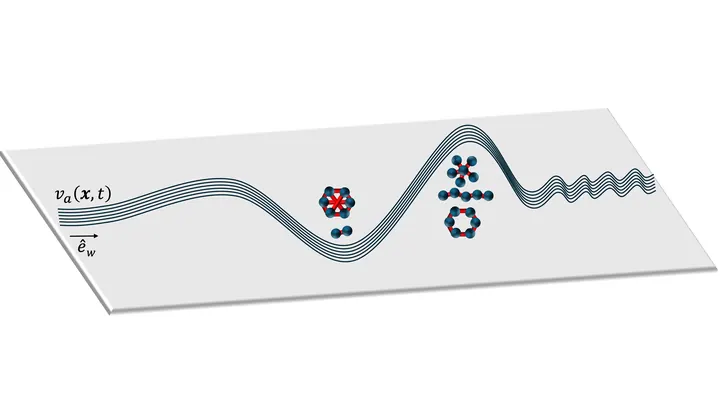
Polymers are long threads of carbon and hydrogen atoms. In living cells, they encounter streams of chemical signals that pulse like the surf. Long chains and closed rings behave like skilled surfers: they catch the wave and glide with it. Short fragments and tight coils, counterintuitively, move strictly against it.
To understand a mechanism, you have to poke it. A child taking apart an alarm clock doesn't just stare at the gears: they turn the wheel and listen to how the ticking changes. Scientists do the same: instead of passive observation, they feed specially chosen signals into the system and watch the response.
Thick honey spreads slowly across a plate. In such a world, where friction suppresses inertia, motion is governed not by force but by viscosity. This is how many soft materials behave: polymer gels, colloidal suspensions, the contents of living cells.
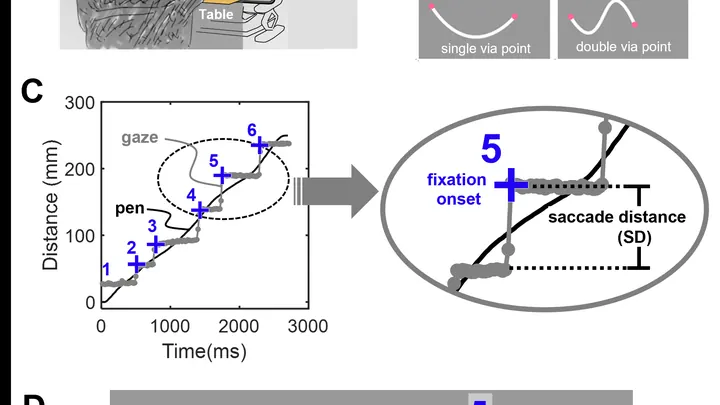
When the hand draws a line, the gaze almost always runs ahead, like a scout peeking around the corner before the column turns. But how far ahead? It turns out that each person has their own distance, and it does not change from attempt to attempt.
In the experiment, professional calligraphers and ordinary people traced a contour on a screen while instruments recorded eye and pen movements.
A quantum computer is like an orchestra where every musician must play with precision down to a billionth of a second. If one instrument goes out of tune, the whole symphony collapses. So scientists spent a year watching 27 qubits — the simplest cells of quantum memory.
In the ocean, sometimes a huge solitary wave appears out of nowhere and then vanishes. Such rogue waves are rare but dangerous. Similar rare and intense spikes occur in other systems, from financial markets to lasers. The problem is that they are hard to predict, let alone trigger on demand.
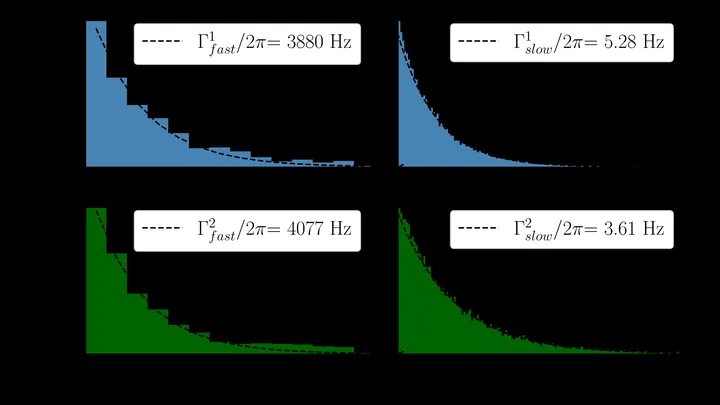
In the superconducting circuits that make up quantum computers, extra particles, quasiparticles, are born from time to time. They are like random passersby who barge into the processor's work and spoil the calculations.
A thin, flexible beam shivers from a blow, and a wave runs along it like ripples on water. Along the beam, seven pairs are placed: a sensor feels the bending, and a motor immediately pushes the beam in response. Each pair is like a tiny tuning fork that oscillates in antiphase and quells the tremor at its spot. The wave cannot pass beyond — at certain frequencies, silence falls.
In 1867, James Clerk Maxwell imagined a demon that sorts gas molecules and thereby violates the second law of thermodynamics. The demon needs to know the speeds of the particles. In the quantum world, a similar task arises: keep entanglement from growing like an avalanche, but you cannot observe the entire system.
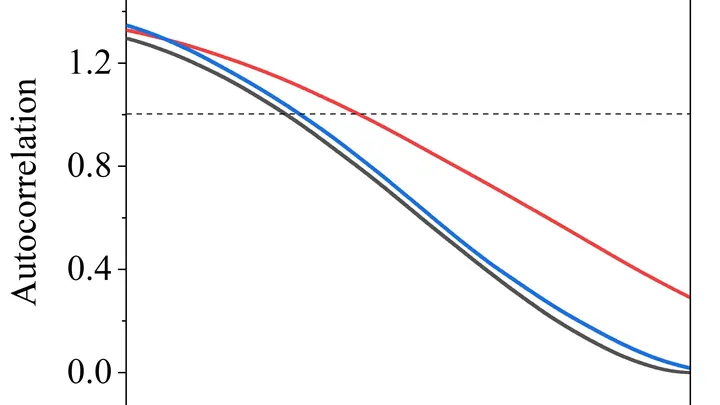
Strike a gong and the sound fades in layers: the low hum lingers longer, the high overtones vanish first, leaving silence behind. So too a qubit, living its quantum life, leaves not one but three echoes of its own past.
In a tropical forest, the dry season gives way to the rainy season, and with the weather, the rules of life change: some animals go into hibernation, while others come out of hiding. Likewise, in complex systems, from climate to economics, the links between processes are not set in stone. They depend on a hidden "regime" that itself switches from time to time.