A Virus Hits Like a Punch: Why Outbreaks Don't Follow the Average express
An epidemic is not a steady stream but a series of hits. One carrier may infect no one, while another infects fifty people at once. Such rare but powerful events are called 'dragon kings': they stand out from the overall pattern and determine how severe a disease wave will be.
In the new study, the virus is compared to a billiard ball. Each contact between people is a collision, after which the ball can bounce in any direction. Instead of tracking each ball individually, the researchers describe the whole game with a single wave. To do this, they took a mathematical function previously used in physics to describe rare, strong shocks and applied it to the spread of infection.
The model was tested on data from SARS, MERS, and COVID-19. It captured exactly those extreme outbreaks that older models missed. It turned out that an individual's infectivity is not a constant but a mixture of many random hits. When there are many such hits, the disease spreads like a snowball.
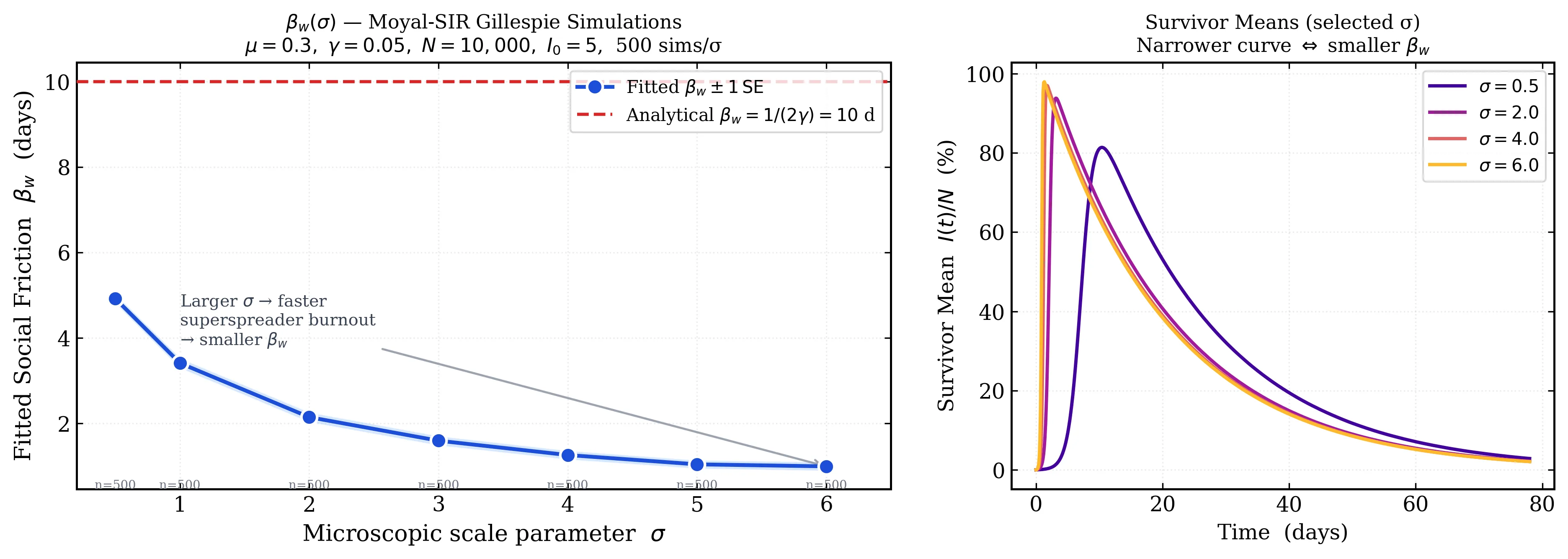
Then the researchers decomposed the pandemic waves in Germany into parts, just as sound is decomposed into notes. They found that large 'social friction'—how much people contact each other and transmit the virus — is built from microscopic 'shocks' between individuals. It's like the roar of a crowd emerging from many individual voices.
This view changes the approach to public health. Instead of relying on average infectivity, we need to identify and contain the 'dragon kings'—the super-spreaders. It's like looking not for the largest drop in a downpour, but for the one that breaks through the roof.
During the SARS outbreak in 2003, one patient in Hong Kong infected more than 180 people at the Metropole Hotel. This is a classic example of a 'dragon king' event.
The idea that one person can trigger a chain reaction of infections echoes the plot of the film 'Contagion', where a random contact leads to a global pandemic.