Disk Vortices Keep Planets from Falling In express
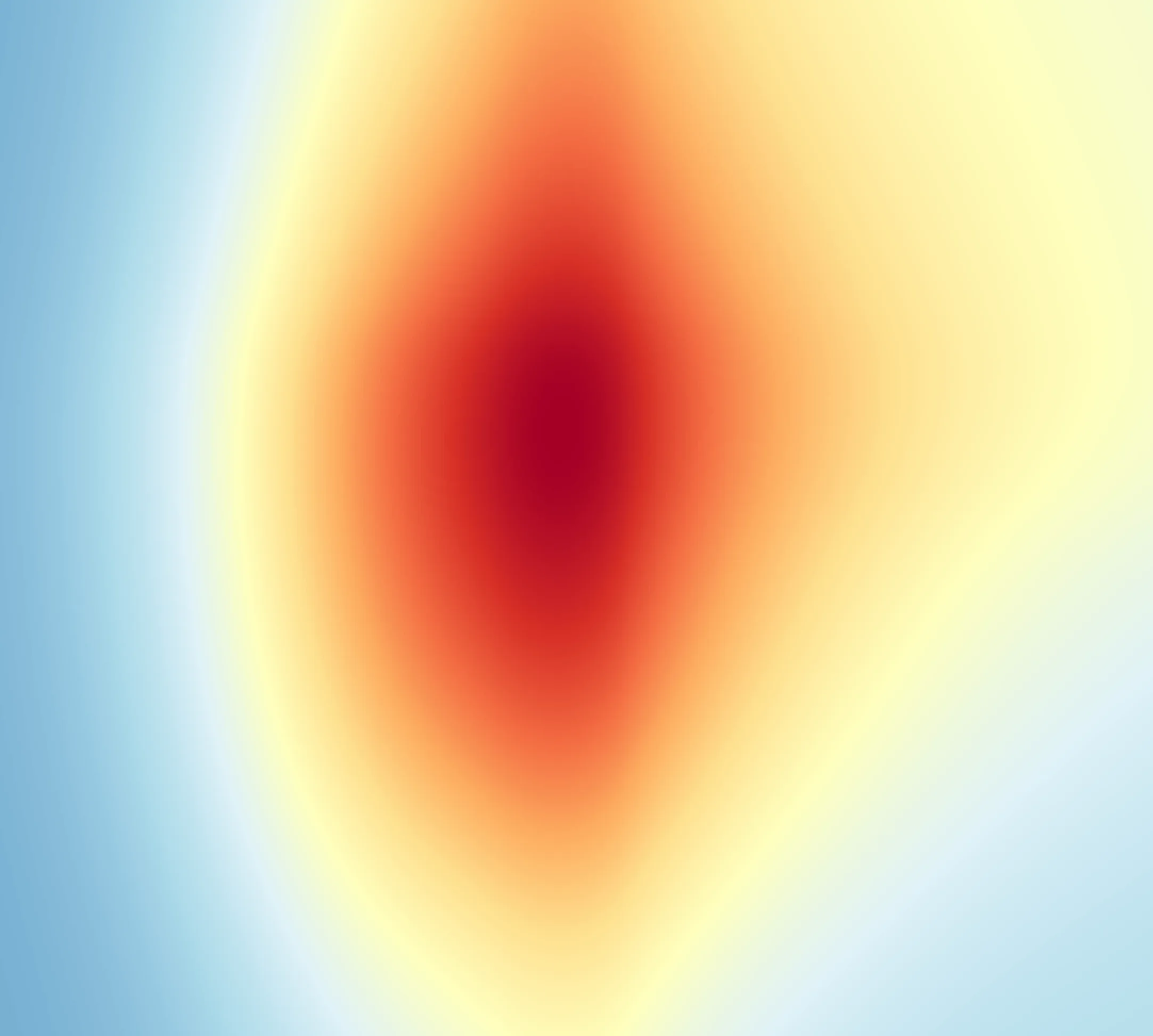
A young planet in a gas disk is like a swimmer trying to swim against the current: friction with the gas slows it down, and it spirals toward the star. For small rocky planets, this fall can take less time than they need to grow. But the disk also has countercurrents — vortices that can push the planet outward.
Scientists built a computer model of a disk around a young star. They added heating from radiation and cooling, which naturally creates large vortices in the disk. These vortices move through the disk and sometimes collide with the planet. The planet is heavier than the vortex, so the vortex, like a light boat, flows around it and transfers some of its momentum. Such a "kick" slows the planet's fall.
This result is important for understanding where super-Earths come from — planets heavier than ours but lighter than Neptune. Previously, it was thought they couldn't grow because they fell onto the star too quickly. Now it's clear: vortices in the disk act as natural "life preservers," keeping planets at a safe distance.
Original abstract
as written by the authors arXiv:2602.15978
Rapid inward migration driven by Type I torques threatens the survival of low-mass planets in their nascent protoplanetary disks (PPDs). Positive co-rotation torques offer a potential solution, but require viscous diffusion to remain unsaturated. However, it is unclear if (magneto)-hydrodynamic turbulence provides the necessary diffusion, and disk profiles supporting such torques are often also susceptible to the Convective Overstability (COS) for suitable gas cooling timescales. To this end, we investigate torques on low-mass planets through radially global 2D (razor-thin) and vertically unstratified 3D hydrodynamic simulations of PPDs with thermal diffusion and optically thin cooling. Our 3D models with thermal diffusion, which allows COS development, show systematically different torque behavior compared to 2D models, wherein COS is absent. In 3D, the COS saturates into large-scale, long-lived vortices that migrate radially and interact gravitationally with the embedded planet. When these vortices encounter the planet, they typically provide positive torque "kicks" counteracting inward migration, as the less-massive vortices are scattered onto horseshoe orbits by the more-massive planet. We validate our simulation methods against the theoretical framework of Paardekooper et al. (2011) and demonstrate that COS-induced torque modifications can extend migration timescales by factors of approximately 10. For plausible disk models, our results suggest that COS activity can lengthen migration timescales sufficiently to overlap with, or even exceed Super-Earth formation windows (0.1-5 Myr). In contrast, simulations with optically thin cooling do not show significant torque modifications, as COS saturates in near-axisymmetric structures without producing large-scale vortices for the disk models considered here.
The Solar System has no super-Earths, even though they are the most common type of planet in the Galaxy. Perhaps our gas disk lacked the vortices to keep such planets from falling into the Sun.