The Clocks That Throw Off the Scales express
Ultra-precise scales that catch the slightest changes in gravity work like a keen ear: they hear even the whisper of distant underground voids or the tremors of the Earth's crust. But such instruments have a hidden enemy: their own internal clocks. Time inside the sensor also jitters, and this jitter smears the picture.
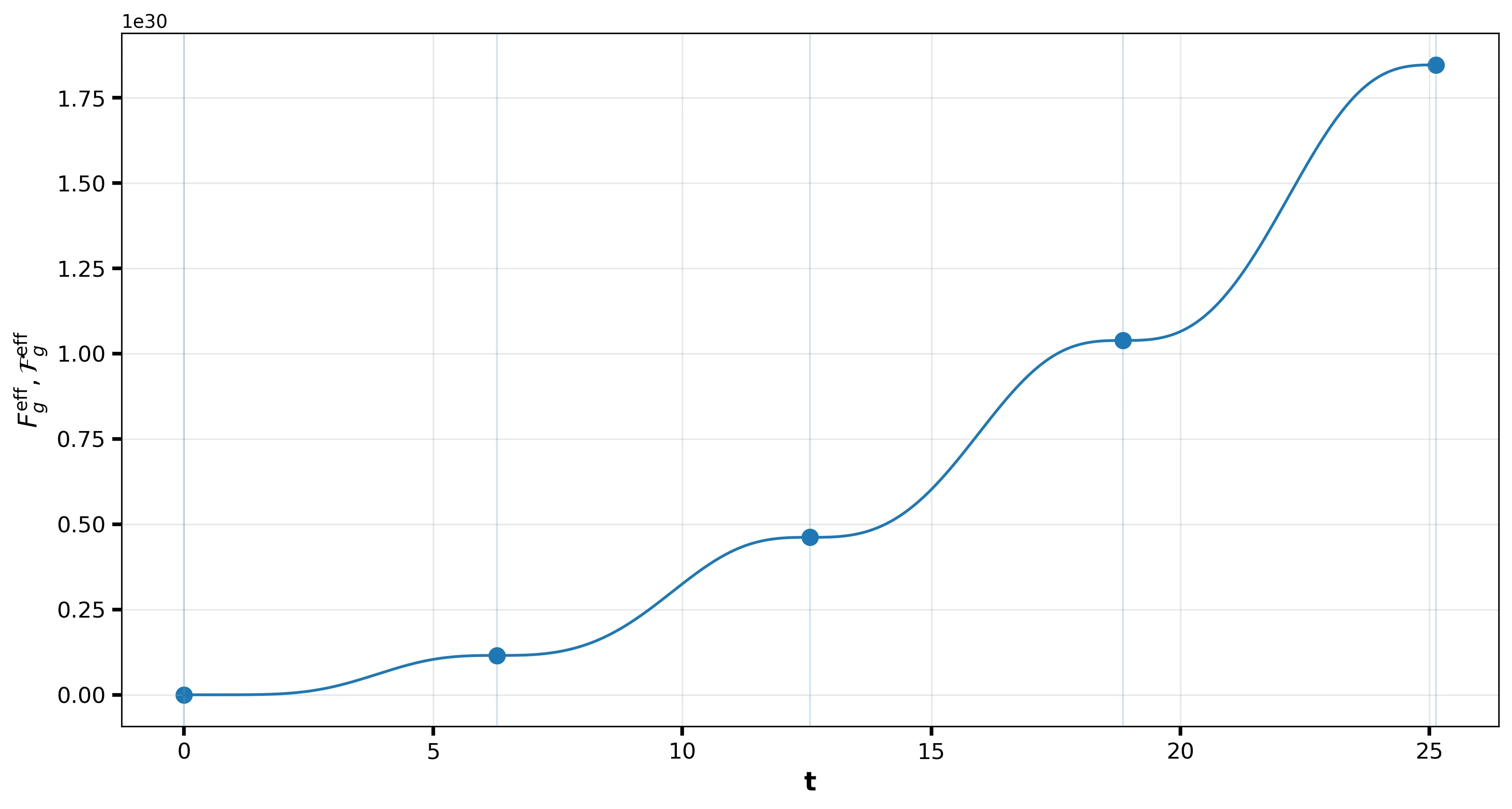
Quantum sensors rely on atoms or light beams that oscillate with incredible stability. But to measure a signal, you need to know how much time has passed. And time in the quantum world doesn't flow like a ruler: it is itself fuzzy. The scientists derived a strict precision limit: if you ignore time uncertainty, sensitivity drops. It's like trying to weigh a feather on a scale whose needle twitches with every draft.
The work applies to a wide class of devices — from gravimeters to accelerometers. It's a step toward making quantum devices truly reliable tools, not just lab toys.
Original abstract
as written by the authors arXiv:2602.18524
High-sensitivity accelerometers and gravimeters, achieving the ultimate limits of measurement sensitivity are key tools for advancing both fundamental and applied physics. While numerous platforms have been proposed to achieve this goal, from atom interferometers to optomechanical systems, all of these studies neglect the effects of intrinsic quantum uncertainty in time estimation. Starting from the Hamiltonian of a generic linear quantum sensor, we derive the two-parameter quantum Fisher information matrix and establish the corresponding Cram'er-Rao bound, treating time as an uncertain (nuisance) parameter. Our analysis reveals a fundamental coupling between time and signal estimation that inherently degrades measurement sensitivity, with the standard single-parameter quantum limit recovered only at specific interrogation times or under special decoupling conditions. We then apply these results to an optomechanical gravimeter and explicitly derive an optimal decoupling condition under which the effects of time uncertainty are averaged out in a continuous measurement scheme. Our approach is general and can be readily extended to a broad class of quantum sensors.
Modern atomic clocks lose a second over billions of years, but even this tiny time uncertainty hampers the most sensitive sensors.