Iceberg Quantum Codes: How Errors Make Computers Smarter express
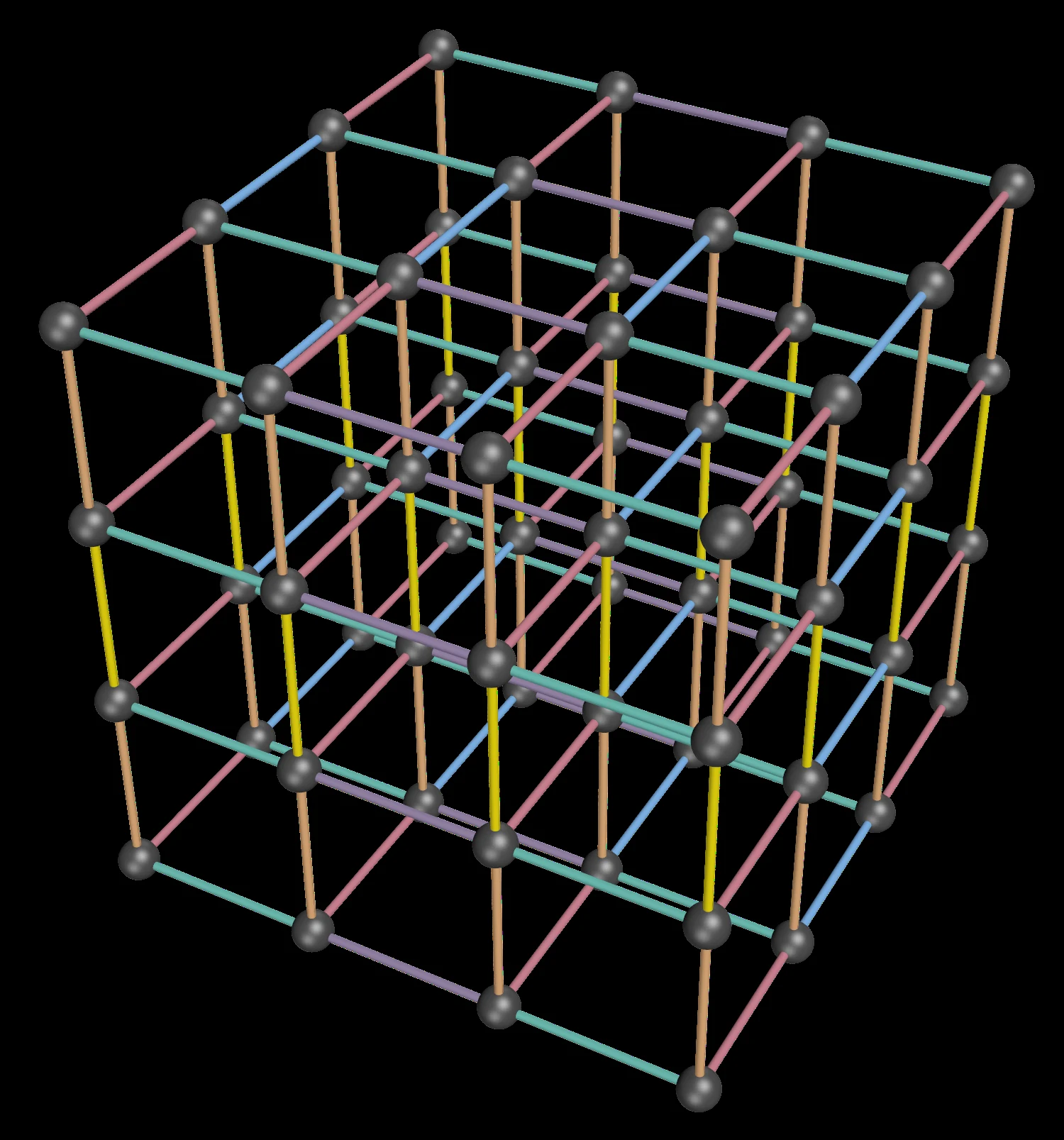
Like an iceberg, the visible part of the code is the data, while beneath the surface lies a massive foundation of auxiliary particles. They quietly monitor noise and fix errors without touching the information. This approach squeezes many protected logical qubits into a modest number of physical ones.
The experiment ran on a 98-ion processor inside an electric trap. Lasers (spectroscopy) controlled the particle states, simulating a quantum magnet — a system that will help us understand new materials. The idea of quantum error correction is credited to Peter Shor, and ion traps were pioneered by Ignacio Cirac and Peter Zoller. For the first time, protected computations delivered a more accurate result than the same operations without protection: previously, correction only slowed data decay, but now it genuinely improves the outcome.
The secret is that the ‘underwater’ particles create redundancy: errors cancel each other out instead of piling up. The more of them there are, the less often we must discard faulty measurements, and the more strongly natural chaos is suppressed. In this way, quantum machines stop fearing interference and edge closer to solving problems that are out of reach for ordinary supercomputers.
Original abstract
as written by the authors arXiv:2602.22211
High-rate quantum error correcting (QEC) codes encode many logical qubits in a given number of physical qubits, making them promising candidates for quantum computation. Implementing high-rate codes at a scale that both frustrates classical computing and improves performance by encoding requires both high fidelity gates and long-range qubit connectivity -- both of which are offered by trapped-ion quantum computers. Here, we demonstrate computations that outperform their unencoded counterparts in the high-rate $$[[ k+2,\, k,\, 2 ]]$$ iceberg quantum error detecting (QED) and $$[[ (k_2 + 2)(k_1 + 2),\, k_2k_1,\, 4 ]]$$ two-level concatenated iceberg QEC codes, using the 98-qubit Quantinuum Helios trapped-ion quantum processor. Utilizing new gadgets for encoded operations, we realize this "beyond break-even" performance with reasonable postselection rates across a range of fault-tolerant (FT) and partially-fault-tolerant (pFT) component and application benchmarks with between $$48$$ and $$94$$ logical qubits. These benchmarks include FT state preparation and measurement, QEC cycle benchmarking, logical gate benchmarking, GHZ state preparation, and a pFT quantum simulation of the three-dimensional $$XY$$ model of quantum magnetism. Additionally, we illustrate that postselection rates can be suppressed by increasing the code distance via concatenation. Our results represent state-of-the-art logical component and state fidelities and provide evidence that high-rate QED/QEC codes are viable on contemporary quantum computers for near-term beyond-classical-scale computation.
The code was dubbed ‘iceberg’ for its resemblance to a real one: the useful qubits are the tip above water, while the ancillas are the hidden bulk below.
In the TV series ‘Devs’, a quantum computer predicts the future, but any error turns the vision into chaos — iceberg codes could clean such predictions from noise.