Chemical Space as a Construction Set express
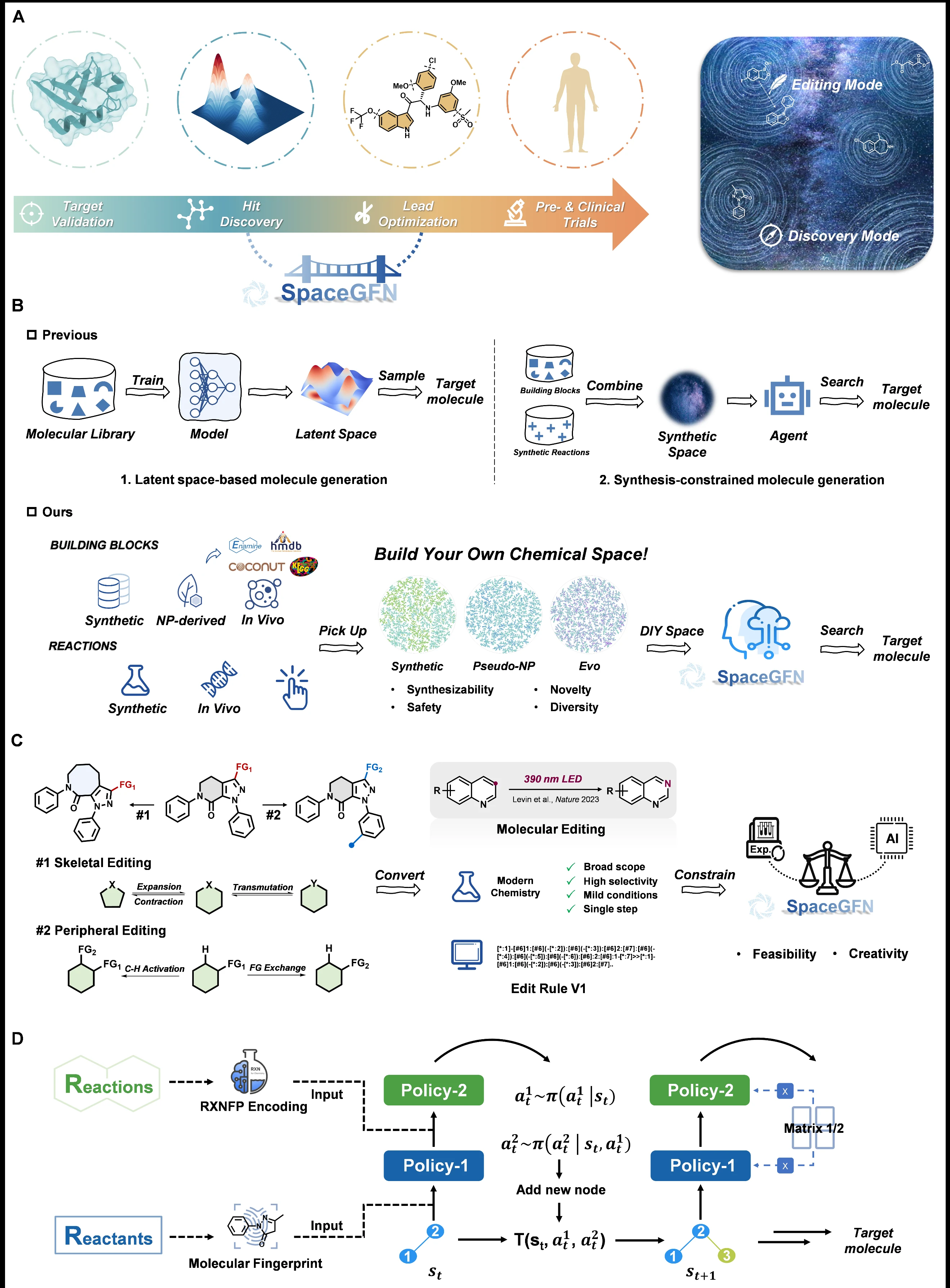
Previously, generative models for drug discovery worked like an artist painting without choosing a canvas. They learned from existing molecules and simply produced similar ones, without considering how the space of possible compounds is organized. SpaceGFN changes the approach: now chemical space is a construction set where the user specifies the parts and the assembly rules.
Inside this construction set works GFlowNet, a method that efficiently selects candidates with desired properties without exhaustively enumerating everything. It's like a smart shopper in a huge store who heads straight to the relevant aisles rather than wandering through every row. In Editing mode, the same logic applies to improving known compounds: instead of random changes, only allowed chemical reactions that preserve synthetic accessibility are used.
This approach makes drug discovery more deliberate: instead of blind generation, you design the space for the task. It's like building a city with thoughtful planning rather than haphazardly developing a vacant lot.
The space of all possible molecules is estimated at $10^{60}$ compounds — more than the number of atoms in the universe.
The idea of programmable molecular universes echoes the "World Constructor" from Stanisław Lem's novel "The Cyberiad."