Prebiotic chemistry is the study of the chemical reactions that could have produced the building blocks of life — amino acids, nucleotides, sugars, and lipids — from simpler inorganic molecules on the early Earth or elsewhere in the universe. It bridges chemistry and biology, exploring how non-living matter can self-organize into the complex molecules that life requires. This field is central to astrobiology, as it helps identify which planetary environments might be hospitable to the origin of life.
History
The field was established by the Miller-Urey experiment in 1953, which demonstrated the abiotic synthesis of amino acids. Earlier, Alexander Oparin and J.B.S. Haldane had proposed the concept of a 'primordial soup' in the 1920s.
How it works
Prebiotic chemistry typically involves simulating early Earth conditions — such as lightning in a reducing atmosphere, hydrothermal vents, or ultraviolet radiation on icy surfaces — and observing what organic molecules form. Key reactions include the Miller-Urey synthesis, which produces amino acids from simple gases, and the formose reaction, which generates sugars from formaldehyde. Recent work focuses on how these molecules can concentrate and polymerize into longer chains, and how compartmentalization (e.g., in lipid vesicles) could lead to primitive cells.
In practice
Prebiotic chemistry informs the search for life on other planets by predicting which molecules to look for, and it guides the design of synthetic biology experiments that aim to create minimal artificial cells.
Fun fact
Cyanide, often considered a deadly poison, is actually a key reagent in many prebiotic synthesis pathways — it can catalyze the formation of nucleotides and amino acids under early Earth conditions.
The liver is an orchestra in which every cell plays its part from a shared score. Males and females have different scores: in males, the genes responsible for detoxifying foreign substances and steroid hormones sound louder, while in females, the genes for fat metabolism and bile acids do.
A drop of blood on filter paper preserves not only cells but also a record of what has been happening to the body over the past few months. That record is not in the genes but on them: the chemical marks cells attach to DNA change with food, stress, illness and age. Scientists have learned to read this archive tape to reconstruct a picture of health without repeated trips to the lab.
A protein in a cell doesn't hang motionless like a mannequin in a store window. Its atoms are constantly jiggling, stretching, and bending, like a plucked guitar string that keeps vibrating after you strum it. To understand how a protein works, you need to know how tightly each part holds onto its neighbors.
Life begins with a bubble. In a warm puddle on ancient Earth, fat molecules could gather into tiny spheres — prototypes of cells. Inside such a sphere, a polymer happened to be present that accelerated the uptake of new fats from the surrounding water. The bubble grew, divided, and passed its composition to offspring.
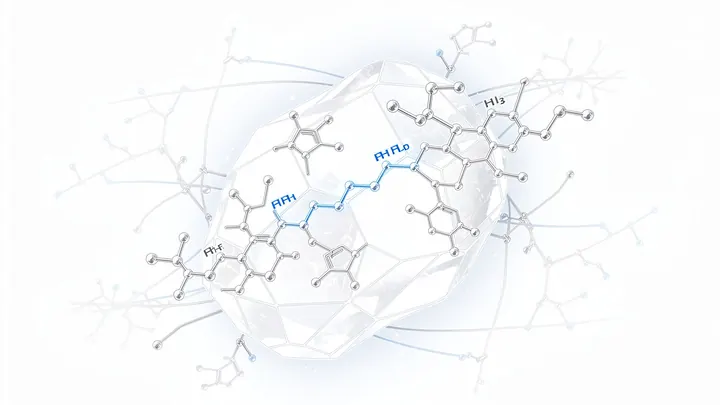
In dark interstellar clouds where new stars are born, chemistry starts with a tiny particle — the trihydrogen ion (H₃⁺). It collides with other atoms and sets off a cascade of reactions that build ever more complex molecules. For a long time, it was thought that the main reaction producing it, H₂⁺ colliding with H₂, only happens in the gas phase.
Inside every cell, things are constantly meeting and parting. Some pairs hold tight, like Velcro, while others barely touch, like pollen on the wind. These fleeting touches, where the binding strength is comparable to a grain of salt dissolving in a glass of water, govern many of the cell's signals and decisions.
A jazz ensemble: at first, a cacophony of random notes. Then — a catchy riff that plays over and over. Such is the riddle of the origin of life — only in the language of chemistry.
In the black depths of space, on the surfaces of tiny icy dust grains, a quiet construction is underway. There, where temperatures drop to near absolute zero and harsh radiation abounds, the ordinary amino acid glycine, the simplest protein building block, links up with itself.
A speed of 7,5 kilometers per second is the threshold beyond which a cosmic collision turns dust grains into a chemical reactor. In the interstellar medium drift tiny cosmic dust grains — the legacy of dying stars.
Erwin Schrödinger pondered how life maintains order despite the second law of thermodynamics. He could never have imagined that part of the answer lies hidden in the instability of giant stars.
Imagine a packed subway car at rush hour. Passengers don't just stand there: they breathe, release moisture, squeeze toward exits, and sometimes get stuck in doors, blocking movement. Now imagine these passengers can remodel the car's walls, add handrails, or turn the floor into gel.
The search for life beyond Earth is like tuning an old radio: we listen to the chemical whisper of distant exoplanets' atmospheres, trying to pick up signs of biological activity.
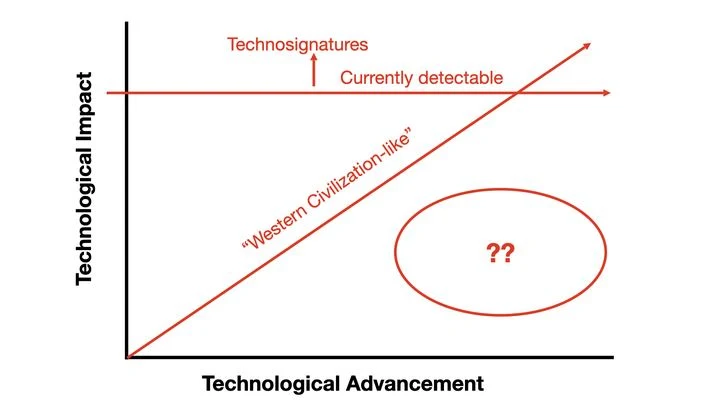
Studying distant exoplanets, scientists look for signs of life — for instance, water and carbon — and signs of technology: radio signals, megastructures. But between these clues there is a yawning gap. If intelligence hasn't created machines or they've vanished, we won't notice it.
The Drake Equation is an attempt to guess the number of intelligent civilizations in our Galaxy. It’s like counting finished cakes in an unknown bakery: you know the ovens (stars), the baking sheets (planets), and the baking time. But were eggs added to the batter? Western science, relying on a single earthly recipe, considers them a rare ingredient.
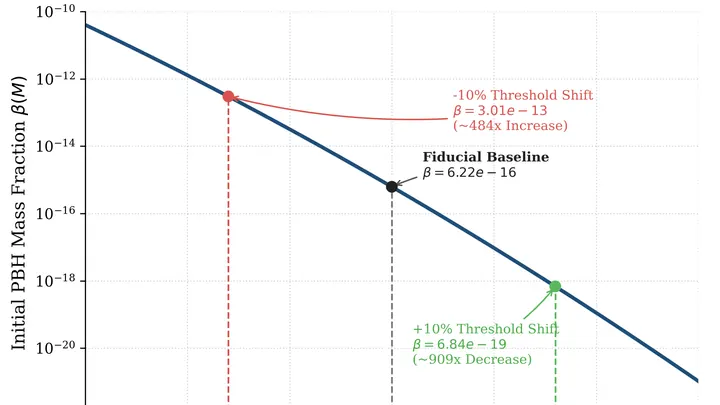
It all began not with emptiness, but with a boiling ocean of plasma. In that primordial broth, sound waves raced through the fiery matter, colliding and compressing it. Sometimes a clump grew so dense that light could no longer escape, and right out of the scorching gas, a primordial black hole was born.
The galaxy NGC 1277 is like an old book that no one has opened for billions of years. It formed quickly at the dawn of the Universe and has barely changed since — no collisions with neighbors, no new layers added.
In the heart of the Milky Way, in the cloud G+0.693, astronomers caught a sweet signal — emission lines of erythrulose, a simple sugar with four carbon atoms and four oxygen atoms.
In a city park, trees grow faster than in a deep forest — not because the soil is better, but because branches collide and seeds are exchanged more often. Galaxies in the Spiderweb protocluster behave much the same way. This vast clump of matter will become a mature cluster billions of years from now.
From carbon, nitrogen, oxygen, and sulfur, you can assemble 10⁶⁰ different small molecules: that's a 1 with 60 zeros, more than the stars in the visible universe. Life uses only a tiny fraction of this menu, but not randomly.
The idea of extraterrestrial origin of life has long excited minds. Fred Hoyle believed bacteria travel between stars. A new study tested a similar but closer route: from Mars to Earth. In ancient times, Mars had water, and asteroid impacts knocked rocks with microbes into space.
The search for extraterrestrial life is like a detective investigation: from tiny clues, you must distinguish traces of life from random imprints of non-living nature. On Saturn's moon Enceladus, the investigators are lucky — geysers burst from cracks in the icy crust, ejecting water from the subsurface ocean straight into space.
When the light of a distant planet is split into colors, it suddenly jumps at the boundary between red and invisible infrared, as if someone flipped a switch. This is how the vegetation red edge manifests itself: chlorophyll is transparent to near-infrared radiation, and the leaf, to avoid overheating, reflects it away.
For nearly half a century, astronomers have been searching for glycine, the simplest amino acid and one of the fundamental building blocks of proteins, in the interstellar medium.
In the freshwater lakes, cyanobacteria Microcystis often cause toxic blooms. They gather into colonies — elastic little spheres, like dense jelly. The cells are glued together by a special substance based on carbon, acting as a powerful natural adhesive. Scientists tested these "jelly balls" for the first time and found their strength astonishing.
Three craftsmen work in the same workshop. The first tries to figure out whether tiny hourglasses are built into nature's own machinery. The second attaches a laser pointer to a microscope to see details invisible to the naked eye. The third, conversely, takes living threads and carefully weaves them into fragile quantum circuits.
Long protein threads, their tangled entanglements, and random contacts: this is how the birth of cellular droplets was usually explained. These membrane-less organelles, where important reactions take place, resemble oil drops in water: they arise on their own when molecules separate into phases.
A pot of water sits on the stove. The temperature drops: plus one degree, zero, minus one — the water stays liquid. But at some point, a light breath is enough to make the whole mass instantly freeze into ice. Physicists call such jumps first-order phase transitions.
Titan is a cold world with methane lakes and a dense orange atmosphere. But beneath the icy crust, warm puddles may hide, formed after meteorite impacts. In such a puddle, like a chemical flask the size of Selk Crater, simple gases from the air, hydrogen cyanide and acetylene, mix.
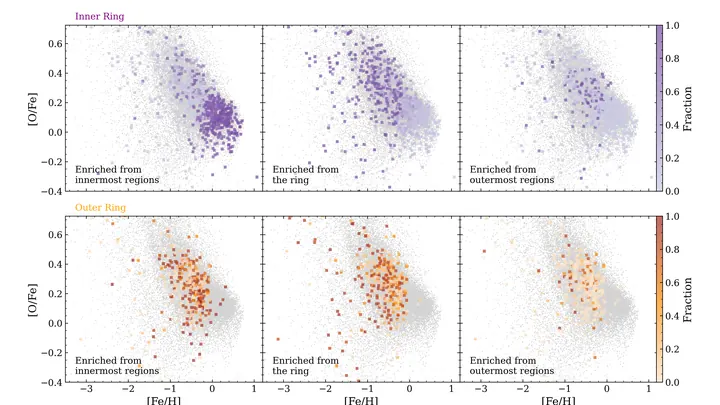
A star inherits the chemical makeup of its parent gas cloud, just like a child inherits genes from its parents. Astronomers turned this into a method: by measuring the fraction of carbon and other elements with spectroscopy (splitting light into colors), they construct family trees for the stars in a galaxy.
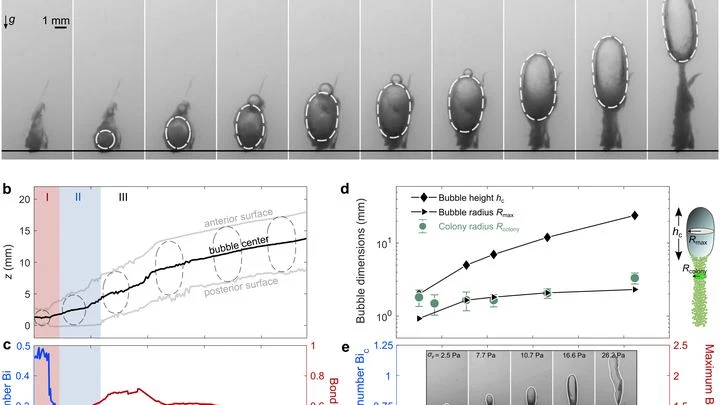
Yeast are trapped in a clear gel, like raisins in jelly. They can't move on their own, but soon they start rising to the top. The secret lies in their own homemade fizz.
During fermentation, yeast release carbon dioxide. In a thick medium, the gas doesn't escape but accumulates until bubbles form.
A chemical detective searches for life on other planets. Its tool is a mass spectrometer that identifies molecules by weight (the same device earthly forensic scientists use to analyze clues).
Radio telescopes detected emissions from the celestial object G358.93-0.03 MM1 — a hot cocoon inside which a massive star is igniting. Within that glow, lines of glycolamide appeared, a delicate carbon molecule.
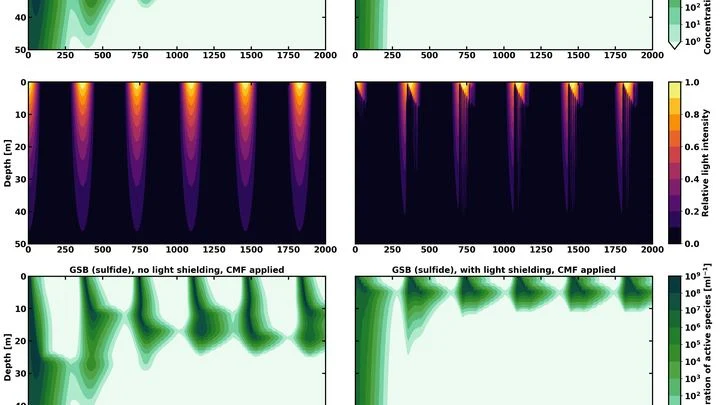
Simple equations that describe fox and rabbit cycles have been turned to bacteria on distant exoplanets, like K2-18 b. These worlds hold deep oceans under thick hydrogen skies. Like duckweed on a pond, light-eating microbes cover the sunlit water surface, stealing light from those below.
At the dawn of Earth, about four billion years ago, the planet was a harsh place: a dim sun, frequent asteroid impacts, and air without oxygen. Under such conditions, the first steps of life seem almost impossible.
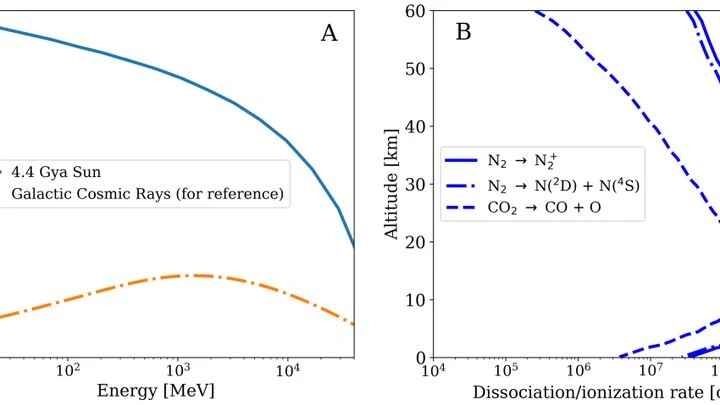
In its youth, our Sun radiated about 30% less energy than it does today: this faint young Sun paradox long troubled planetary scientists: with such a heat deficit, Earth's oceans should have frozen, yet geological evidence says otherwise.
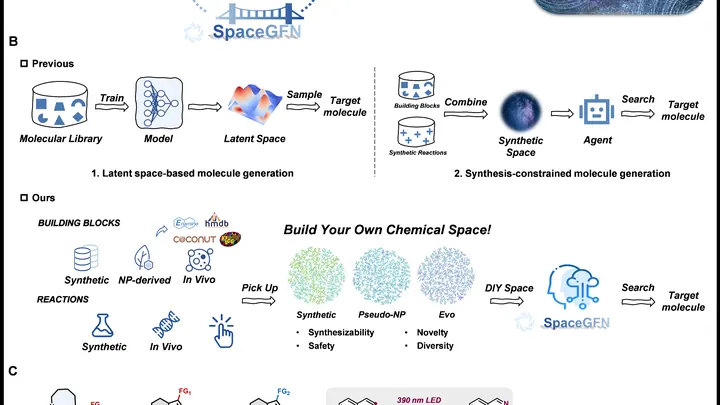
Previously, generative models for drug discovery worked like an artist painting without choosing a canvas. They learned from existing molecules and simply produced similar ones, without considering how the space of possible compounds is organized. SpaceGFN changes the approach: now chemical space is a construction set where the user specifies the parts and the assembly rules.
When a young star ejects jets of gas, they slam into the surrounding cloud like a fist into a pillow. At the impact site, the gas is compressed and heated — creating a shock wave. In this hot zone, atoms and simple molecules collide and assemble into larger compounds, known as complex organic molecules.
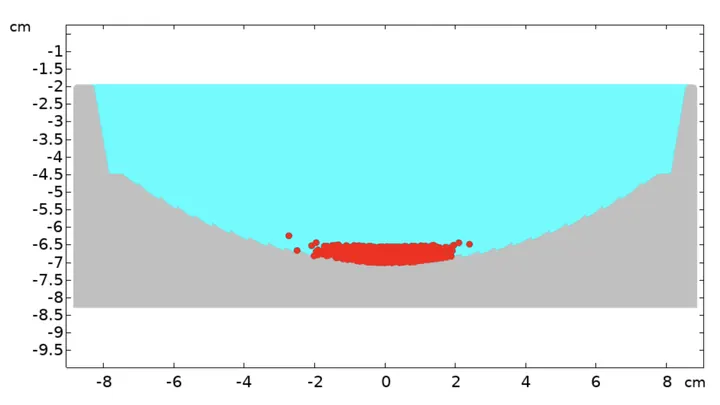
4 billion years ago, the young Earth was mercilessly bombarded by meteorites, leaving behind impact craters. Rains filled them with water, forming shallow ponds where lipid bubbles accumulated. These bubbles, like soap bubbles but with a double-layered lipid membrane (just like modern cells), formed spontaneously when water mixed with fat-like substances.
In dark, cold clouds where stars are just beginning to form, dust grains put on icy coats. This ice is not just frozen water: it contains dissolved carbon dioxide, methanol, ammonia, and other molecules.
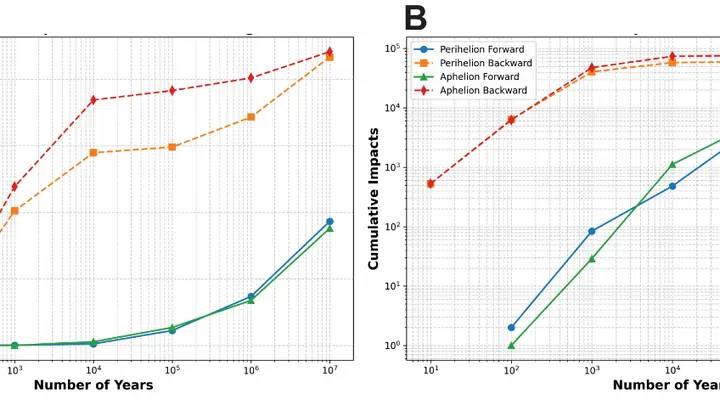
Cometary ice slams into the young Earth. The pressure at the impact point is like stacking six aircraft carriers on your thumbnail. In the lab, such conditions are reproduced by squeezing a tiny sample between two rotating anvils.
This time, adenosine monophosphate — one of the letters of future RNA — was placed under the anvils.