A Quantum Duet of Tin and Lithium in a Crystal express
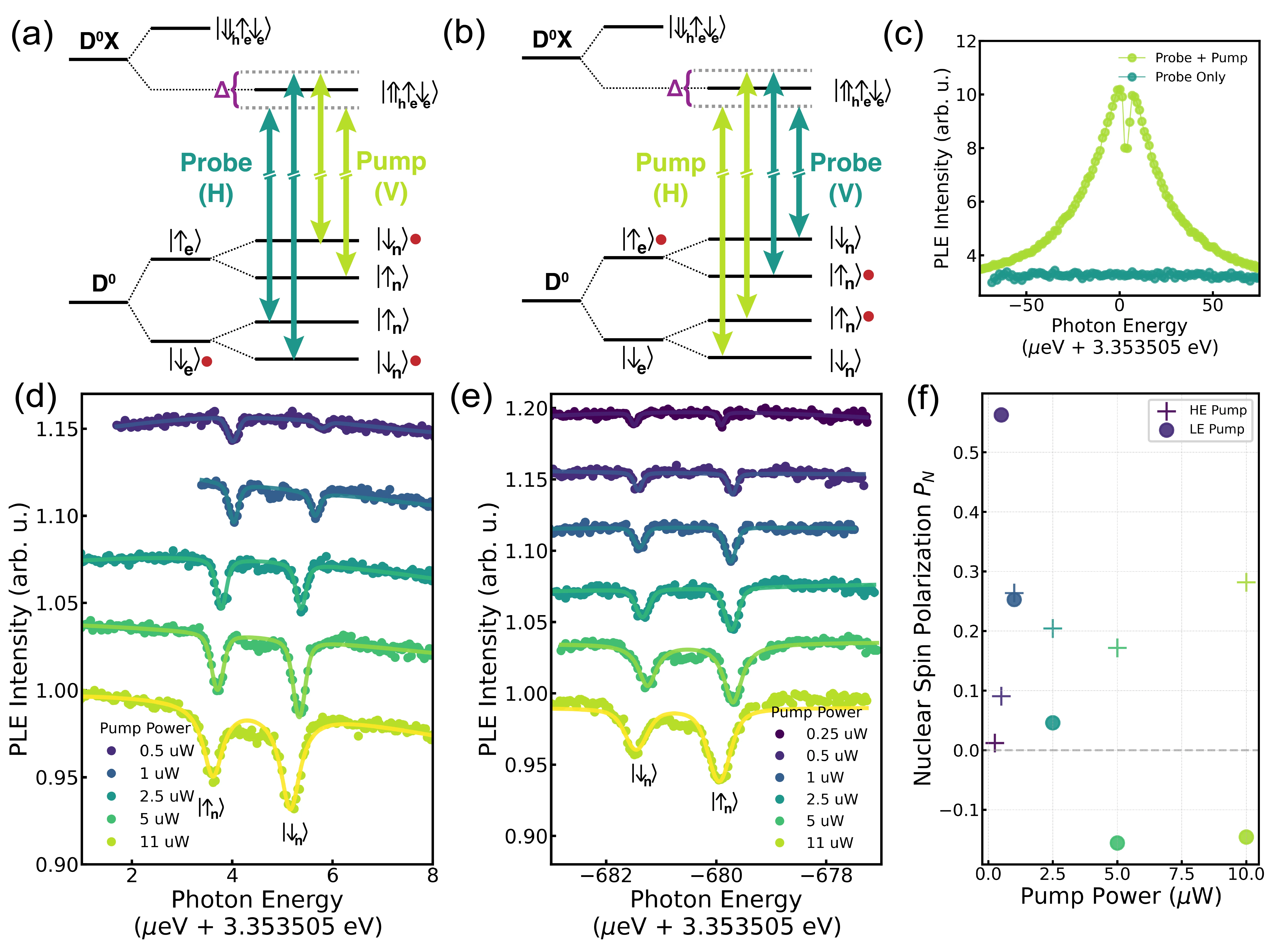
Hidden inside a zinc oxide crystal is a quantum duo: a tin atom and a lithium atom sitting side by side. Their bond is so tight that the electron captured by this pair seems to live on the tin, while the lithium merely plays along. This complex was long sought after, but only now has it been deliberately created and identified by its characteristic glow.
The strength of this coupling has been precisely measured: 392 megahertz. For comparison, in typical donors in silicon, the coupling is tens of times weaker. Such a strong pair allows very fast manipulation of the nuclear spin — literally within billionths of a second. This means quantum information can be written into the nucleus and read out with light.
This work shows that not only single impurities but also their pairs can serve as building blocks for quantum devices. The tin–lithium complex opens a new direction in the design of quantum defects — with a nuclear spin ready for dialogue with photons.
The hyperfine interaction in this complex is so strong that the transition frequency between spin states is comparable to the frequencies at which microwave ovens operate.