A Trap for Dark Matter express
A radio receiver hunting for dark matter is like a bell: it responds to only one note. The trouble is, nobody knows what note dark matter plays, so the bell needs to be retunable. Usually, a metal rod is inserted inside, but it creates extra noise. Engineers at SLAC National Accelerator Laboratory found a simpler way: they cut the cavity in half and spread the halves apart like accordion bellows.
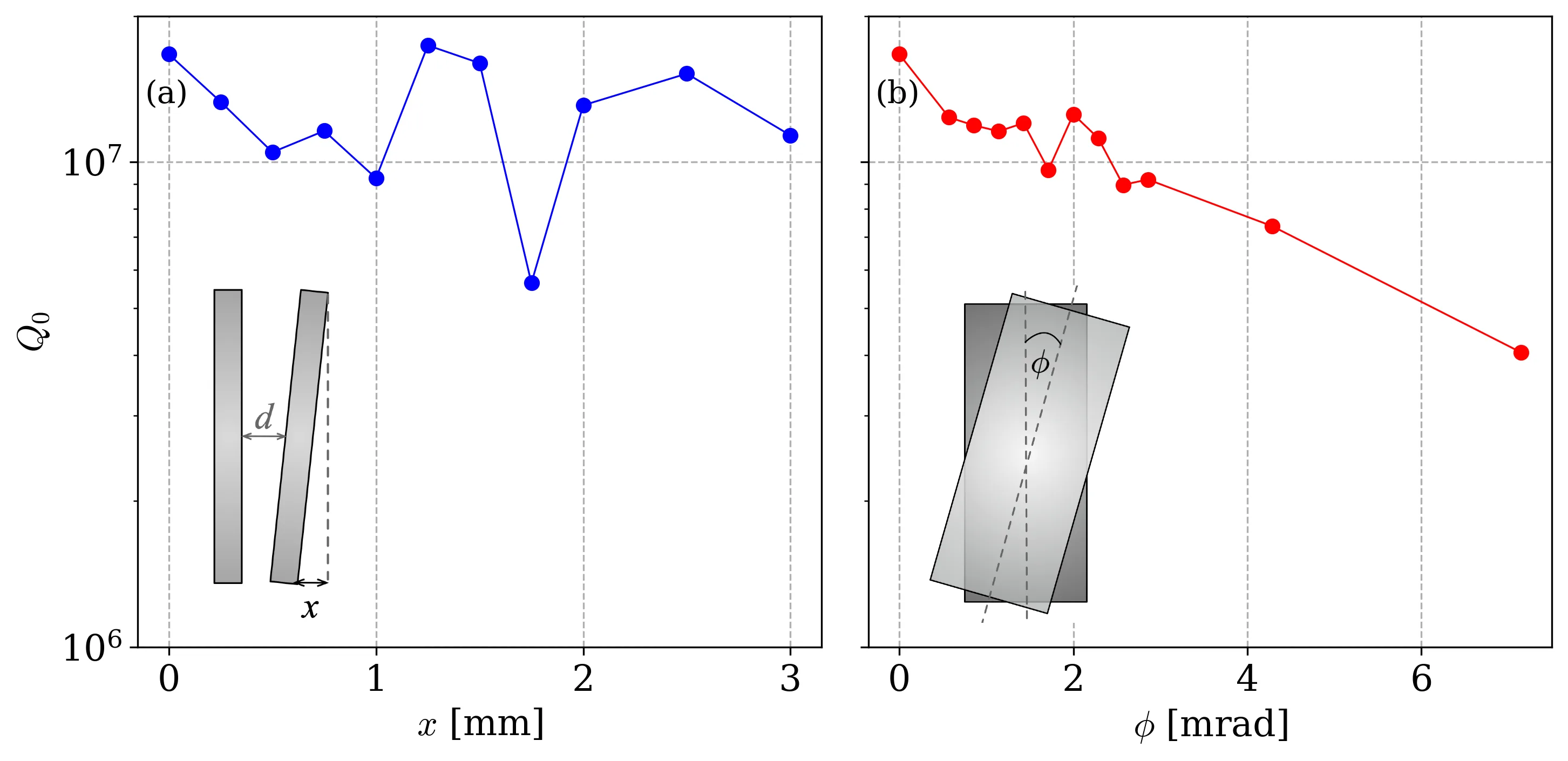
In the experiment, a cavity the size of a soda can operated at 9 gigahertz — a billion times faster than a guitar string vibrates. When the halves were spread apart by 9 millimeters, the frequency dropped to 7.5 gigahertz, while the ability to store radio waves (the quality factor) remained at ten million. This means that even when wide open, the cavity catches signals as sensitively as when closed.
Why go to such lengths? Dark matter might consist of ultra-light particles called axions. As an axion flies through the cavity, it could convert into a radio wave of a very specific frequency. If the cavity's frequency matches the axion's mass, a faint ring sounds. The new tuning technique allows covering a wide frequency range without sacrificing sensitivity. In the future, such cavities made of a different superconductor could operate in strong magnetic fields, further boosting the chances of hearing the elusive particle.
A superconducting cavity made of niobium-tin at liquid helium temperature (about -269°C) conducts electricity with zero resistance. If a current is started in it, it would circulate for years without decaying.
In Liu Cixin's novel "The Three-Body Problem," aliens use giant antennas deployed in space to pick up signals from dark matter. Here, the same principle applies: spread the structure apart, and you change the tuning.