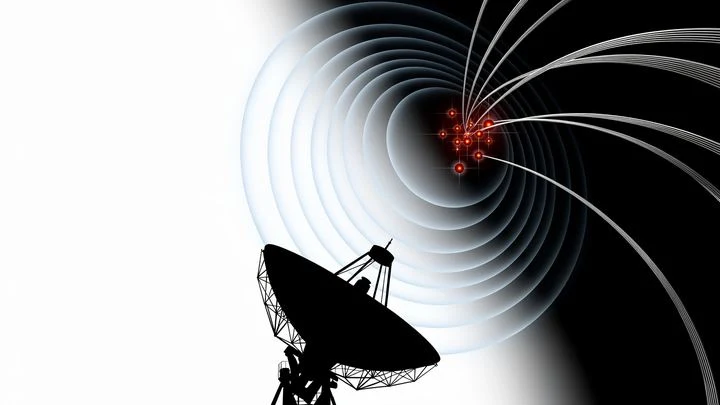
Radio waves are a type of electromagnetic radiation with wavelengths ranging from about one millimeter to hundreds of kilometers, corresponding to frequencies from 300 GHz down to a few kilohertz. They are the longest-wavelength form of light, invisible to the human eye, and are generated by accelerating charges, such as electrons oscillating in antennas or spiraling in cosmic magnetic fields. In astronomy, radio waves penetrate dust clouds that block visible light, revealing the structure of galaxies, the remnants of supernovae, and the faint glow of the cosmic microwave background.
History
Radio waves were first predicted by James Clerk Maxwell in the 1860s and experimentally generated and detected by Heinrich Hertz in 1887. Their astronomical use began in the 1930s when Karl Jansky detected radio emission from the Milky Way, opening the field of radio astronomy.
How it works
Radio waves are produced when charged particles accelerate. On Earth, this happens in antennas driven by alternating currents; in space, it occurs in phenomena like solar flares, pulsars, and supernova remnants. They propagate at the speed of light, and their long wavelengths allow them to diffract around obstacles and travel long distances. Radio telescopes detect these waves using large parabolic dishes or arrays of antennas, converting the electromagnetic signal into electrical currents that are amplified and analyzed.
In practice
Radio waves are used in communication (radio, television, Wi-Fi, mobile phones), radar, medical imaging (MRI uses radio-frequency pulses), and radio astronomy to study cosmic phenomena.
The blue glow in water around a nuclear reactor is light born when a charged particle outruns light in that medium. The effect was discovered by Pavel Cherenkov in 1934, with the theory provided by Igor Tamm and Ilya Frank.
Galaxy Mrk 590 behaves like a radio receiver that sometimes picks up a signal and sometimes fades into static. Its supermassive black hole has been brightening and dimming for decades, and astronomers caught every such 'switch-on.' In 2017, the receiver came alive again, but the VLA radio telescope heard not the signal they expected.
Radio telescopes listen to the sky like sensitive ears: they catch the whispers of distant explosions, the hum of galaxies, the crackle of pulsars. But sometimes they pick up a sound that isn't in the catalogs. In 2003, such a sound emerged in the constellation Aquila — a spot in the sky that had been quiet until it suddenly began to speak.
An ordinary flashlight shines in all directions, and after just a couple of dozen meters its beam fades so much it barely lights a wall. The atmosphere scatters light, and wind and heat currents distort it even more. But if you lay an invisible pipe for light right in the air, the beam will travel through it like water through a hose.
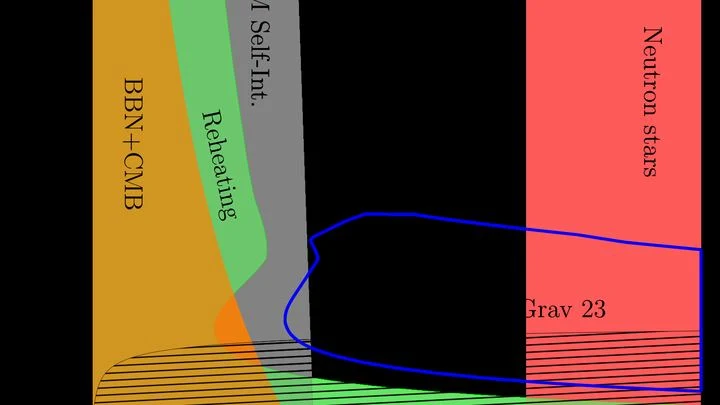
A bell rings not from the strike but from a fleeting shudder of space. A gravitational wave, like ripples on a pond, passes through a massive magnet, and it deforms ever so slightly. That deformation can be turned into an electrical signal.
Long-period radio transients (LPTs) are a mysterious class discovered only recently. Their pulses last minutes or hours, and their nature was completely unknown. ASKAP J1745-5051, caught by the Australian telescope ASKAP, became the first to get a full explanation.
When a distant galaxy sends us light, it dims with distance, and from that dimming, we can tell how far away it is. Gravitational waves work in much the same way: the farther their source, the weaker the ripple in space that detectors on Earth pick up.
The cosmic microwave background is the afterglow of the Big Bang, which we see at millimeter wavelengths. But it also has a long-wavelength tail extending into the radio range.
In a vast hall, a hundred tuning forks are set out. Each one is a pulsar — an ultra-dense stellar remnant spinning at a furious rate, sending out radio pulses more precisely than any clock. When a low-frequency sound wave sweeps through the hall, all the tuning forks start to go slightly out of tune at the same moment.
Gravitational waves are ripples in the fabric of spacetime, spreading from sources like circles on water from a thrown stone. When a wave passes a galaxy, its path bends, like water ripples meeting an underwater boulder.
The solar corona, the Sun's outer atmosphere, stretches millions of kilometers, yet it's visible only during a total eclipse or with specialized instruments. Typically, we gauge the corona's density by how it scatters white light, but that method relies on simplifications that can skew the results.
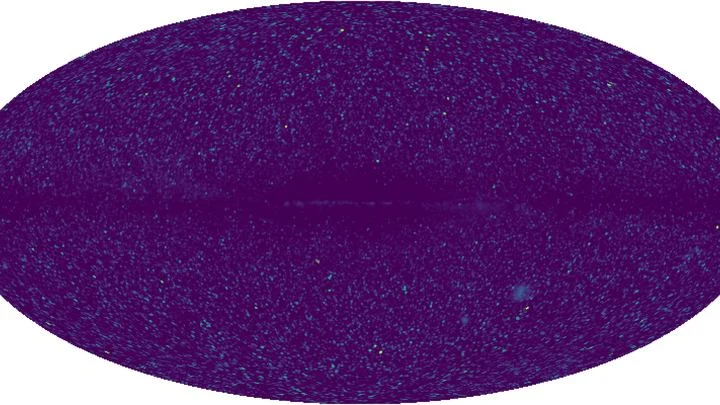
The night sky glows not only with stars. Between them lies a faint microwave radiance that astronomers have noticed for three decades but couldn't explain. One idea: the culprits are polycyclic aromatic hydrocarbons — molecules like tiny soot flakes that spin in space and, like miniature antennas, emit radio waves.
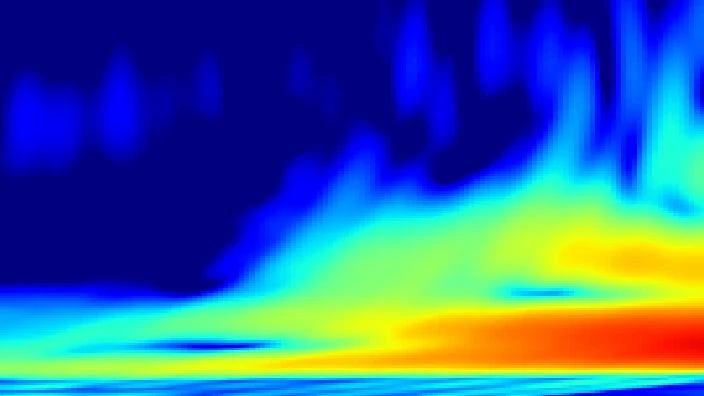
In the stream of charged particles that constantly blows from the Sun, radio bursts sometimes occur — short, powerful signals at frequencies you can pick up on an ordinary radio. Until now, it was unclear how exactly these signals are born in that stream.
Seven billion years ago, a black hole at the center of a galaxy unleashed a gamma-ray flare — the most energetic form of light — with staggering power. Its light, after crossing cosmic distances, reached the MAGIC telescopes in December 2017.
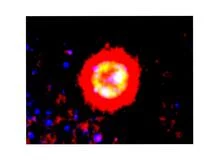
In 1181, Chinese and Japanese astronomers recorded the appearance of a 'guest star', a bright object that shone for six months in the constellation Cassiopeia and then vanished. Today, that spot hosts Pa 30: a nebula with a hot central source ejecting material at 16,000 km/s.
The RATAN-600 radio telescope is a ring of hundreds of aluminum panels on a mountainside in Karachay-Cherkessia. In the spring of 2018, its mirror caught radio waves from sixteen red dwarfs — small, dim, but very long-lived stars.