The Liquid That Catches Ghosts express
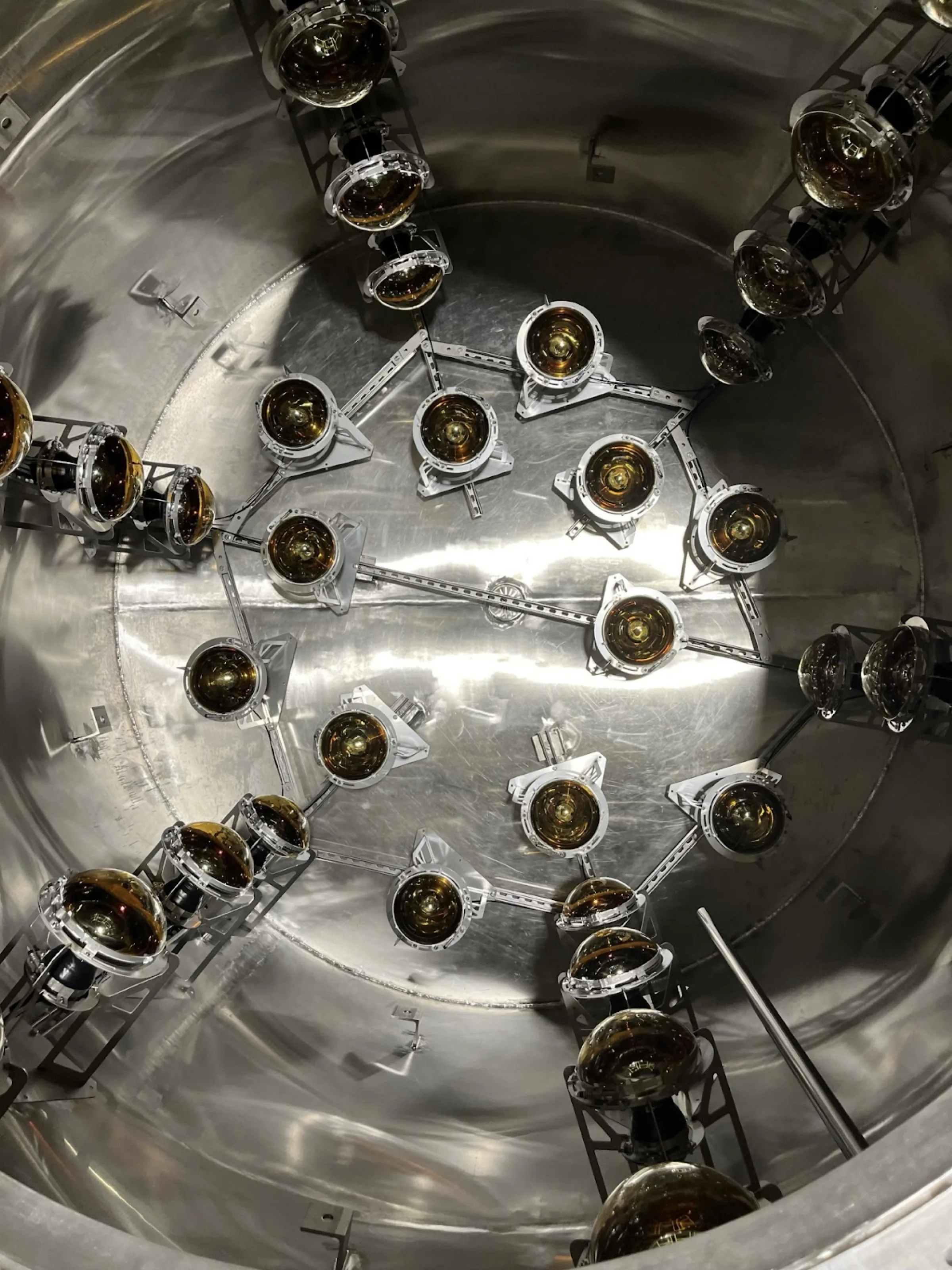
In a dark tank holding thirty tons of water, the liquid glows when a ghostly particle streaks through. Neutrinos barely interact with matter, but occasionally they bump into atoms, and a flash is born. To catch it, a special substance, a liquid scintillator, is added to the water to amplify the light.
Ordinary detectors see either one type of glow or the other. Here, both are mixed: Cherenkov radiation (a bluish cone, like a sonic boom from a supersonic jet, but from a particle moving faster than light in water) and scintillation light (a soft, uniform glow). The ratio can be adjusted right in the tank, tuning the detector for different tasks.
Why bother? Neutrinos come from the Sun, from stellar explosions, and from nuclear reactors. Some are fast and energetic, others slow and feeble. One tank with tunable liquid can catch both kinds, and also tell them apart from random noise. Scientists have already launched a prototype at Brookhaven Laboratory and are gearing up to analyze the first data.
You can see Cherenkov radiation in a pool next to a nuclear reactor, the water glows blue, like in a sci-fi movie.