Crack in the Battery: Why Dendrites Grow express
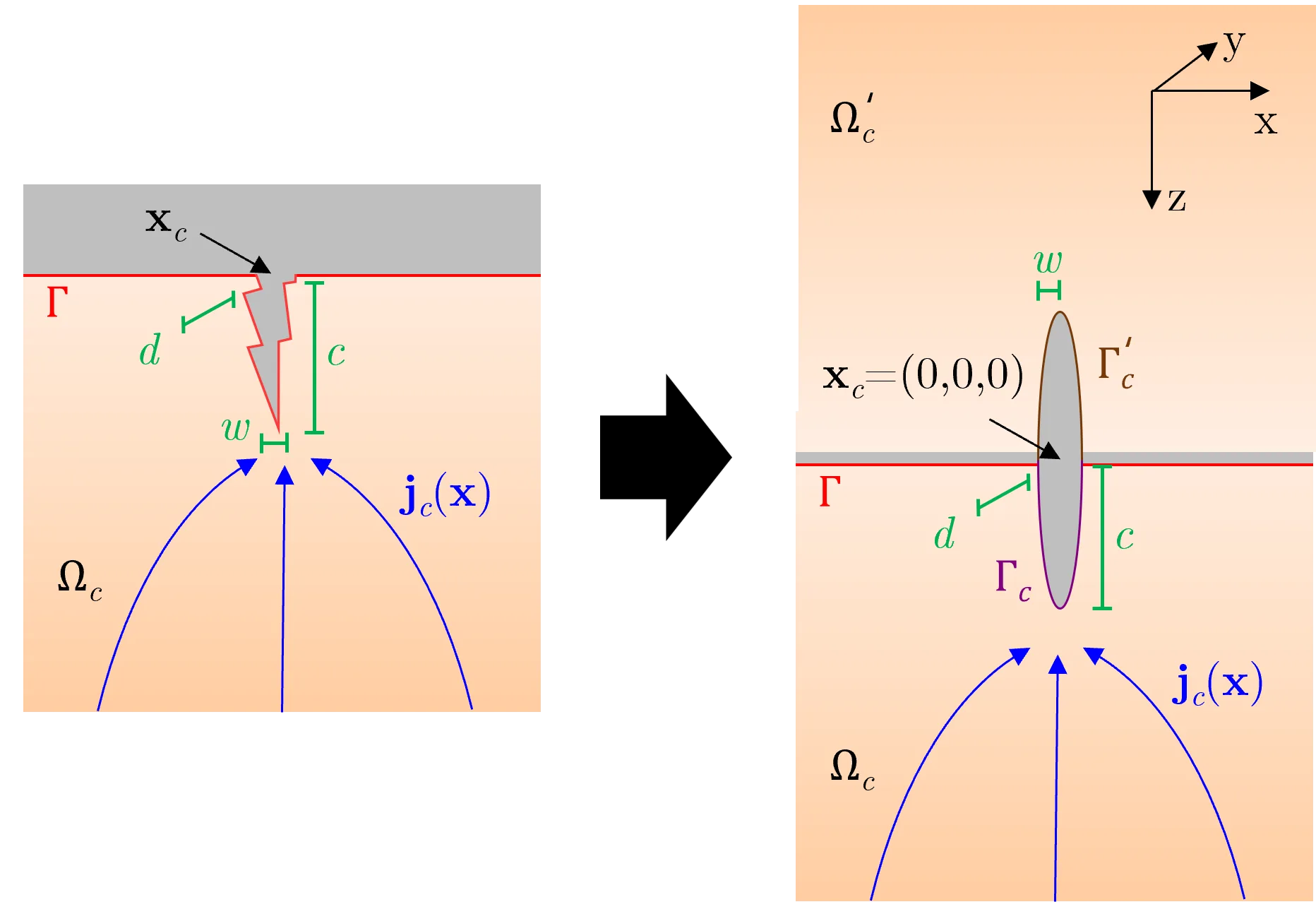
A metal filament as thin as a hair grows through the ceramic like a root through asphalt. In solid-state batteries, such filaments are called dendrites, and they appear when the charging current exceeds a critical threshold. The ceramic electrolyte is solid but brittle, like glass. A dendrite grows from an existing defect at the metal-ceramic interface: if opening a crack is cheaper than forcing the current to go around, metal deposits right at the tip of the filament.
The authors linked the critical current to the length of the longest thin defect. The longer the defect, the lower the threshold at which growth begins. The relationship is a power law: the critical current is proportional to the defect length to the power of three halves. It's like a crack in a windshield: the longer it is, the less force is needed to make it spread.
The scientists extended the theory to the case where the ceramic conducts a little electricity. Then, at the dendrite tip, stress corrosion occurs under voltage, and growth continues even below the critical current. The scatter between samples follows a Weibull distribution — the same law that describes the strength of ceramic parts: a few weak spots determine the fate of the whole battery.
The Weibull distribution, used to describe the scatter in ceramic strength, was originally proposed to describe the scatter in the strength of cotton fibers.
In Andy Weir's novel "The Martian," the protagonist uses a radioisotope thermoelectric generator, but the problem of dendrites in solid-state batteries is a real challenge for future Mars missions.