Why Purple Bacteria Always Have Big Rings express
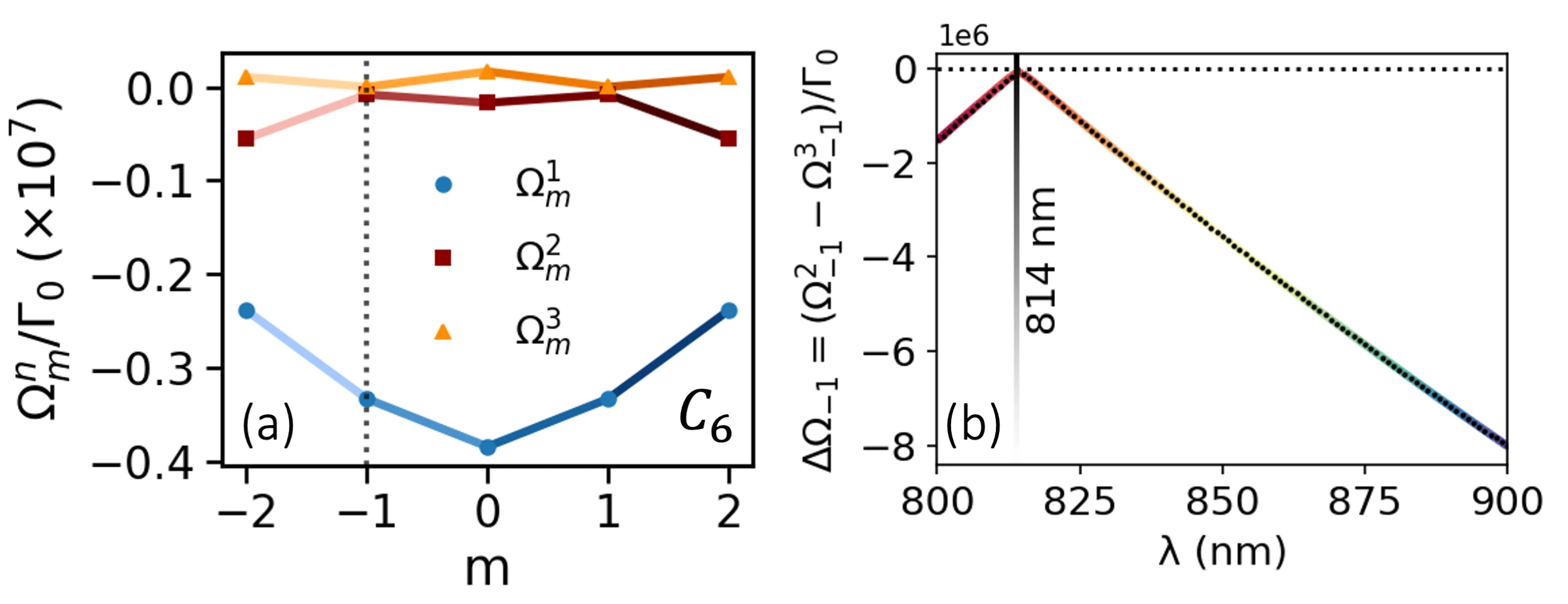
In the depths of murky ponds, purple bacteria lurk. Their secret to surviving in near-total darkness is rings of light-catching molecules, arranged like a round dance: each dancer passes energy to a neighbor. But if the round dance has fewer than seven participants, the dance breaks down — energy scatters, and disorder takes over. Over billions of years, nature set a minimum: the ring always has 8 or 9 links, never fewer than seven.
Using spectroscopy (analysis of light absorption) and photometry (brightness measurement), scientists confirmed that small rings suffer heavy losses. In large rings, energy flows instantly and almost without heating. The secret lies at the quantum level: excitation envelops the entire ring as a single wave, like water frozen in a perfectly smooth circular channel, wasting no energy on eddies.
These living solar cells are already inspiring engineers. Tomorrow’s solar panels might copy this bacterial design, and capture even dim twilight.
Original abstract
as written by the authors arXiv:2603.23743
Using a closed quantum optical coupled-dipole model, we investigate why sub-sevenfold symmetries are likely absent in the stacked-ring scaffolds of light-harvesting 2 (LH2) complexes in purple photosynthetic bacteria.
Purple bacteria absorb infrared light — invisible to us, but felt as warmth. They thrive on this meager glow where other organisms starve.