Quantum Bridge Between Nodes
An ordinary random network is like a road map: to connect four cities with a complex interchange, you need to lay down many highways. In the quantum world, things are different.
Quantum light networks use entangled photons for secure communication and advanced sensing applications.Quantum light networks are communication systems that use the quantum properties of light—specifically entanglement and superposition—to transmit information in ways impossible with classical signals. Unlike conventional networks that send bits as on/off pulses, quantum networks encode information in the quantum states of photons, enabling fundamentally secure communication and distributed quantum computing. These networks are the backbone of the future 'quantum internet,' where quantum information can be shared between distant nodes with provable security.
The concept of quantum cryptography was introduced by Stephen Wiesner in the 1970s and developed into practical protocols by Charles Bennett and Gilles Brassard in 1984. The first quantum key distribution experiments were performed in the late 1980s and early 1990s.
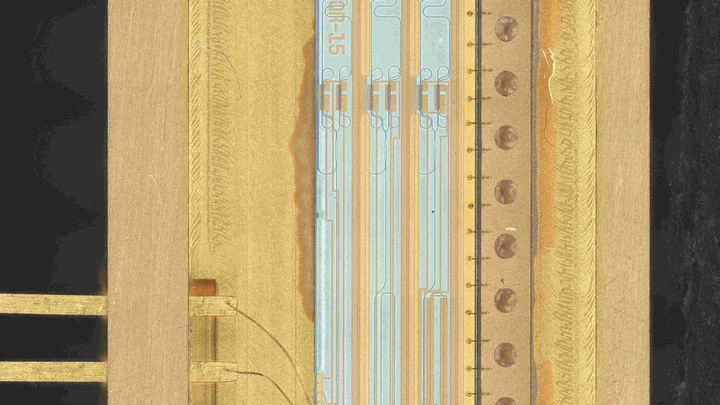
The core mechanism relies on entangled photon pairs: two photons whose quantum states are correlated such that measuring one instantly determines the state of the other, regardless of distance. To send a secure message, a sender and receiver share entangled photons and use them to generate a secret key—any attempt to eavesdrop disturbs the entanglement and is immediately detected. Quantum networks also use quantum repeaters to extend entanglement over long distances, overcoming photon loss in optical fibers. Recent advances include using microchips on lithium niobate to generate entanglement efficiently and increasing the speed of quantum key distribution by nearly fivefold.
Quantum light networks are being deployed for secure government and financial communications, and are being developed for satellite-based quantum links to enable global secure communication.
The Sun itself can serve as a source of quantum entanglement—researchers have demonstrated that sunlight, after filtering, can produce entangled photon pairs, opening the possibility of daylight quantum communication.