Whirlpools in the Cradle of Planets express
The young star HL Tau is surrounded by a disk of gas and dust — the cradle of future planets. Inside this disk, the gas is not static: it orbits the star, but it also trembles and churns, like water in a raging river. Astronomers have now directly measured the strength of this churning for the first time.
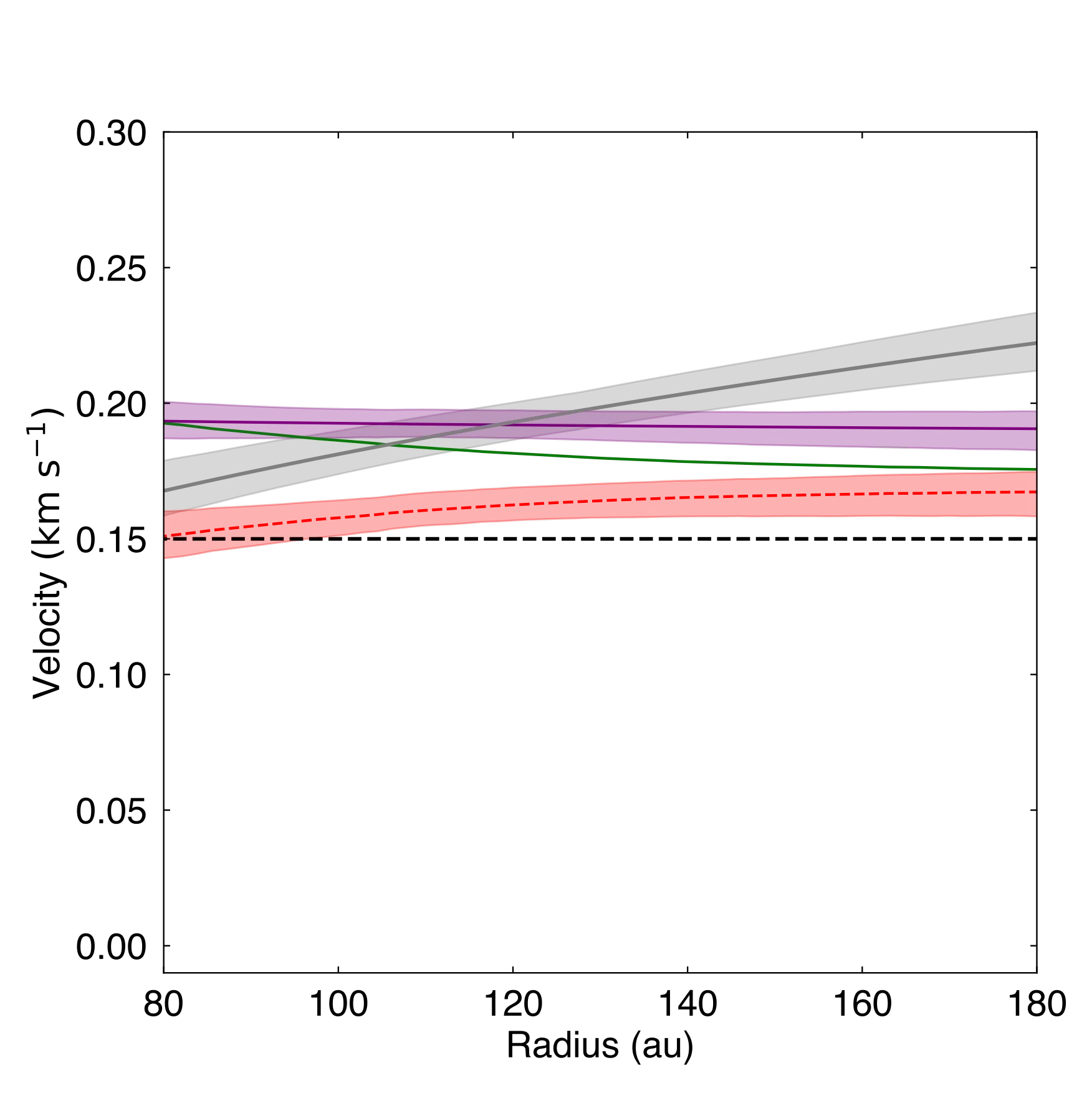
A galaxy is a vast system of stars, gas, and dust, and the disk around HL Tau is just a tiny part of one. The researchers used data from the ALMA telescope, observing the emission from formaldehyde molecules (H2CO). The width of these emission lines reveals how fast the gas is moving. It turned out that the gas in the disk trembles at about 0.15 km/s — roughly the speed of a walking person. But for cold gas, this is a lot: the turbulence is several times stronger than in more mature disks.
Where does such a lively state come from? The HL Tau disk is still young and is surrounded by gas falling onto it from the outer cloud. This infalling gas crashes into the disk and shakes it, like wind ruffling the surface of a lake. Moreover, the disk itself is massive and may be unstable, spawning whirlpools. Such strong turbulence prevents dust from settling quickly toward the disk's midplane, meaning planets under these conditions form more slowly and differently than in calm disks.
This discovery shows that young planetary systems pass through a turbulent stage. It changes our view of how quickly and where exactly planets are born. In the future, such measurements will help explain why some stars end up with planets while others remain lonely.
The speed of turbulent motions in the HL Tau disk—0.15 km/s — is roughly the speed of a brisk human walk. But for cold gas, this is extremely fast: the temperature there is only about 30 kelvins (−243°C), and the molecules themselves barely move.