Breathing of a Quantum Gas Reveals Its Hidden Energy express
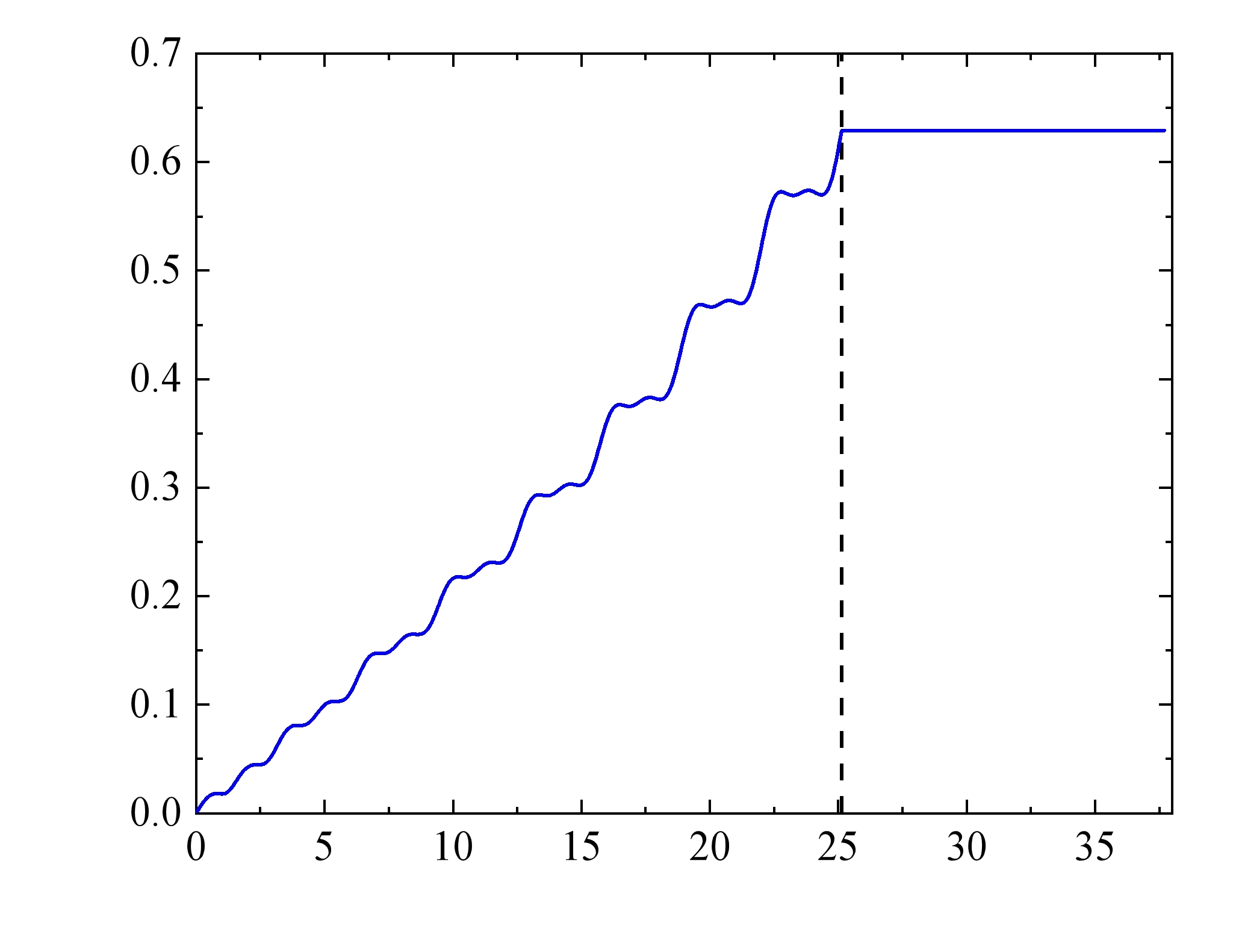
An ultracold cloud of atoms trapped in laser light can 'breathe': it rhythmically contracts and expands, much like lungs. Physicists have long been able to observe this breathing, but only now have they realized that its amplitude is not just a pretty picture: it is a precise measure of hidden energy jitters inside the cloud.
The study shows that the breathing amplitude is linked to energy fluctuations by a universal formula. It contains just one number — the Bargmann index, which is set by the system's symmetry (SO(2,1)—a special mathematical structure describing such gases). This number does not depend on the type of atoms or how the cloud was excited. It is as if the loudness of a person's breathing always indicated their inner agitation equally accurately, regardless of whether they were running or just nervous.
The practical benefit is that you no longer need to break the cloud apart into atoms to learn about its energy statistics. You just measure how strongly it breathes. This is especially valuable for strongly interacting quantum systems, where direct energy counting is nearly impossible, but collective motions are clearly visible.
This approach opens the door to studying nonequilibrium energetics in a wide variety of quantum gases — from ultracold Fermi gases to exotic mixtures. The cloud's breathing becomes a window into a world that was previously accessible only through extremely complex calculations.
Original abstract
as written by the authors arXiv:2604.06594
Directly accessing energy fluctuations in interacting quantum many-body systems remains a long-standing challenge, especially far from equilibrium. Here we show that in scale-invariant quantum gases with SO$$(2,1)$$ dynamical symmetry, the amplitude of the breathing mode provides a direct and quantitative probe of energy fluctuations. We establish an exact and universal relation between the oscillation amplitude and the energy fluctuation, with a dimensionless ratio fixed solely by the Bargmann index $$k$$, which labels the irreducible representation of the underlying SU$$(1,1)$$ algebra and thereby determines the structure of the many-body spectrum and dynamics. As a consequence, this relation is fully dictated by symmetry and remains independent of microscopic details and excitation protocols. Furthermore, we show that the excitation of breathing-mode states follows a universal statistical distribution governed by a single parameter, independent of the specific driving protocol. Our findings demonstrate that energy fluctuations, typically encoded in the many-body spectrum, can be directly accessed through collective dynamics, offering a symmetry-based route to probe nonequilibrium energy statistics in strongly interacting quantum systems.
The breathing mode is a collective oscillation in which the atomic cloud contracts and expands like a balloon, but with a frequency dictated by quantum laws.