The world's most famous formula — E=mc² — says that mass and energy can turn into each other. Even at rest, any object stores colossal energy: as if every pebble were a compressed spring ready to release. A little mass yields enormous energy because the speed of light (c) is very large, and its square is an astronomical number. This is how stars and nuclear reactors work.
History
Albert Einstein published the final formulation in 1905, though ideas about the connection between mass and electromagnetic energy were expressed earlier by Henri Poincaré in 1900. Experimental confirmations came with the discovery of nuclear reactions and mass defect in the 1930s. Today it has been verified with extremely high precision in accelerators.
How it works
Foundation of nuclear and particle physics: allows calculation of energy release in fusion and fission reactions, production of particle-antiparticle pairs. Limitations: applicable in inertial reference frames; in general relativity, energy becomes part of the energy-momentum tensor. The concept of mass becomes more complicated in curved spacetime.
Fun fact
The Sun converts about 4 million tons of its mass into light every second! We live thanks to that.
Two electrons that leave a metal needle tip almost simultaneously start to repel each other, like two people trying to squeeze through a narrow door at the same time. The closer they are, the more they get in each other's way.
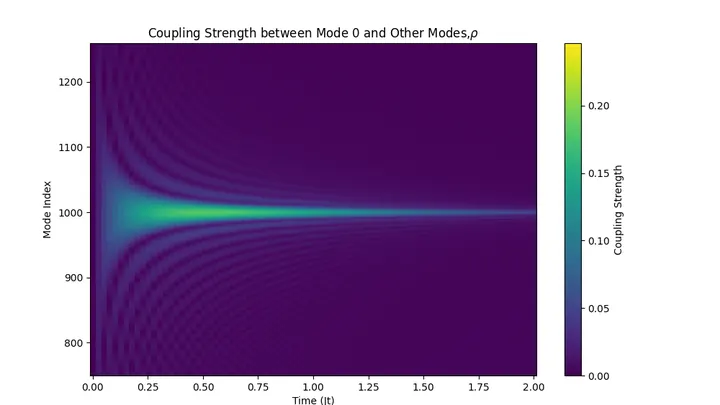
In a crystal, heat travels on waves. Atoms vibrate, and these vibrations, called phonons, carry energy from the hot edge to the cold one. For a long time, it was believed that if phonons hit resonance (their frequencies exactly match) and can exchange energy, heat would flow like an avalanche. It turns out that's not the case.
Gravitational signals from dying massive stars are whispers reaching us from the most violent laboratories in the Universe. Einstein predicted these gravitational waves over a century ago, but only today, with detectors like LIGO, are we beginning to hear them.
In the ordinary world without dark energy, the mass of any object is always positive. That seems obvious: positive mass attracts, creating gravity. But the real universe has dark energy — a mysterious force making the cosmos expand faster and faster.
Two guitar strings are stretched on the same neck. They are almost identical, but one is slightly shorter — and they sound different. That's roughly how the two isomers of ethanimine work: molecules with the same set of atoms but rotated differently in space. Astronomers spotted this molecule in the dense clouds near the center of our Galaxy.
Gravitational waves — ripples in spacetime predicted by Einstein — have exposed an abyss: black holes with masses between 60 and 120 solar masses are almost never born.
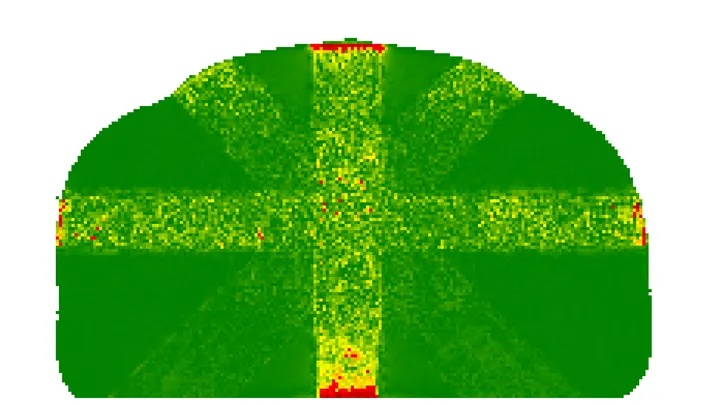
Prostate cancer radiation therapy requires precise calculation of the radiation dose at every point in the body. The classic Monte Carlo method simulates millions of particles and takes hours, while adapting the plan to daily anatomical changes needs seconds.
An ultracold cloud of atoms trapped in laser light can 'breathe': it rhythmically contracts and expands, much like lungs. Physicists have long been able to observe this breathing, but only now have they realized that its amplitude is not just a pretty picture: it is a precise measure of hidden energy jitters inside the cloud.
Cosmic rays are charged particles that constantly bombard Earth from deep space. When one of these particles enters the atmosphere, it collides with air nuclei and spawns a whole cascade of secondary particles: electrons, muons, photons.
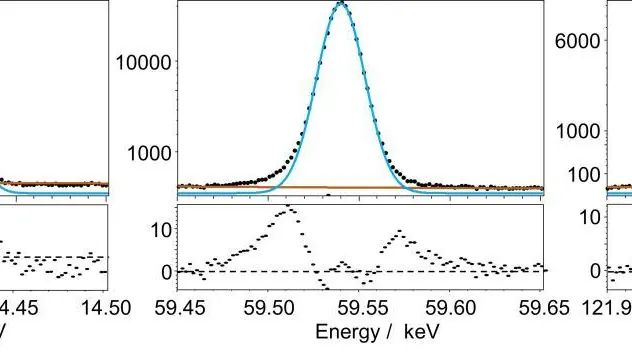
Gamma rays are the most energetic flashes of light born deep within atoms. Their energies are like fingerprints: each radioactive element has its own pattern. But measuring that pattern with high precision is like weighing a grain of sand on a scale sitting on a vibrating truck.
The new setup works like an ultra-sensitive thermometer.
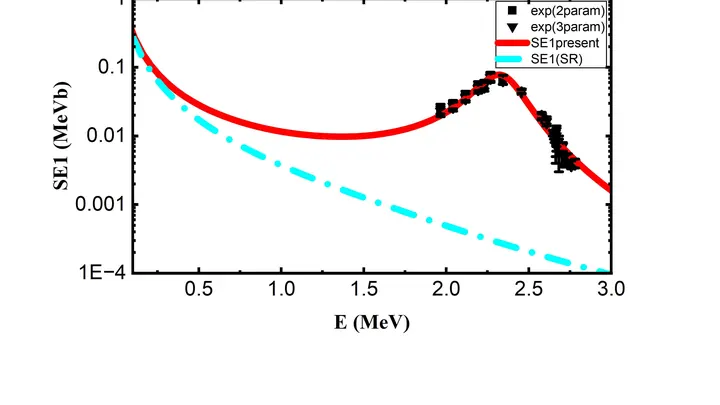
Igniting a miniature sun is a long-held dream of humanity. Typically, scientists try to confine scorching plasma (a gas of charged particles) at temperatures of hundreds of millions of degrees. But plasma tends to escape magnetic traps, and confinement comes at enormous cost.
Dark energy and dark matter are the invisible conductors of the cosmos. Usually considered independent, new research proposes seeing them as dance partners. The lead — dark energy — changes the mass of dark matter particles. Like a dancer who lifts and lowers their partner, dark energy increases or decreases the weight of dark matter.
Hot water sometimes freezes faster than cold — this is the Mpemba effect. In the quantum world, it’s even more astonishing: a system bubbling with disorder (with high entropy) can settle incredibly faster than one that is almost calm.
The solution lies in islands of silence within any system — regions untouched by the destructive noise of the environment.
All bodies fall the same: this was first observed by Galileo. Einstein elevated the observation to the equivalence principle: gravity and acceleration are indistinguishable, giving birth to curved spacetime.