How Cell Motors Set Droplet Size express
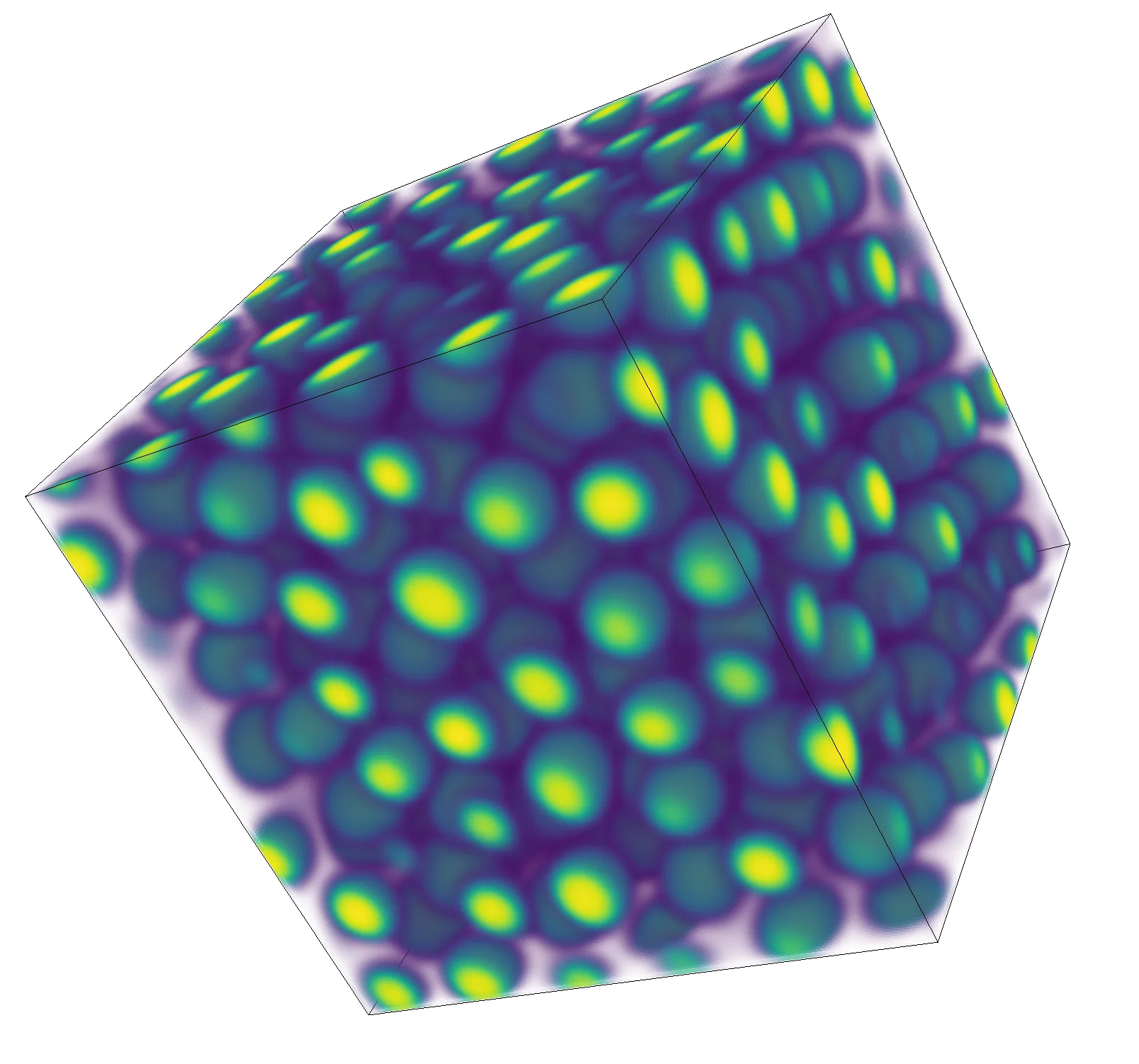
Inside a cell, there are tiny liquid droplets, like oil droplets in water. They form from proteins and RNA and serve all sorts of purposes, from storing molecules to speeding up reactions. But if droplets start merging with each other, you'd end up with one big puddle, which would wreck the cell's organization. How does a cell keep droplets from clumping together while maintaining them at the right size?
It turns out molecular motors are involved — proteins that step along filaments inside the cell and haul cargo. The authors noticed that proteins that build droplets sometimes briefly attach to motors. The motors carry them along filaments, which drags the droplets apart. This movement creates something like an invisible repulsion between droplets: they can't get too close and stop growing. As a result, droplets stay small and spread evenly throughout the cell.
The scientists built a simple model: proteins randomly attach to motors, motors carry them at a constant speed, then proteins detach. The model showed that droplet size depends on motor speed and attachment frequency. For example, if motor speed increases 16-fold, droplets become half as large. This is very convenient for the cell: you can tune droplet size just by tweaking motor activity.
This mechanism is like a traffic controller on the road: motors, like little tugboats, pull droplets apart, preventing them from merging. The cell uses them to manage its internal 'droplets'—from tiny ones, hundreds of nanometers across, to micron-sized ones. Understanding this process could help not only in deciphering cell life but also in creating artificial active materials where droplets can be tuned in size and shape.
Original abstract
as written by the authors arXiv:2604.08316
The size and organization of biomolecular condensates formed by liquid-liquid phase separation (LLPS) are set by multiple cellular mechanisms that are not yet fully understood. Here we identify a transport-driven mechanism: stochastic binding of phase-separating proteins to cytoskeletal motor proteins, followed by active redistribution along filament networks, generates an effective long-range repulsion that arrests coarsening and selects a finite condensate size. A minimal diffusion-transport model, analyzed by linear stability theory and three-dimensional simulations, reveals a transition from macroscopic to microphase separation at remarkably low binding/release fractions, corresponding to minute motor-bound populations. Tuning motor binding rates $$b$$ or transport velocities enables sublinear control of condensate sizes ($$L \sim b^{-1/4}$$) from a few hundred nanometres up to the micron scale. The selected length scale is robust to the intrinsic shot noise of the binding--release reactions. In anisotropic cytoskeletal environments, transport asymmetry drives morphological transitions from spherical to cylindrical condensates, independently of the thermodynamic parameters. This mechanism provides a versatile, spatiotemporally programmable route to condensate organization and informs the design of synthetic active emulsions with tunable architectures.
Droplet size depends on motor speed very weakly: if speed increases 16-fold, the droplet shrinks only by half. This makes the system robust to random fluctuations.
Science fiction often shows nanobots that rebuild cells from within. Here, the cell itself uses its motors as such robots to sculpt droplets of the desired shape and size.