Random Light Patterns Instead of Long Scanning express
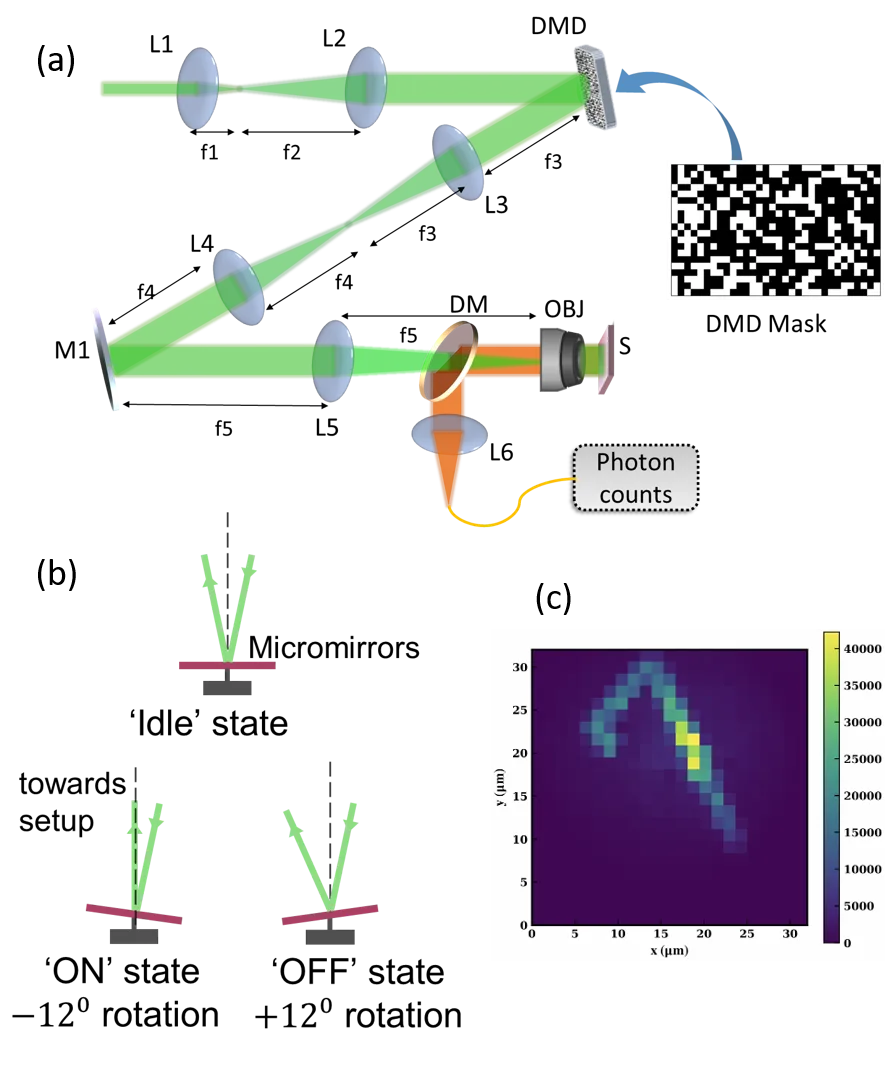
Hunting for a single glowing spot in a dark sample is like trying to find a needle in a haystack: the microscope beam crawls line by line, wasting time and light. Physicists replaced this slow sweep with random light patterns. The sample is illuminated with a broad field, but each time with a new pattern of bright and dark patches, as if random shadows from a grid were projected onto it. The camera records how much light comes from the whole area, and an algorithm then assembles the image from these fragments.
In the experiment, they used nitrogen defects in diamond — tiny defects in the crystal lattice that glow like single atoms. It turned out that about 20% of the measurements from a typical line-by-line scan are enough for a clear image. It's like assembling a puzzle with only a fifth of the pieces, but choosing them not in order, but from random positions.
The method went beyond simple glow. The scientists learned to reconstruct a map of quantum properties of light — how photons arrive one by one, not in pairs. Such a 'loneliness map' allows distinguishing a true single light source from a cluster of several, and it also requires five times less data. Rare quantum beacons can now be found faster, without burning the sample with a long beam.
A nitrogen defect in diamond is a nitrogen atom that took the place of a carbon atom, plus a vacancy next to it. Such a defect glows so stably that it is used as a tiny compass for measuring magnetic fields.