A Lava World with a Cool Face express
A hot skillet on the stove glows in the dark, but if you cover it with a lid, the heat escapes more slowly and the surface doesn't look as bright. That's roughly the situation on planet HD 3167 b: it always shows the same face to its star, and the dayside is heated to temperatures that melt rock. Astronomers expected to see a bare rock radiating heat, but the James Webb Space Telescope showed the planet shining noticeably fainter.
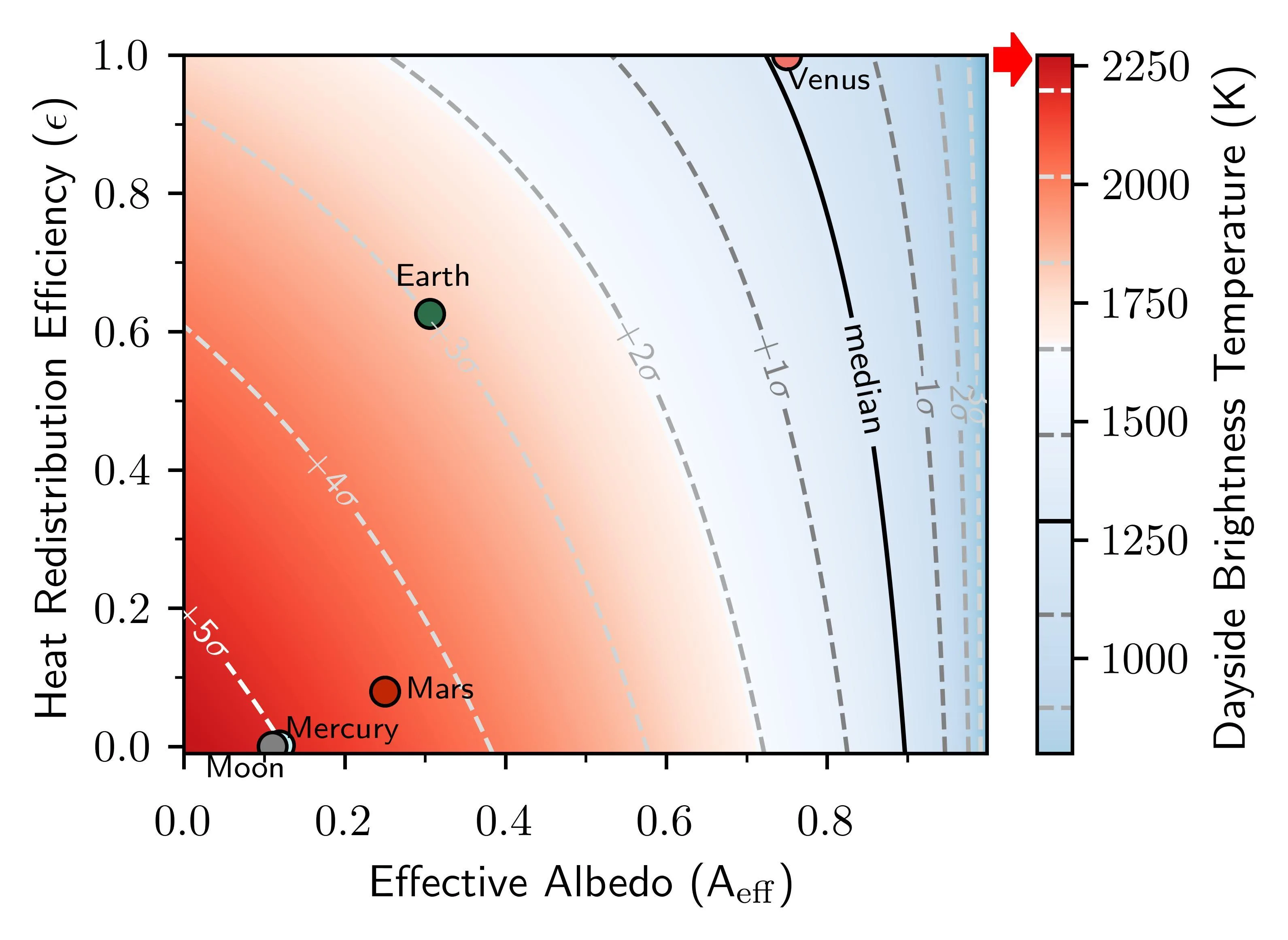
The measurements revealed that the dayside is cooler than a dark, unprotected rock would be. The difference is small — just a few tens of degrees — but enough to suspect the planet has an atmosphere. It could act like a blanket, trapping heat, or like a mirror, reflecting some starlight back into space. The atmosphere also explains why the planet is slightly less dense than expected for a purely rocky sphere.
This discovery matters because astronomers have been debating which hot planets can hold onto atmospheres. HD 3167 b receives less heat from its star than other known lava worlds, yet it still retains a gaseous envelope. That means the boundary beyond which atmospheres disappear lies farther out than previously thought.
Now scientists have a new point on the map: a planet that hasn't completely lost its atmosphere, even though it lives in harsh conditions. The next step is to figure out what that atmosphere is made of, using more detailed observations. Each such find brings us closer to answering how often rocky planets in the universe have air — and thus a chance for life.
Original abstract
as written by the authors arXiv:2604.11911
'Lava worlds'-Earth-sized planets hot enough (Teq >~ 1100 K) to melt their dayside silicate surfaces-have emerged as promising candidates for atmospheric detection and characterization. Thermal emission observations show an apparent dichotomy: the hottest lava worlds have colder daysides than the temperature of a maximally emitting bare rock, indicating the likely presence of thick and/or reflective atmospheres while the coldest ones do not. However, where in instellation flux this potential bifurcation occurs is uncertain. We present a JWST MIRI LRS eclipse of the ultra-short period (USP) lava world HD 3167 b (Teq = 1786 K, R = 1.6 Rearth, P = 0.96 d) that helps bridge this gap. We measure the white light eclipse depth to be 38 +/- 11 ppm, more than 5 sigma lower than the expected eclipse depth of a dark, maximally hot bare rock. We use this to derive a dayside brightness temperature that is best explained by the presence of an atmosphere that cools the dayside by reflecting incoming starlight and/or efficiently redistributing heat to the planet's nightside. An atmosphere is further compatible with the planet's slight under-density compared to an Earth-like composition. The corresponding dayside emission spectrum is not precise enough to constrain atmospheric composition, motivating follow-up spectroscopic observations with JWST NIRSpec. Lastly, we use our observation and existing data to refine key planetary parameters of the HD 3167 system. HD 3167 b is currently the least irradiated USP super-Earth with evidence for an atmosphere.
If you stood on the dayside of HD 3167 b, you'd see rock melting and flowing like lava from a volcano — while the sky might be filled with clouds of vaporized minerals.
In the series 'The Expanse', colonists live on planets with extreme conditions where the atmosphere becomes a vital resource — HD 3167 b resembles such worlds, where survival depends on a thin gaseous shell.