object

ozone layer

A region of Earth's stratosphere that absorbs most of the Sun's harmful ultraviolet radiation.
26 related articles

Description

The ozone layer is a region of Earth's stratosphere, roughly 15 to 35 kilometers above the surface, that contains a relatively high concentration of ozone (O₃) molecules. Its primary role is to absorb most of the Sun's harmful ultraviolet (UV) radiation, particularly the most energetic UV-B and UV-C bands. Without this shield, life on Earth's surface would be exposed to radiation levels capable of causing severe DNA damage, skin cancer, and disruption of ecosystems.

History

The ozone layer's existence was discovered by French physicists Charles Fabry and Henri Buisson in 1913, and its role in absorbing UV radiation was identified by Gordon Dobson in the 1920s. The severe depletion of the layer by chlorofluorocarbons (CFCs) was announced by British Antarctic Survey scientists in 1985, leading to the Montreal Protocol in 1987.

How it works

Ozone molecules absorb UV photons through a photochemical cycle. When UV radiation strikes an O₃ molecule, it splits into an O₂ molecule and a single oxygen atom, converting the photon's energy into heat. This process, and the subsequent recombination of oxygen atoms with O₂ to reform ozone, continuously converts dangerous high-energy UV into harmless thermal energy, effectively acting as a protective filter in the stratosphere.

In practice

The ozone layer is essential for protecting human health and agriculture; its monitoring guides international policy on ozone-depleting substances, and its recovery is tracked via satellite and ground-based instruments.

Fun fact

The ozone layer, if compressed to sea-level pressure, would be only about 3 millimeters thick.
Concept graph →

Related articles · 26

Stellar2026-08-272 minarXiv:2608.27344
X-ray passports for habitable worlds
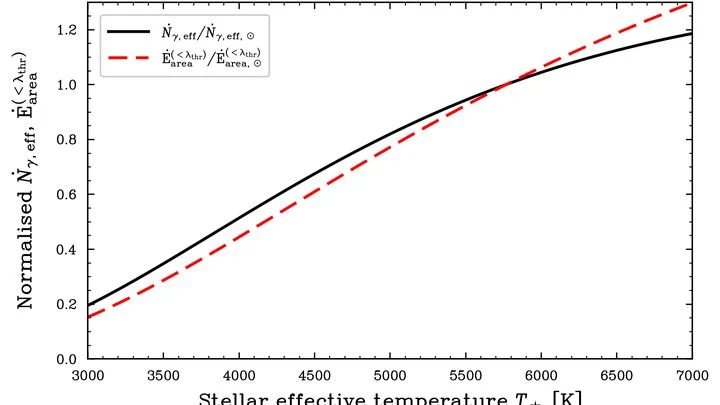
Twelve stars have received X-ray passports. Now, for each of them, we know the exact radiation dose received by a planet in the habitable zone, the region where liquid water is possible.
The Invisible Threat After Nuclear War
After a nuclear explosion, soot rises into the sky. It settles high above the clouds, in the stratosphere, and stays there for years. This soot acts like a thick curtain: it blocks some sunlight and alters the chemistry of the sky.
Exoplanets2026-07-282 minarXiv:2607.25542express
Three Cloud Layers of Jupiter
Jupiter's atmosphere resembles a layered cake, where each layer plays its role. Scientists took data from four instruments at once (VLT/MUSE, Cassini/VIMS, IRTF/SpeX, and Juno/JIRAM) and built a model of clouds and ammonia in the planet's equatorial zone, from 0.1 to 10 bar (pressure equivalent to hundreds of kilometers below Earth's…
Medical Physics2026-07-202 minarXiv:2607.17974express
Oxygen Decides Whether Ultrafast Radiation Saves Tissues
A camera flash that fires in a thousandth of a second doesn't heat the subject — unlike a regular flash that lasts a full second. A similar trick has been found in radiotherapy: when a radiation dose is delivered in milliseconds instead of minutes, healthy tissues suffer less. This is called the FLASH effect.
Exoplanets2026-06-222 minarXiv:2606.23483express
Mars's Subsurface Life: Radiation as Fuel
The Martian surface is a place where anything alive quickly dies. Cosmic rays and ubiquitous oxidizers sterilize the top layer of soil. But dig a little deeper, and the picture changes. There, beyond the reach of ultraviolet light, a zone suitable for life may lurk. This zone runs on a strange fuel — radiation.
Exoplanets2026-06-132 minarXiv:2606.15472express
The Golden Pressure for Life
Deep beneath our feet, in the scorching mantle, iron leads a double life. It can be divalent or trivalent, like a coin that lands heads or tails. Which side dominates determines how much oxygen stays in the planet's rocky shell and how much sinks into the core.
Cosmic Tan: How Stellar Flares Repaint Water Worlds
When astronomers peer at distant worlds, they often don't see crisp lines of water vapor or methane, but a blurry silhouette, as if the planet has thrown on a thick veil. This veil, a haze of organic particles, behaves like a temperamental photographic plate: it darkens under harsh ultraviolet light, revealing hidden chemical patterns.
Ultraviolet Trap: How TRAPPIST-1 Star Fakes Signs of Life
In the orchestra of interstellar life search, every note counts. And the score here is dictated not by man, but by a distant star. For the planet TRAPPIST-1 e, one of seven in the system of an ultracool red dwarf, the conductor's baton is harsh ultraviolet light.
Optics2026-05-302 minarXiv:2606.00565express
Invisible Beads: Cooling That Doesn't Care About Size
Two white sheets lie in the sun — one rough, one smooth. Which one heats up less? The rough one scatters light more strongly, so it seems it would stay cooler. But if the coating is made of many transparent glass beads, the logic changes. Light wanders through it like in a thick fog, and at some point it stops noticing individual droplets.
Instrumentation2026-05-121 minarXiv:2605.11822express
How Antennas on Earth Hear Solar Flares
The ionosphere at an altitude of 70 kilometers acts like a giant mirror for radio waves. Ground antennas constantly beam signals into it and listen for the reflection. When a solar flare occurs on the Sun, a stream of X-rays reaches Earth in 8 minutes and compresses the lower layer of the ionosphere.
Exoplanets2026-04-132 minarXiv:2604.11911express
A Lava World with a Cool Face
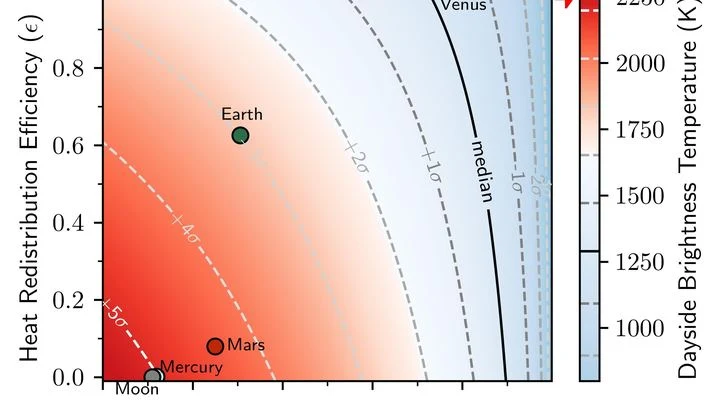
A hot skillet on the stove glows in the dark, but if you cover it with a lid, the heat escapes more slowly and the surface doesn't look as bright. That's roughly the situation on planet HD 3167 b: it always shows the same face to its star, and the dayside is heated to temperatures that melt rock.
Exoplanets2026-03-262 minarXiv:2603.24944express
Stellar Flares as a Source of Life
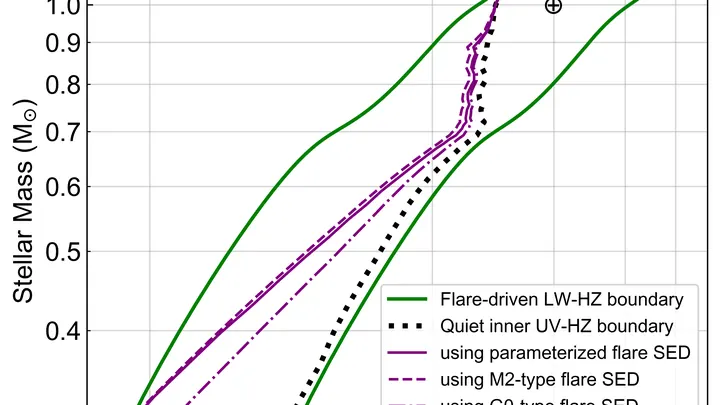
Water isn't the only thing life needs. To assemble the first RNA-like chains from simple molecules, you need ultraviolet light, like the sunlight that helps plants, but harsher and with shorter wavelengths. Big stars like the Sun emit plenty of this light. Small, dim stars, however, have almost none: they shine mostly in red and infrared, like a glowing ember.
Galaxies2026-03-191 minarXiv:2603.18775express
Galaxy Lit Up Just 330 Million Years After the Big Bang
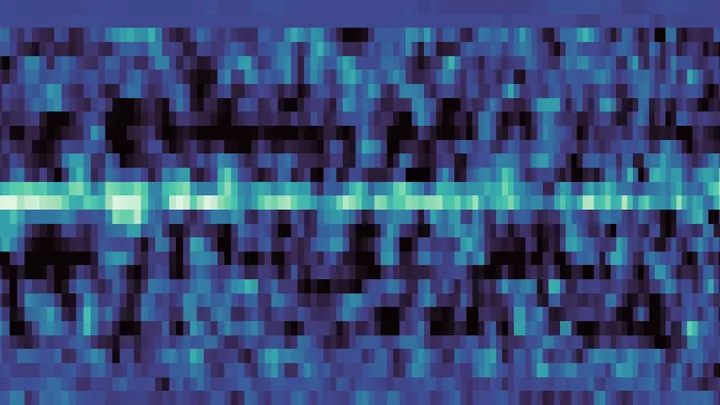
Light from a distant galaxy traveled to us for 13.4 billion years. The James Webb Space Telescope caught it and split it into colors. The spectrum shows a bright hydrogen line, like a fingerprint saying that galaxy GS-z13-1-LA is actively forming stars. Young hot stars inside the galaxy act like floodlights.
Galaxies2026-03-032 minarXiv:2603.03570express
Teenage Galaxies in a Crowd Grow Differently
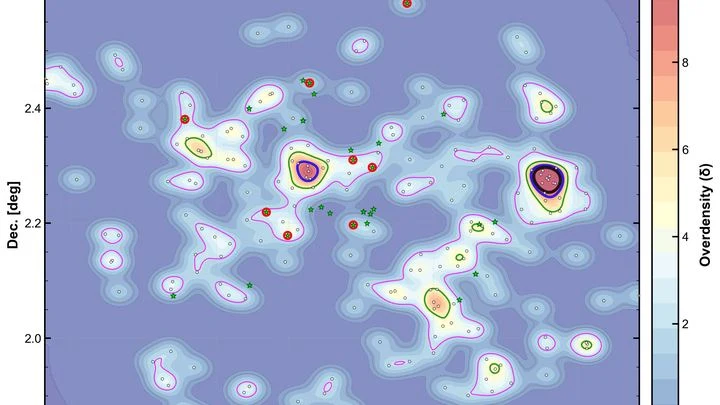
In the vast COSMOS field, where telescopes scrutinize thousands of distant galaxies, a special group stands out: four clumps of young galaxies spread over a patch of sky the size of several full moons. The main clump is so dense that it contains four times as many galaxies as the average across the sky.
Exoplanets2026-02-241 minarXiv:2602.20789express
Why Red Dwarfs Have Fewer Chances for Photosynthesis
Oxygenic photosynthesis requires splitting water. It's kind of like a water wheel: to make it spin, you need a strong current. Light acts as the current, and light particles are the streams. For red dwarfs, the most common stars, the light is "cool" and weak — the streams barely move the wheel.
Stellar2026-02-101 minarXiv:2602.09819express
The Solar Corona: A New Way to Measure Its Density
The solar corona, the Sun's outer atmosphere, stretches millions of kilometers, yet it's visible only during a total eclipse or with specialized instruments. Typically, we gauge the corona's density by how it scatters white light, but that method relies on simplifications that can skew the results.
Instrumentation2026-01-311 minarXiv:2602.00779express
How to Remove Sky Glow from Galaxy Images
At night, the sky is never completely black. Even far from cities, the upper atmosphere glows faintly: sunlight makes hydrogen atoms emit a reddish glow that astronomers call geocoronal emission. For a telescope, it's like a fogged-up window: it adds extra light and hinders seeing distant galaxies.
Biological Physics2026-01-212 minarXiv:2601.15106express
How a cell decides whether to survive radiation
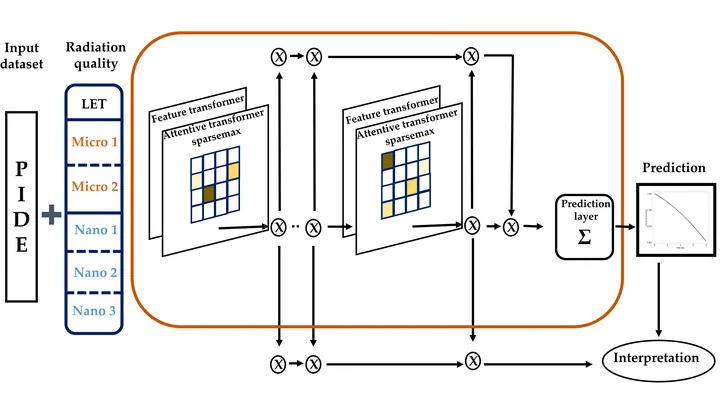
A cell hit by a proton beam is like a city after a pinpoint bombing: some blocks are leveled, others just have broken windows. Whether the city survives depends on which buildings are hit and how the strikes are distributed.
Exoplanets2026-01-131 minarXiv:2601.08306express
Titan's Age: Icy Moon Turns Out Younger Than Thought
Titan, discovered by Christiaan Huygens in 1655, resembles a canvas that is constantly being repainted. Impacts from cosmic dust and asteroids leave crater marks on it. But an invisible artist, the moon's own forces, time and again covers everything with a fresh layer, erasing old strokes.
Instrumentation2026-01-121 minarXiv:2601.08883express
The Colors of Life on Distant Planets
To spot life on other planets, you don't necessarily need to search for oxygen in the air. Living beings paint the surfaces of their worlds: Earth's plants in green, bacteria in purple. The future HWO space telescope will capture these "paints of life" on exoplanets.
Galaxies2026-01-091 minarXiv:2601.05507express
Alcohol in the Galaxy's Ice: What the Center of the Milky Way Hides
At the center of our Galaxy lies a dense forest of dust and gas. Starlight barely penetrates this thicket, like a flashlight in fog. But it is precisely there, in this dense cloud, that new stars are born. Scientists decided to look into this fog. They took light from 15 bright stars that shine through cold clouds.
Stellar2026-01-061 minarXiv:2601.03238express
The Solar Dynamo: Deep Beneath the Surface
The Sun doesn't rotate as a solid body: its equator spins faster than its poles. This difference in rotation speed creates layers that move at different speeds, like ocean currents at different depths.
Exoplanets2026-01-052 minarXiv:2601.02548express
Oxygen Dead End in a Red Dwarf System
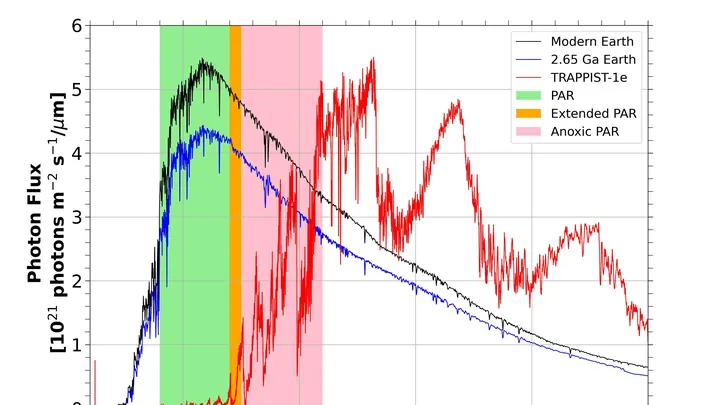
On the exoplanet TRAPPIST-1, oxygenic photosynthesis, the process by which light energy is converted into chemical energy with oxygen as a byproduct, is losing the race for survival. This M-dwarf star emits mostly in the infrared, not in the visible range like the Sun.
A Thermos with a Loose Lid: Super-Hot Super-Earth Has a Thick Atmosphere
The super-hot super-Earth TOI-561 b completes an orbit around its star in just 10.7 hours. It is a scorched rocky sphere, so close to its star that its dayside should heat up to 2950 K, a temperature at which many minerals melt.
nlin.AO2021-07-023 minarXiv:2107.00843
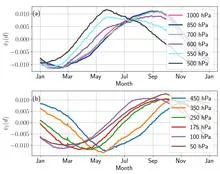
Ozone Sings in Many Voices: How Climate Stratifies by Altitude
In the vast concert hall of the atmosphere, ozone plays a part that changes from tier to tier. Near the surface, its notes sound alarming, for there it is a pollutant that irritates lungs and leaves. At 25 kilometers up, the same gas becomes a protective shield that absorbs harsh ultraviolet radiation.