Reflectivity, also called albedo, is the fraction of incident light that a surface reflects. For planets, it determines how much sunlight is bounced back into space versus absorbed, directly influencing surface temperature and climate. A high-reflectivity planet stays cooler, while a low-reflectivity one absorbs more heat. This property is key for understanding planetary atmospheres, detecting exoplanets, and studying dark matter interactions that might heat a planet's interior.
History
The concept of albedo was formalized by Johann Heinrich Lambert in the 18th century, and later extended by August Beer and others for planetary studies.
How it works
Reflectivity depends on the surface material, roughness, and wavelength of light. For a planet, it is measured as the ratio of reflected to incident radiation across the spectrum. Ice and clouds have high reflectivity, while oceans and dark rock have low reflectivity. The balance between absorbed and reflected energy drives the planet's energy budget.
In practice
Reflectivity measurements are used in climate modeling, satellite remote sensing, and the search for habitable exoplanets by analyzing their reflected light.
Fun fact
The Earth's albedo is about 0.3, meaning it reflects 30% of incoming sunlight, but this varies with cloud cover and snow extent.
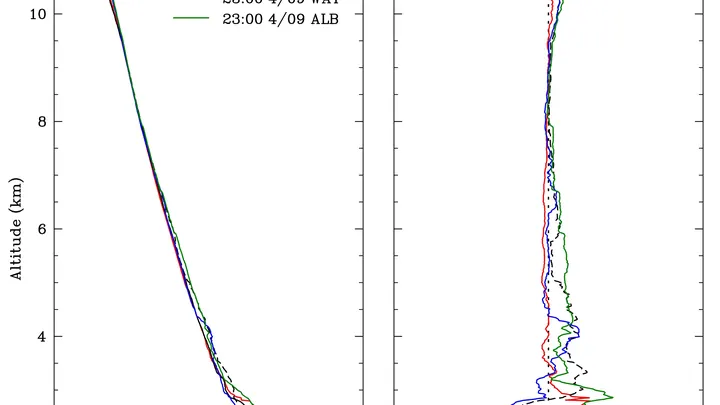
Every second, thousands of passenger aircraft in the sky transmit radio signals: that's how air traffic controllers track where each flight is. These signals don't travel in a straight line: air of varying humidity bends them like a lens. If you can measure that bending, you can work out where the air is drier and where it's more humid.
WASP-121 b is not just a hot ball. It's a world where iron vaporizes and the sky glows with its own heat. A fresh look at it has revealed what 'ingredients' went into making it.
The James Webb Space Telescope has for the first time clearly detected vaporized silicon monoxide in its atmosphere — a refractory substance usually locked inside dust grains.
When the light of a distant planet is split into colors, it suddenly jumps at the boundary between red and invisible infrared, as if someone flipped a switch. This is how the vegetation red edge manifests itself: chlorophyll is transparent to near-infrared radiation, and the leaf, to avoid overheating, reflects it away.
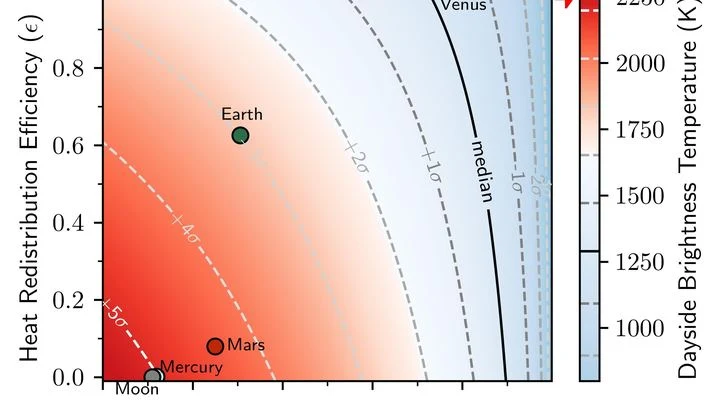
A hot skillet on the stove glows in the dark, but if you cover it with a lid, the heat escapes more slowly and the surface doesn't look as bright. That's roughly the situation on planet HD 3167 b: it always shows the same face to its star, and the dayside is heated to temperatures that melt rock.
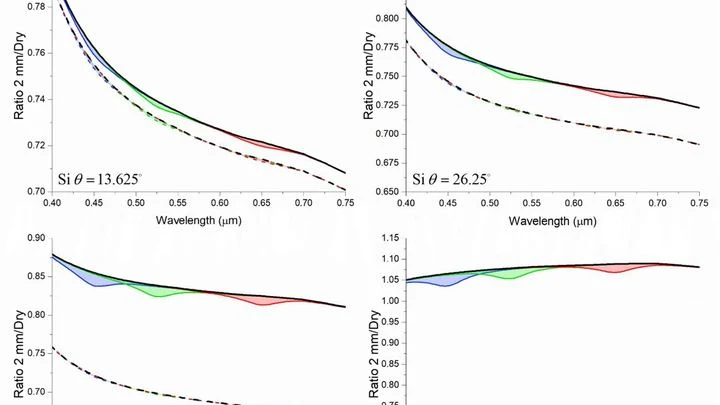
A water droplet on a leaf disappears faster under the sun than heat calculations would predict. A few years ago, a hypothesis emerged: light itself, without heating, could knock water molecules off the surface. This was dubbed the photomolecular effect. If it exists, clouds, climate, and even everyday clothes drying could work differently.
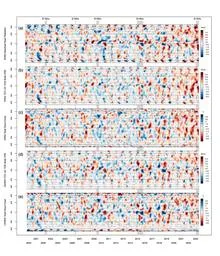
In the summer of 2023, thermometers around the world registered numbers that even the boldest forecasts had not anticipated. The planet's average temperature rose to 1.48°C above pre-industrial levels, a jump of 0.17°C that broke the previous record as if the climate had suddenly shifted gears.