Solar Wind: Fine-Tuning the Waves express
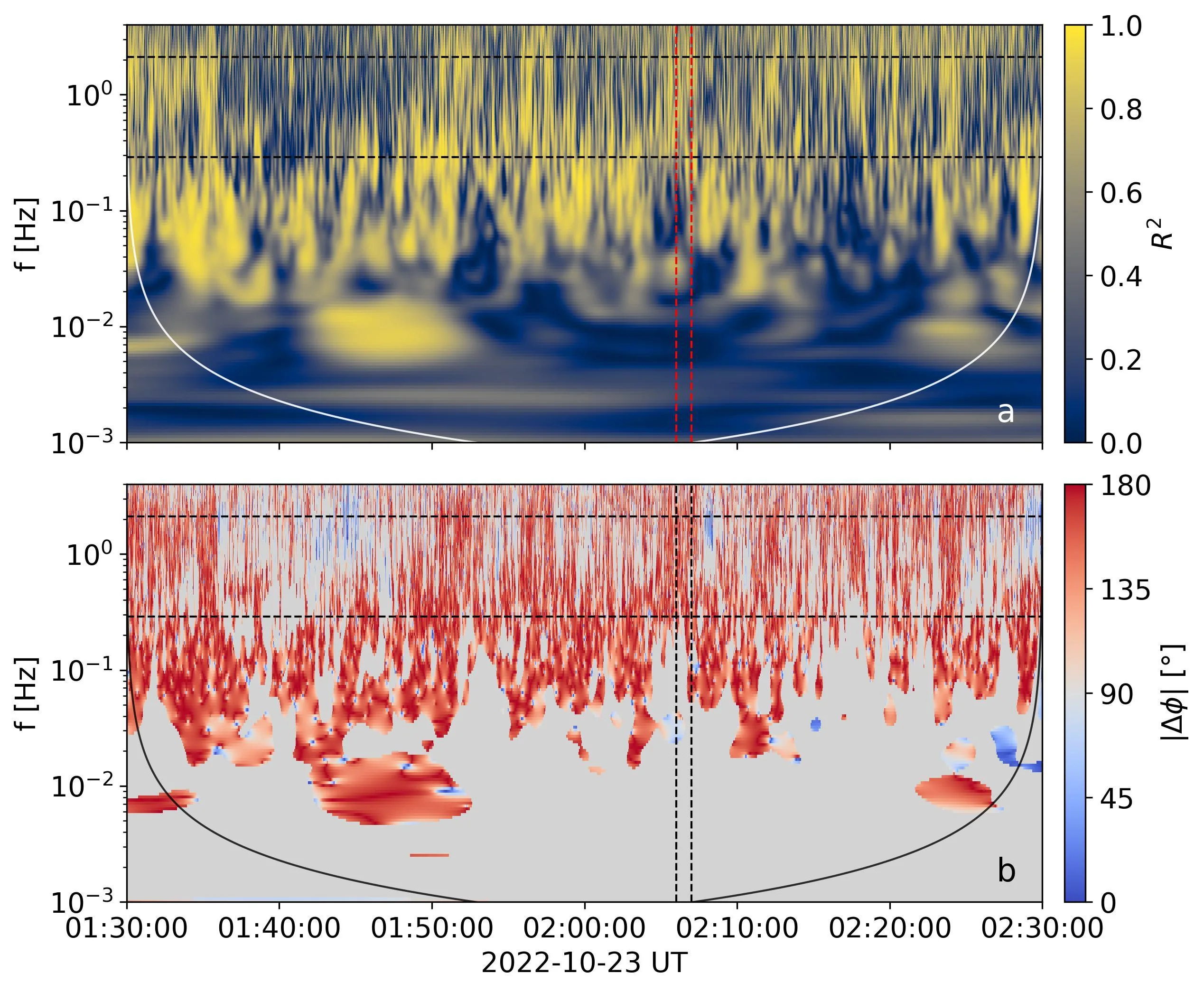
The solar wind isn't a smooth flow: it's gusty. Inside it, protons and helium nuclei don't all travel at the same speed; they spread out like droplets in a hose stream. Usually, this spread is described by a simple bell-shaped curve. But precise instruments on the Solar Orbiter probe showed that the velocity distribution is actually chiseled with small steps and bumps.
These irregularities are no triviality. They determine how sound waves behave in the solar wind. Such waves can either damp out, giving energy to particles, or grow instead. Scientists compared two calculations: one with the real, 'rough' distributions and one with simplified smooth ones. The difference turned out to be fundamental. The smooth model predicted the wave would quickly damp out. But the real data showed that the wave might not only avoid damping: it could even amplify.
This means that understanding space weather and the heating of the solar corona requires accounting for the fine structure of the flows. The broad strokes (temperature, average speed) don't tell the whole story. It's like cooking: two dishes with the same ingredient list can turn out completely different if you chop the ingredients differently.
Original abstract
as written by the authors arXiv:2604.14311
Observations of solar wind velocity distribution functions (VDFs) commonly reveal fine-scale structures. These features strongly influence kinetic processes such as wave damping and instability, yet their role remains poorly understood. We use a Gaussian Mixture Model (GMM) to separate proton and $$\alpha$$-particle (fully ionized helium) VDFs from Solar Orbiter Proton and Alpha-particle Sensor (PAS) measurements, and assess how measured VDFs affect the damping of compressive fluctuations with the Arbitrary Linear Plasma Solver (ALPS). We analyze the dispersion relation and polarization properties of ion-acoustic (IA) waves in the solar wind. Protons and $$\alpha$$-particles are represented by the measured VDFs derived from PAS observations. For comparison, we also perform calculations using the bi-Maxwellian assumption for the VDFs. Fine-scale structures of the measured proton VDFs reduce the damping rate of IA waves, even when $$T_e \simeq T_i$$. In some cases, we find that the measured VDFs drive the IA mode unstable, while the corresponding bi-Maxwellian representations predict strong damping. These results demonstrate that resolving the fine-scale structures of VDFs is essential for accurately capturing the kinetic physics of the solar wind.
The solar wind blows at speeds from 300 to 800 kilometers per second — faster than a bullet, but a thousand times slower than light.
In Arthur C. Clarke's novel 'Solar Wind,' characters race sailboats driven by the pressure of sunlight, and precise knowledge of the wind's gusts decides the outcome.