Galaxy Clusters: Where the Signs of Collisions Hide express
Giant galaxy clusters are cities of thousands of star islands, held together by gravity. Inside them, hot gas churns and glows in X-rays. If a cluster has recently collided with another, it develops clumps of galaxies and distortions in the gas, like ripples on water after a stone is thrown.
Astronomers took a catalog of hundreds of clusters assembled from optical images and used a clever algorithm to identify distinct groups of galaxies within each cluster. They then compared these groups with X-ray images of the same clusters. It turned out that 40% of clusters show noticeable clumps, and in a quarter of cases, these clumps account for more than a third of all the cluster's galaxies.
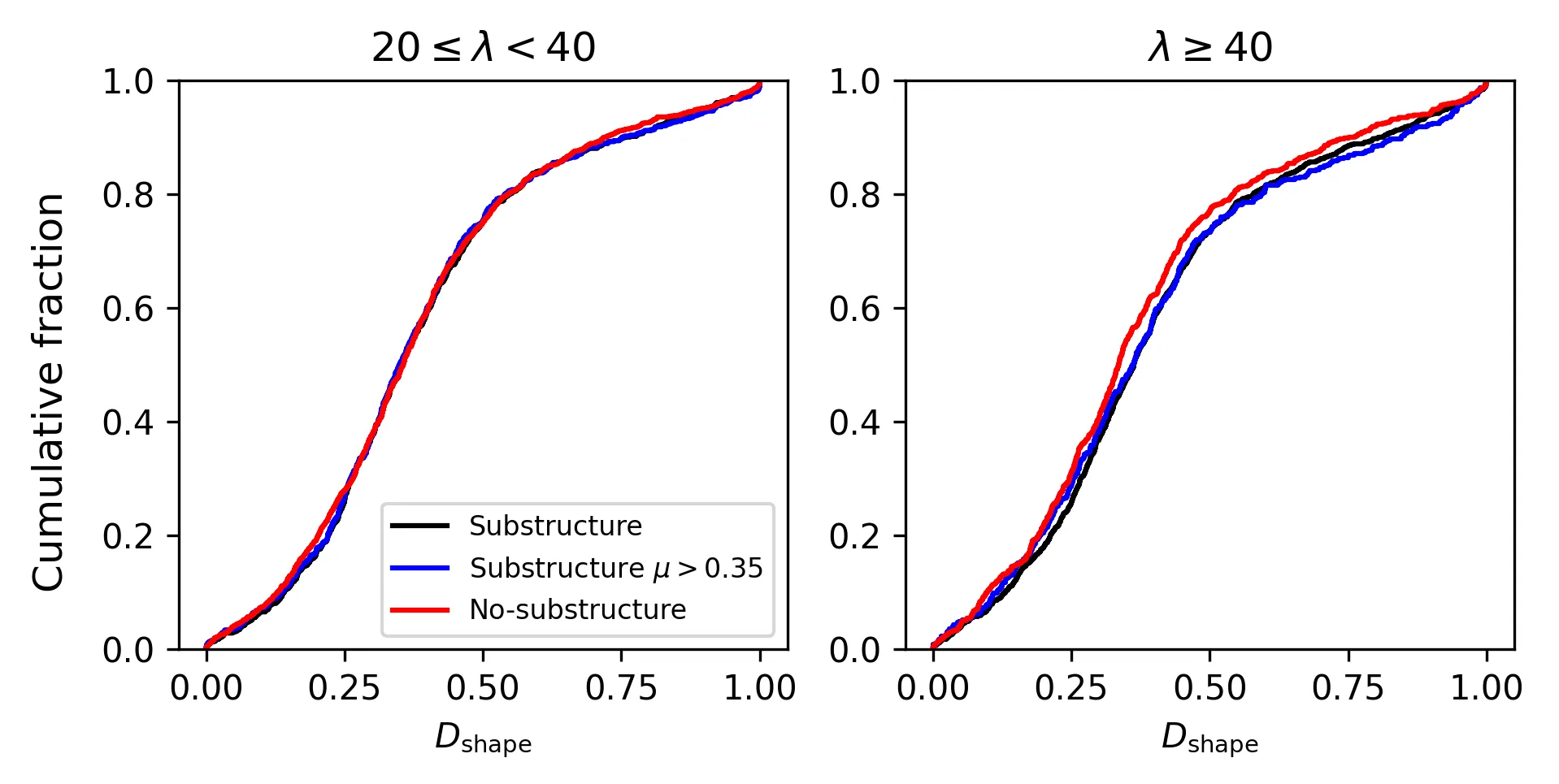
Clusters with clumps are more likely to have a disturbed, lopsided shape in X-ray light. This is especially evident in the most massive clusters. Moreover, among nearby clusters (out to a distance of about 2.5 billion light-years), those that have undergone a collision shine more brightly in X-rays than calm clusters with the same number of galaxies. For distant clusters, this difference is almost absent.
The reason, it seems, is that in nearby clusters the hot gas at the center is denser and cooler, so after an impact it stays compressed and bright for longer. In addition, in nearby clusters the clumps survive longer — magnetic fields, like an invisible film, prevent the gas from mixing and erasing the traces of the collision.
In smaller clusters, where there are fewer galaxies, the X-ray shape does not always indicate a collision. There, the central black hole takes the lead, injecting energy and reshaping the gas cloud on its own. So an X-ray image of a cluster is not just a photo; it's the story of its turbulent life.
Galaxy clusters are the largest objects in the universe held together by their own gravity. Some have masses of $10^{15}$ solar masses, and their diameters reach tens of millions of light-years.