Gravitational memory as a defect in the fabric of spacetime express
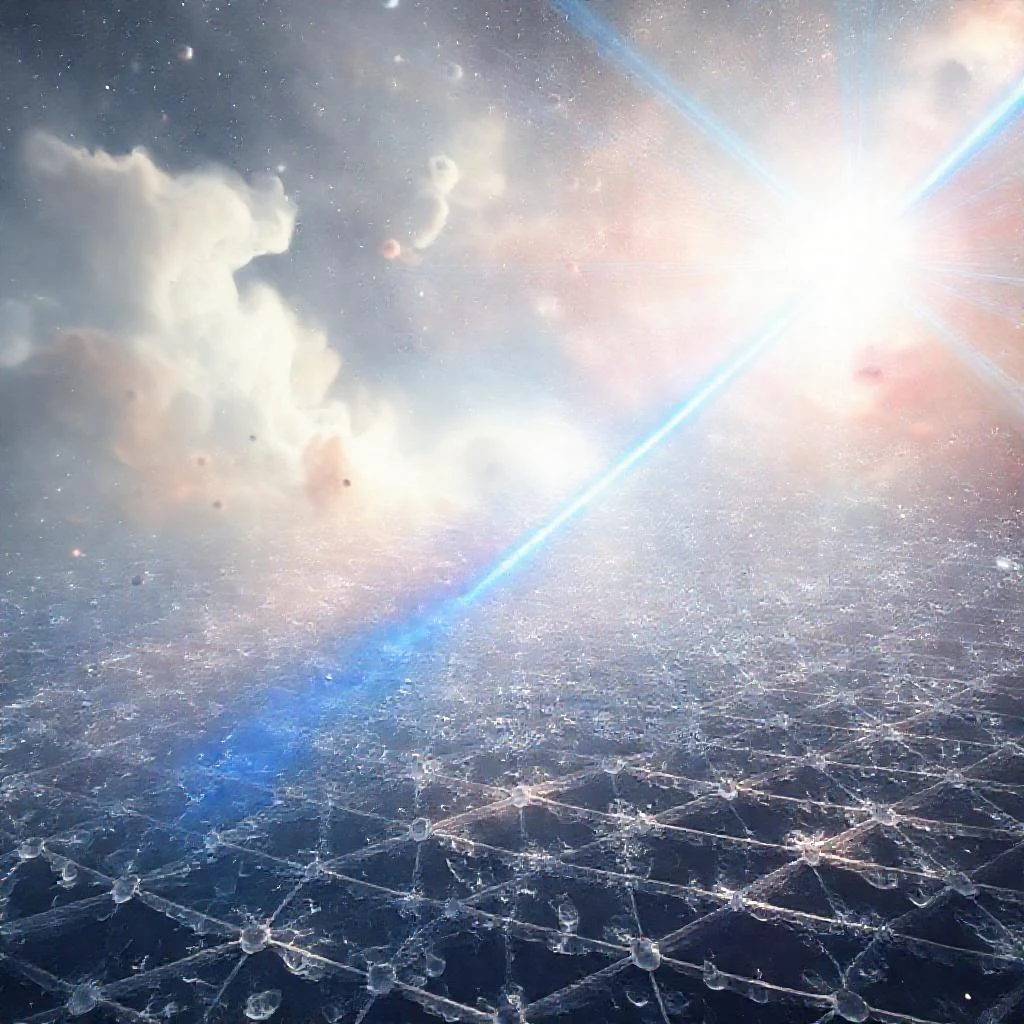
Spacetime resembles a giant crystal. Gravitational waves, born from collisions of black holes, not only make it tremble — they leave indelible defects: edge ones, as if an extra plane of atoms was inserted into the crystal, and screw ones, where the layers twist. This is gravitational memory — residual deformation that does not vanish.
Detecting this ripple directly has not yet been possible, but ultra-precise "celestial clocks" — pulsars — may allow it. Remarkably, the idea is not new: back in the 1970s, physicists predicted the effect, not by changing the theory of Einstein, but by proposing a visual model — much like how solid-state physics studies defects. John Wheeler compared this behavior of spacetime to living matter.
The very idea of gravitational memory emerged back in the 1970s, but directly detecting this effect remains a challenge — the expected shift is too small.