Teleparallel gravity is an alternative theory of gravity in which spacetime is flat (no curvature) but has torsion—a twist in the geometry that carries the gravitational interaction. Instead of describing gravity as the curvature of spacetime (as in general relativity), teleparallel gravity attributes gravity to a force field that acts on matter, analogous to the electromagnetic force. The theory is dynamically equivalent to general relativity in many respects, but it offers a different conceptual framework and can be modified to address open problems in cosmology, such as dark energy and the early universe.
History
The idea of teleparallelism dates back to Albert Einstein in the late 1920s, who attempted to unify gravity and electromagnetism using torsion. The modern formulation was developed by Kenji Hayashi and Takeshi Shirafuji in the 1970s, and it gained renewed interest in the 2000s as a framework for modified gravity.
How it works
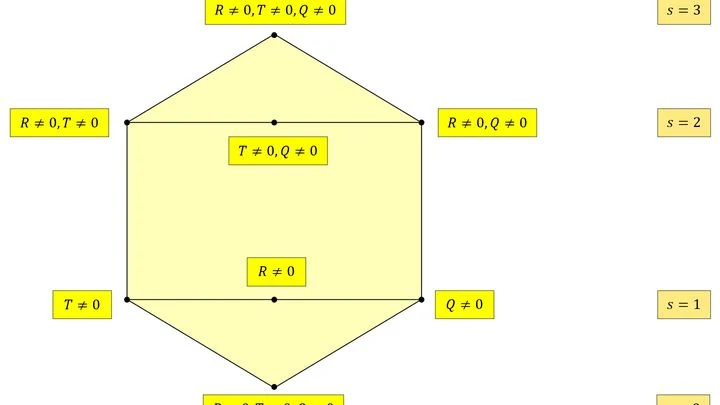
In teleparallel gravity, the connection (the rule for parallel transporting vectors) is chosen to have zero curvature but nonzero torsion. The gravitational field is encoded in a tetrad field, which relates the spacetimemetric to a flat, orthonormal frame. The torsion tensor measures how much a vector rotates when parallel transported around a loop. The action for the theory is built from the torsion scalar, which is quadratic in the torsion tensor, and it yields field equations that reduce to Einstein's equations in the appropriate limit. Modifications, such as f(T) gravity, introduce nonlinear functions of the torsion scalar to explain cosmic acceleration without dark energy.
In practice
Teleparallel gravity is primarily a theoretical tool used in cosmology to model dark energy and inflation, and it provides an alternative framework for quantum gravity research, though it has no direct technological applications yet.
Fun fact
In teleparallel gravity, the gravitational 'force' is local, meaning that the equivalence principle is implemented differently than in general relativity, yet the theory still predicts the same bending of light and precession of Mercury's orbit.
An ordinary mirror swaps left and right. Many laws of physics don't notice the swap: they are mirror-symmetric. But some phenomena, like the weak interaction, break this symmetry. Until now, it was thought that gravity and light each break mirror symmetry in their own independent way.
A pendulum in a noisy room is constantly jostled by people passing by. Its motion is a mix of regular swings and random jerks. Something similar happens with weak gravitational waves against the backdrop of an expanding universe. In Einstein's general relativity, these waves are tiny ripples in spacetime.
The Standard Model of particle physics is a catalog of all known building blocks of the universe: electrons, quarks, and others. But it is silent about dark matter and doesn't get along with gravity.
Usually, a black hole is described as a frozen frame: there's mass, there's charge, and it's all static. But real objects live in time. They radiate, lose energy, and change.
When two black holes merge far away, we receive a tremor of space — gravitational waves. Usually, they are described by Einstein's equations, but what if gravity works differently at the tiniest distances? The authors took one such hypothesis — Hořava–Lifshitz gravity.
Boson stars are gravitational atoms. Only instead of electric charge, gravity itself serves as the nucleus, holding a cloud of scalar field in quantized clumps.
An object cannot be a point. At least, not in Einstein's gravity. The equations of general relativity require that the source of the field, matter, be smeared out in space, not concentrated in an infinitesimal volume. Otherwise, infinities appear in the formulas, and a smooth spacetime cannot be constructed.
A ball sits in a pit. It won't roll out on its own: it needs a push. But in the quantum world, a particle can leak through a barrier without extra energy. This trick is called tunneling.
The boundary sets the rules
Quantum gravity is like a theater where spacetime is the stage and fields are the actors. When the stage has an edge, you need to know exactly what happens at the boundary; otherwise, the play falls apart. In 2018, Edward Witten proposed an elegant recipe for such a case.
The early universe was a restless place. Space trembled with gravitational waves — ripples in the very fabric of reality. In this churning cauldron, dark matter is thought to have been born. But the newborn particles had no mass: it had to come from somewhere.
Usually, the Higgs field is responsible for mass.
The Schwarzschild black hole is the simplest model in general relativity. But when you switch to teleparallel gravity (TEGR), where torsion replaces curvature, the horizon develops a problem. Some quantities built from torsion tend to infinity.
A builder checks the strength of an arch not by running through all possible shapes in their head, but by mentally nudging it and seeing how much force is expended. That's essentially how the principle of virtual work works in mechanics. The authors of a new study have applied this approach to the very geometry of spacetime.
They constructed a covariant framework of virtual work for the metric.
Gravity is usually explained through the curvature of spacetime. Massive bodies press it down like a bowling ball on a stretched rubber sheet. But this approach has two lesser-known twins. In one, gravity arises from torsion (twisting) of spacetime; in the other, from its non-metricity (when lengths and angles change during transport).
The Sun is not just a source of light but a giant laboratory where ghostly particles are born. Every second, billions of neutrinos fly through your body, barely noticing you. But inside the Sun, these particles behave differently: they change their type on the fly, like an actor playing three roles in a single play.
Inflation is the ultra-fast expansion of the universe in its first moments. It was driven by a field resembling a ball rolling down a hill. But there could have been a second, almost imperceptible ball nearby. The authors of this work considered exactly that scenario: a light spectator field (the axion), frozen at the top of its potential.
A flashlight beam travels straight into the dark: that's how we usually think of light. But near a massive body, like a star or a black hole, space is curved, and the beam bends smoothly, as if guided by an invisible hand. The authors of a new study have worked out exactly how gravity alters the familiar laws of electricity and magnetism.
Time is a fickle thing. Inside a massive star, it flows calmly, like sand in an old clock on a mantelpiece. Outside, on the scale of the entire universe, it stretches along with space, as if the same clock were in an elevator that speeds up and slows down. For a long time, physicists puzzled over whether these two worlds could be glued together without visible seams.
Two particles separated by kilometers change their states in concert, as if there were no distance between them. This is called quantum entanglement, and since its discovery it has baffled physicists: no known carrier can travel faster than light, yet correlations appear instantaneously.
A wormhole is a hypothetical tunnel in curved spacetime connecting two distant regions of the universe and potentially shortening the journey between them.
In the mid-20th century, Roger Penrose described a black hole using the concept of a “trapped surface” – a region where even a light ray directed outward inevitably falls inward. A situation familiar to everyone: water in a sink’s vortex is irretrievably sucked down the drain.
The weak equivalence principle, silently tested since the time of Galileo and laid at the foundation of general relativity, states: all bodies fall equally, regardless of their internal composition.
A mathematical doughnut, a torus, sits on the boundary of a three-dimensional world where gravity acts. You can crumple and stretch it, and physicists decided to see how it behaves. Inside this world, space can be flat like a table, expanding like a soap bubble, or curved like a saddle. The doughnut boundary refused to stay smooth.
A stone falls into a pond, and ripples spread across the water. They reflect off the shore, overlap, and die out. All this motion unfolds in space. But what if the pond itself changed its depth or density for an instant — not at one point, but everywhere at once? A temporal boundary is exactly such a jump in properties over time, not space.
At the heart of an active galaxy, where interstellar gas spirals into a dazzling accretion disk around a supermassive black hole, a boundary is born through which even sound cannot break. This acoustic horizon was long considered frozen ripples on water.
A magnetic field can hold a star against complete collapse: that's the idea behind a new kind of black hole. Instead of the usual point of infinite density, inside there is a field that prevents space from crunching down to zero. It's like a spring: the harder you squeeze, the more it pushes back.
Spacetime resembles a giant crystal. Gravitational waves, born from collisions of black holes, not only make it tremble — they leave indelible defects: edge ones, as if an extra plane of atoms was inserted into the crystal, and screw ones, where the layers twist.
A huge orchestra is tuning up before a concert. Each instrument makes its own noise, and in the general hubbub it's hard to pick out individual sounds. But if the conductor gives a special flick of the baton for a second, all the violins will simultaneously hit one high note, and that pure tone will cut through the cacophony.
A balloon is being inflated faster and faster. At first, it stretches smoothly, but at some point, the pump stutters — the speed drops, then picks up again. During this brief respite, tiny bubbles appear on the rubber. As inflation resumes, they turn into dense knots.
Something similar happened to the universe itself right after the Big Bang.
You are pacing a huge hall in complete darkness. You walk from wall to wall, counting your steps, and suddenly realize that the distances don't add up as they should. It seems as if the floor is not flat but bulging like a hump or hollowed like a bowl. That's roughly what astronomers found when studying distant galaxies and sound waves frozen in the early Universe.
A broken guitar string doesn't just go silent. It still vibrates for a while, and by the character of that vibration, a luthier can tell what kind of string it was — thick or thin, tightly wound or loose. In much the same way, physicists listen to the "vibration" of quantum systems when they want to understand their structure.
Normally, current flows equally well in both directions if there's no magnet. A magnetic field or magnetic material breaks that symmetry: electrons start to prefer one direction. But in a new study, physicists found a way to do without magnets.
In a crystal, atoms may not sit perfectly ordered but with some disorder.
The universe is expanding, but at what rate is a question that has been troubling astronomers for decades. Two methods of measurement give different answers, and this discrepancy is called the Hubble tension. Some look at the early universe through the cosmic microwave background, others at nearby supernovae and Cepheid variables.
Time is a one-way road: events race forward with no U-turn allowed. The arrow of direction is governed by entropy — a measure of disorder, which only grows in the Universe, like a traffic jam at rush hour. You can clear one intersection, but the overall congestion only gets worse.
Setting up an orchestra without a conductor: the algorithm itself decides which instruments (basis functions) and at what volume (weights) should play to reproduce Earth's gravitational symphony.