Space Weather by the Seasons express
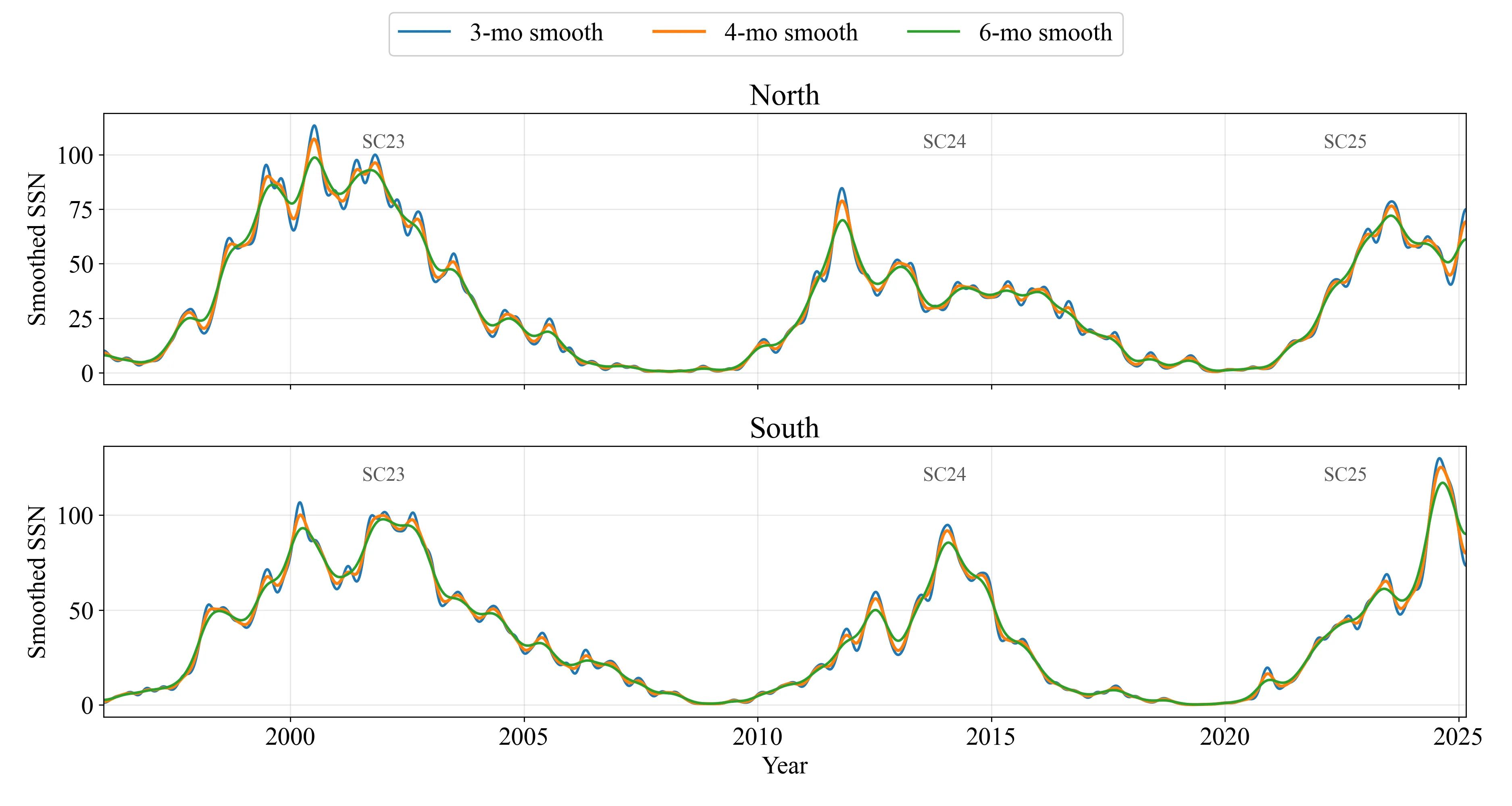
The Sun doesn't burn steadily: it erupts in series. Like a campfire that dies down and then suddenly throws out showers of sparks, these "fiery seasons" last from six months to a year and a half, and during them the star shows an unusually high number of sunspots. A team of researchers took sunspot data going back to 1878 and taught a computer to recognize when the next fiery outburst is approaching.
Instead of looking at the Sun as a whole, they split it into north and south. Each hemisphere follows its own rhythm: the north peaked at about 70 spots in March 2025, while the south went wilder — up to 130 spots at nearly the same time. The difference was captured using a mathematical model similar to predicting seasonal sales in a store: it accounts for both smooth trends and sharp jumps.
Then came the "forest predictor"—the random forest algorithm, which learns from examples. It was fed hundreds of past surges and learned to guess how strong the next one would be. This hybrid of statistics and machine learning already correctly pointed to the rise in activity in late 2024 and early 2025. The next flare-up is expected in December 2025, with the southern hemisphere again setting the tone. The overall strength of the storms depends mostly on it.
A sunspot the size of a small city can trigger a magnetic storm on Earth that knocks out navigation systems.