Game or simulation: what’s the best way to learn the photoelectric effect? express
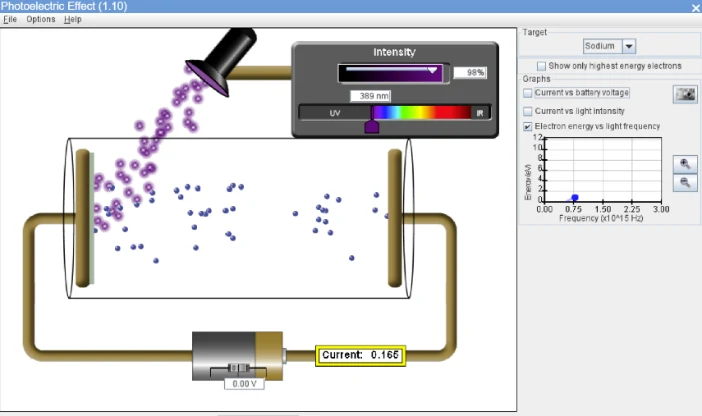
Understanding the photoelectric effect — where light knocks electrons out of a material — is like learning to cook without a recipe. That’s where digital tools help: games provide intuition, and simulations provide precision.
Researchers tested 55 students: one group first played 'Photon Jump' (experimenting with light particles), then moved to a PhET simulation; the other group did the opposite. They enjoyed the game much more. Surprisingly, even those indifferent to computer games got into 'Photon Jump' no less than gamers.
It turned out that the game sparks excitement and instinct, while the simulation sharpens knowledge. They work best together, like a self-taught cook who first experiments and then checks the recipe book. This approach is widely used in spectroscopy — analyzing the composition of substances by light.
Albert Einstein won the Nobel Prize precisely for explaining the photoelectric effect, not for the theory of relativity.