Digital twintraining is a machine learning approach where a simulated digital replica of a physical system is used to generate training data for models, especially when real-world data is scarce or expensive to obtain. The digital twin is a high-fidelity simulation that mimics the behavior of the physical system, allowing the model to learn from a vast amount of synthetic data. This technique is particularly valuable in fields like medical imaging, where collecting large datasets from real patients is difficult, or in industrial settings where running physical experiments is costly.
History
The concept of digital twins has been around since the early 2000s, popularized by Michael Grieves, but its use in trainingmachine learning models has grown significantly in the 2010s and 2020s with advances in simulation and deep learning.
How it works
The process involves creating a detailed simulation of the physical system, which can be based on physics-based models or learned from limited real data. This simulation is then used to generate a large dataset of input-output pairs, which are used to train a machine learning model. The model learns to map from the input (e.g., sensor readings) to the desired output (e.g., a reconstructed image or a classification). Once trained, the model can be applied to real data, often with fine-tuning on a small set of real examples to account for any discrepancies between the simulation and reality.
In practice
Digital twintraining is used in medical imaging to train models for MRI and CT reconstruction, in autonomous driving to train perception models in simulated environments, and in industrial predictive maintenance.
Fun fact
Digital twintraining allows models to be trained on millions of simulated scenarios in a fraction of the time it would take to collect real data, and it can even simulate conditions that are dangerous or impossible to create in reality.
Diamond is not just a gemstone. Hidden inside its crystal lattice are defects that sense magnetic fields better than many instruments. One such defect, the NV center, acts as a tiny compass, but its needle wavers from heat and noise. For the compass to point accurately, calibration is needed.
The proton beam is like a sniper's bullet: it delivers most of its energy at a precisely set point, barely touching tissues on the way in. But over 4–6 weeks of head and neck tumor treatment, the target shifts: the patient loses weight, the tumor shrinks, posture changes. The sniper aimed at one spot, but the target has already moved.
The robot juggler catches and throws balls in precise rhythm with a human, like two пульсара sending pulses in unison. Juggling three balls is a classic cascade, governed by a steady beat, like the uniform rotation of a cosmic lighthouse. Break the rhythm and the pattern crumbles.
In any city project, residents' behavior is a invisible force that determines success. One skeptical neighbor can slow down solar panel installation across an entire block: their caution triggers a rise in disorder.
A cook who learns to cook from hand-drawn pictures risks ruining every dish. The same trap awaits computer vision: models need thousands of labeled images, but collecting them manually is expensive and tedious. Synthetic frames solve the problem, but only if they look real.
When you type 'salad' and the keyboard suggests 'Caesar,' behind the scenes millions of phones are jointly learning to predict words. They share not your messages, but only improvements to the common algorithm, like a coach who sends athletes only the tweaks to the plan: 'add 5 push-ups to yesterday’s routine.' Information entropy helps send only unexpected, valuable updates.
Imagine a fleet of many ships, resembling a galaxy — a vast stellar system where every element follows the overall dynamics. From time to time, one ship breaks down, exploding like a supernova — a catastrophic event that can disrupt the integrity of the entire formation. If the damaged unit isn't replaced in time, the fleet loses combat capability.
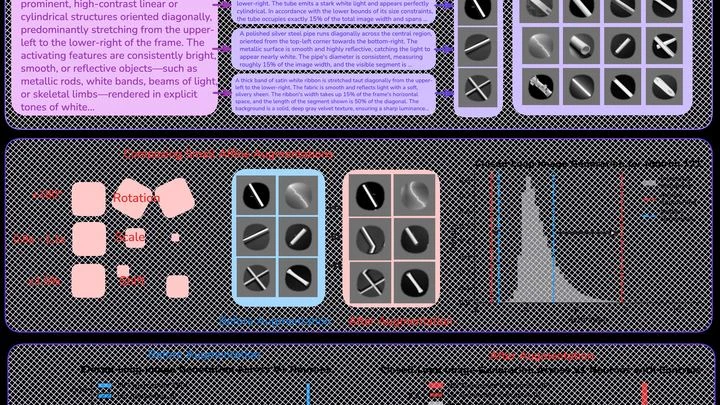
In brachytherapy, thin catheters are inserted into tumors. On CT scans, they look like tangled glowing threads. Previously, doctors would manually outline each one, spending up to an hour.
The new algorithm learns from synthetic scans — drawing metal strips in an empty volume, like threads without a body.
DFTB is a high-speed train in the world of quantum chemistry: hundreds of times faster than classical DFT, yet still on electronic rails. But its engine — iterative self-consistency of charges — sometimes resembles an orchestra where each instrument starts from an arbitrary note.
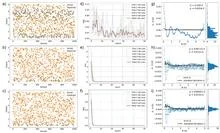
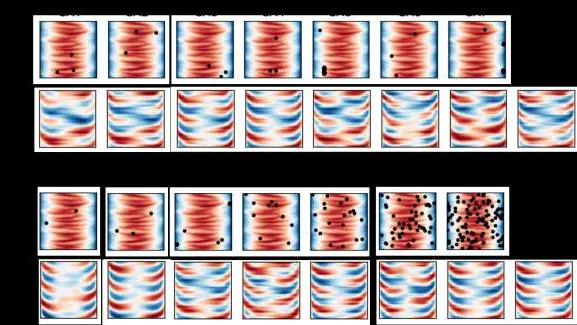
Inside a fusion reactor, plasma rages — a gas heated to millions of degrees. There are no direct windows, and cameras and sensors quickly fail. Engineers see only fragments of information: a few sensors at scattered points. It's like trying to grasp a symphony from the sound of three microphones in a vast hall.
Molecules float in a pot of broth. Some copy themselves, others help their neighbors, and still others just get in the way. This isn't soup: it's a model of early life: a replicator system. Usually, we assume the rules of the game are fixed once and for all: whoever reproduces fastest wins. But the authors of this study proposed something different — the rules can change too, just very slowly.
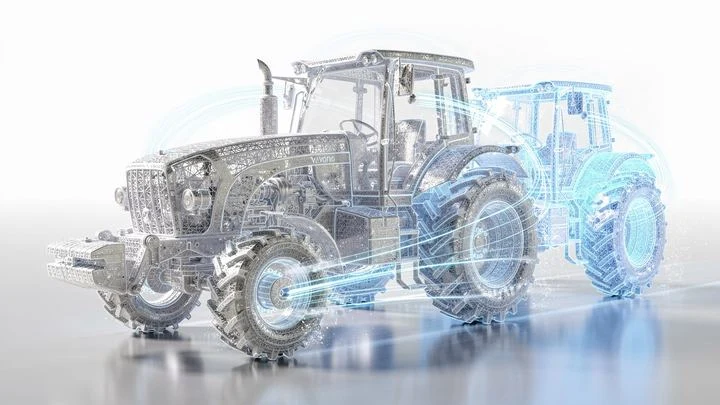
The tractor traces a perfect circle on the stubble. At that same moment, its digital shadow, an exact virtual copy, repeats the maneuver on a computer screen, diverging from the original by only a few percent.
The number −0.000459 is no random guest in the Blasius equation. It's the coefficient of η⁵, defining the boundary layer on a flat plate — a thin whisper of air friction against metal. Standard numerical methods like Runge–Kutta yield only an approximate curve. Physics-informed neural networks (PINNs) try to guess the entire solution. Often — unsuccessfully.
Quantum spin chains resemble a line of people passing along a secret handshake: each turns to a neighbor, and how firmly they clasp palms determines how the wave runs through the entire chain. In the ideal Heisenberg chain, quantum magnetism’s bedrock, all handshakes are equal.
Today's Freon-based refrigerators and air conditioners silently poison the atmosphere. An alternative is solid-state caloric materials that cool under rapid pressure changes via the barocaloric effect.
Training a large neural network across hundreds of compute nodes is like making soup as a team: each 'chef' tastes the dish and tells the others what to adjust.
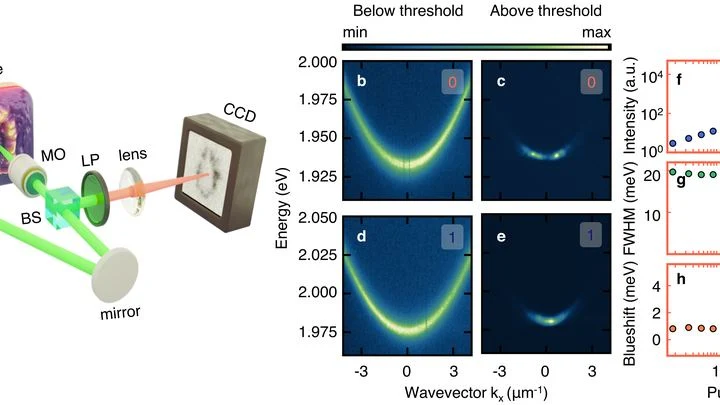
Generative neural networks that create images typically rely on digital randomness. But a team of researchers built a system where randomness is born not in code, but in a tiny optical cavity filled with an organic dye.
A grand symphony orchestra plays, but each group of instruments follows its own score without hearing the others. The violins carry the melody of the heart, the cellos the rhythm of the liver, and the woodwinds the pulse of the brain. It sounds disjointed, even though each part is flawless on its own.
Understanding the photoelectric effect — where light knocks electrons out of a material — is like learning to cook without a recipe. That’s where digital tools help: games provide intuition, and simulations provide precision.
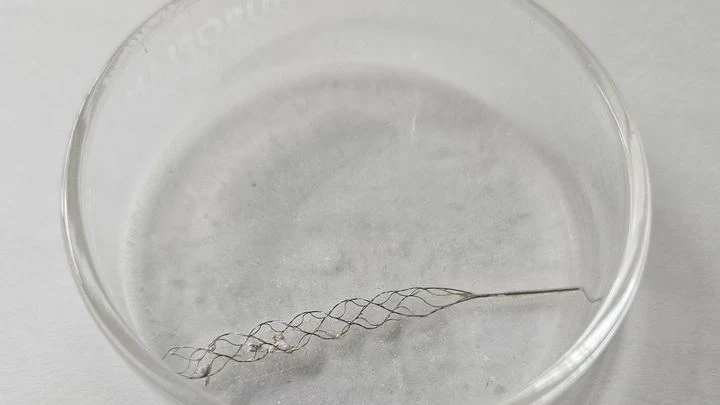
A plumber clears a clog in a narrow, winding pipe — by feel, without seeing inside. That's roughly how a surgeon feels during mechanical thrombectomy, the operation to remove a blood clot from a brain vessel. Time is short, and every move can either save a life or damage the vessel wall.
Your arm lifts a cup from the shelf — a familiar motion you don't notice until muscles tire. Then the trajectory changes: the elbow shifts slightly, the hand trembles. A doctor usually catches these changes by hand, feeling the patient's muscles.
An artist paints a picture, glancing at the audience in the hall. If the viewer smiles, the artist adds more red and rounded lines to the canvas; if the viewer frowns, the artist removes blue and sharpens the angles.
The vessels inside the skull resemble a mountain road's hairpin turns — sharp bends, narrowings, unexpected curves. When a traffic jam forms on such a serpentine, blood stops reaching the brain properly. To predict trouble, doctors need to see the entire flow: where it accelerates, where it swirls into eddies. The full picture comes from a special MRI, like slow-motion cinematography of fluid.
A pot of water boils, and molecules break into a chaotic dance. You cannot stop that moment or freeze the dance, but in the quantum world there is a workaround: you can create a 'double' of the system that stores all the information about its thermal state.
You taste a fruit smoothie through two different straws. One lets through only the big chunks, the other only the liquid. Individually, the sensations are misleading, but together they give you the key: here, it seems, is banana, and here, strawberry.
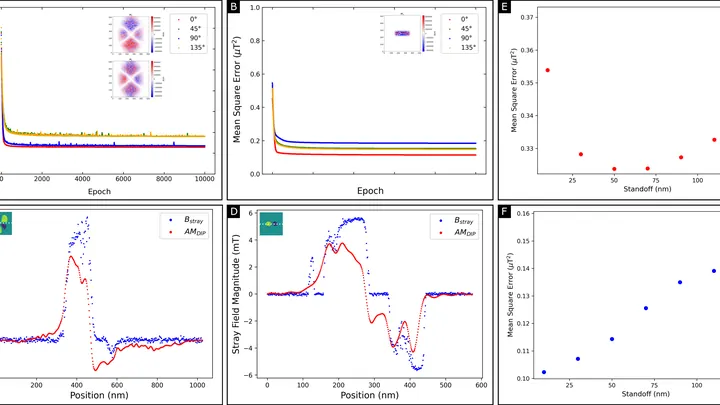
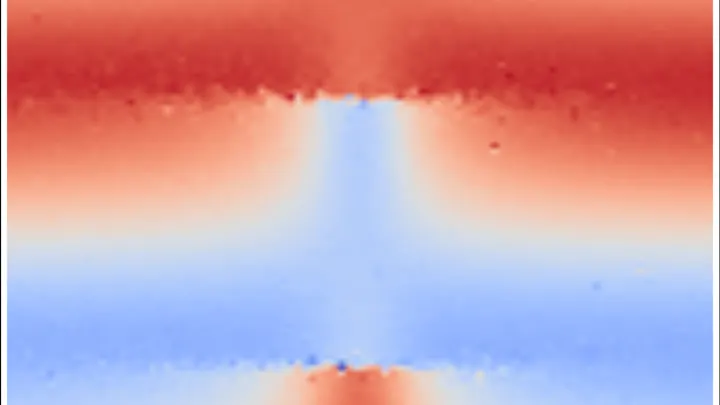
A magnetic film just tens of atoms thick stores information in tiny magnetic vortices. But you can't look inside and see these vortices directly: the instrument only senses the weak magnetic field around the film. Reconstructing the magnetization pattern from such a field is like guessing the shape of an invisible relief from its shadow on a wall.
The old paint on one board has already dried, and the new coat hasn't been applied yet, but you need to know which one protects better against rain. Usually, you'd paint two boards and wait a year. The researchers did something different: they taught a computer to predict, from old photographs, how the same board would look under a different paint. No real experiment needed.
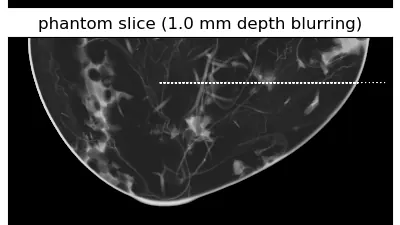
The X-ray machine moves around the breast in an arc, taking several images from different angles. From these flat frames, the computer assembles a 3D picture, like putting together a mosaic from pieces. But if the mosaic pieces are crumpled or smudged, the picture turns out blurry. In tomography, the role of "crumples" is played by noise and imperfections in the imaging.
A kettle cools on the table. Heat escapes into the air, and is wasted. Yet you could squeeze a bit of electricity out of it. Devices that can do this are called thermomagnetic generators. Inside them, there are no pistons or turbines — only a material that changes its magnetic properties when heated and cooled.
Seismologists listen to the Earth the way a doctor listens to a heart. Surface waves from earthquakes travel across the planet, and their speed reveals what lies beneath our feet — solid rock, melt, or water. Usually, this requires building complex physical models.
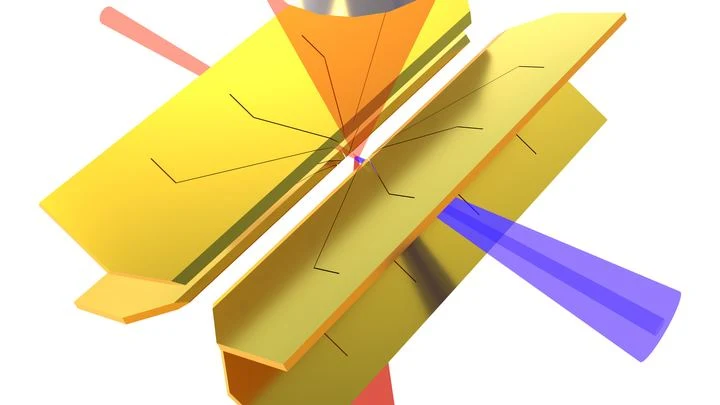
A laser strikes a tiny glass grating, and electrons passing through it are accelerated. You can't see inside, so you judge what's happening by the energy of the electrons after acceleration, like judging the shape of a stone by the splash it makes.
Scientists built a digital twin: a computer model that mimics the behavior of the real accelerator.
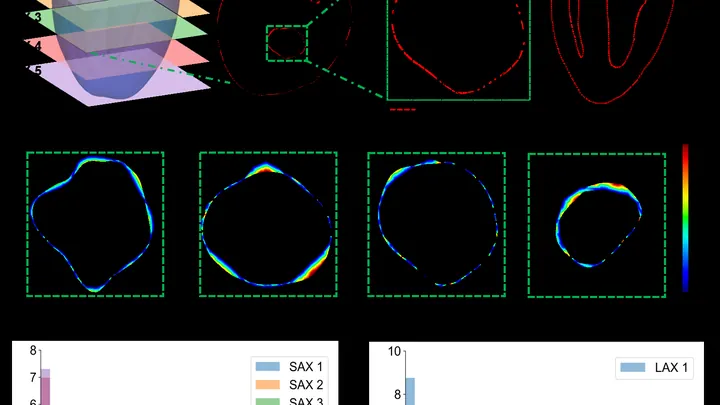
The heart is not a perfect sphere; its shape changes with every beat. To build an accurate 3D copy for a computer model, doctors typically take dozens of MRI slices. But that's like assembling a watermelon from thin slices: the fewer slices, the more guesswork.
A new approach teaches a neural network to understand the heart's shape from sparse contours.
A typical machine learning model looks at one object at a time: one brain, one patient, one engine. But biologists need the big picture: how the brain of a species works as a whole, not just that of a particular fish.
Fibers in composites, paper, or biological tissues are often hidden from view, but their orientation determines the strength and properties of the material. Previously, to see fiber directions, you had to take many images at different angles and assemble a three-dimensional picture, like slicing a loaf of bread into thin pieces. For thin samples, this approach doesn't work: you can't slice what isn't thick enough.
A chunk of nuclear fuel inside a reactor is not just a solid. When heated, the uranium atoms in it start to 'wiggle' their magnetic moments, and this motion changes thermal conductivity and other properties.
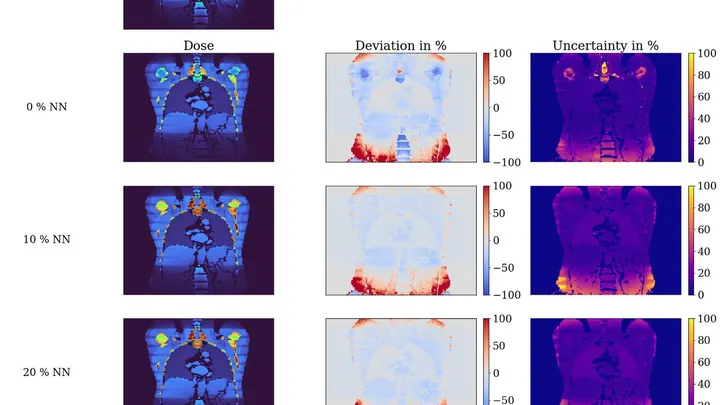
Computed tomography is like an X-ray that takes hundreds of images from different angles and stitches them into a 3D picture of the body. But each image delivers a small dose of radiation, and doctors need to know how much each organ receives. Currently, this is often estimated roughly using average tables rather than for the specific patient.
Regular quantum communication is like a postal service that sends letters strictly one at a time. If the route is long, you have to wait an indecently long time for a reply. Physicists sped up the process by dispatching ten 'postal trucks' — light pulses — into a single optical fiber, but in different time windows.