String and Light: How to Tune Their Dance express
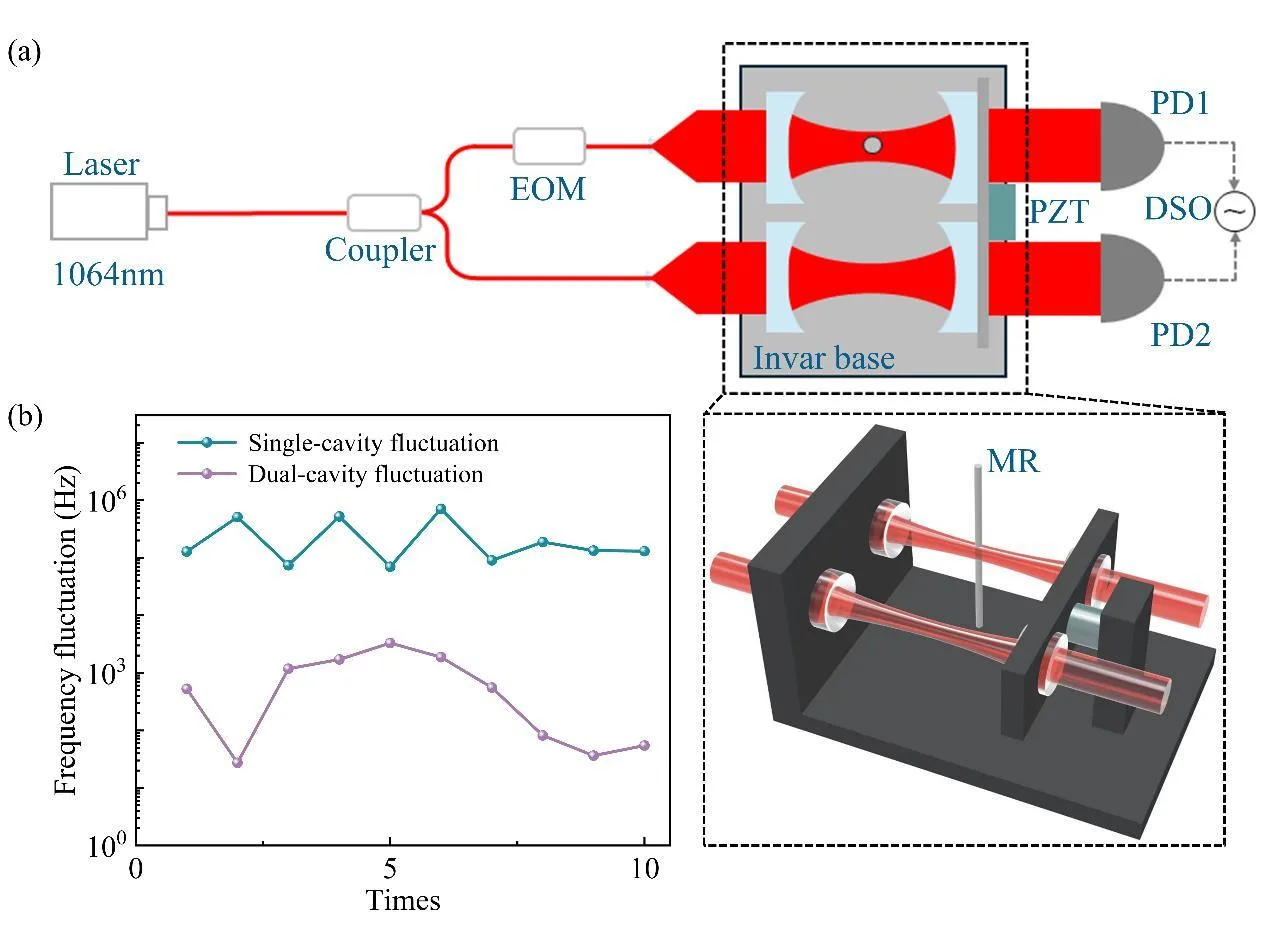
A guitar string is stretched between two mirrors. A beam of light bounces back and forth between them, and the string shudders at every touch. Sometimes the light loses energy — the string takes it and dissipates it as heat, like a fading sound. Other times, the string shifts the pitch of the light itself, changing its color but barely dimming it.
In the new work, physicists built a device where these two effects, energy loss and color shift, can be smoothly blended. All it takes is moving the string relative to the light spot. The researchers used ultra-thin filaments of different materials and varied their diameter. When the string sits at the very center of the light beam, energy loss dominates. If you shift it toward the edge, the color shift starts to prevail.
This trick is not just for fun. It allows you to explore both the quantum limits of measurement precision and exotic states where a massive object like a string behaves according to the laws of the microscopic world — all on the same setup. Previously, you had to build a separate instrument for each regime; now you just move the string by a fraction of a millimeter. One musical instrument can become a violin or a drum at will.
Original abstract
as written by the authors arXiv:2606.10318
We demonstrate an optomechanical system with tunable dissipative and dispersive couplings using a Fabry-Perot cavity and a string mechanical resonator. By varying the diameter and material of the mechanical resonator, and the relative location between the mechanical resonator and the cavity, the relative strengths of dissipative and dispersive coupling could be tuned continuously from dissipation-dominated regime to dispersion-dominated regime. In our experiments, the dissipative-to-dispersive coupling ratios of 1.3 and 0.6 are achieved by using two different mechanical resonators, corresponding to a transition from dissipation-dominated to dispersion-dominated optomechanical system. Theoretically, the coupling ratio could be tuned from 25 to 0.02 by optimizing the mechanical resonator, spanning over three orders of magnitude. These two distinct coupling regimes are achieved with the same experimental platform. The capability to freely adjust the coupling ratio provides a versatile platform for exploring quantum effects of massive mechanical resonators and quantum-limited measurements.
In these experiments, the string was tens of times thinner than a human hair, and its vibrations were measured with precision down to thousandths of a nanometer — roughly like noticing that the Eiffel Tower had lifted by the thickness of a sheet of paper.
In Stanislaw Lem's novel "Solaris," the planet's ocean reacts to the presence of humans by changing its physical properties — somewhat similar to how the string here changes its behavior depending on where the light falls.