The Zero-Energy Trap express
You're looking for a quiet room for an important conversation. You step into a space, and hear silence. But upon closer inspection, you find that in one corner the ventilation is simply broken, and in another there's a hole in the floor that absorbs sound. In much the same way, physicists hunt for Majorana zero modes — special excitations in superconductors that could become ideal building blocks for quantum computing. They are impervious to interference, like a conversation in a perfectly isolated room.
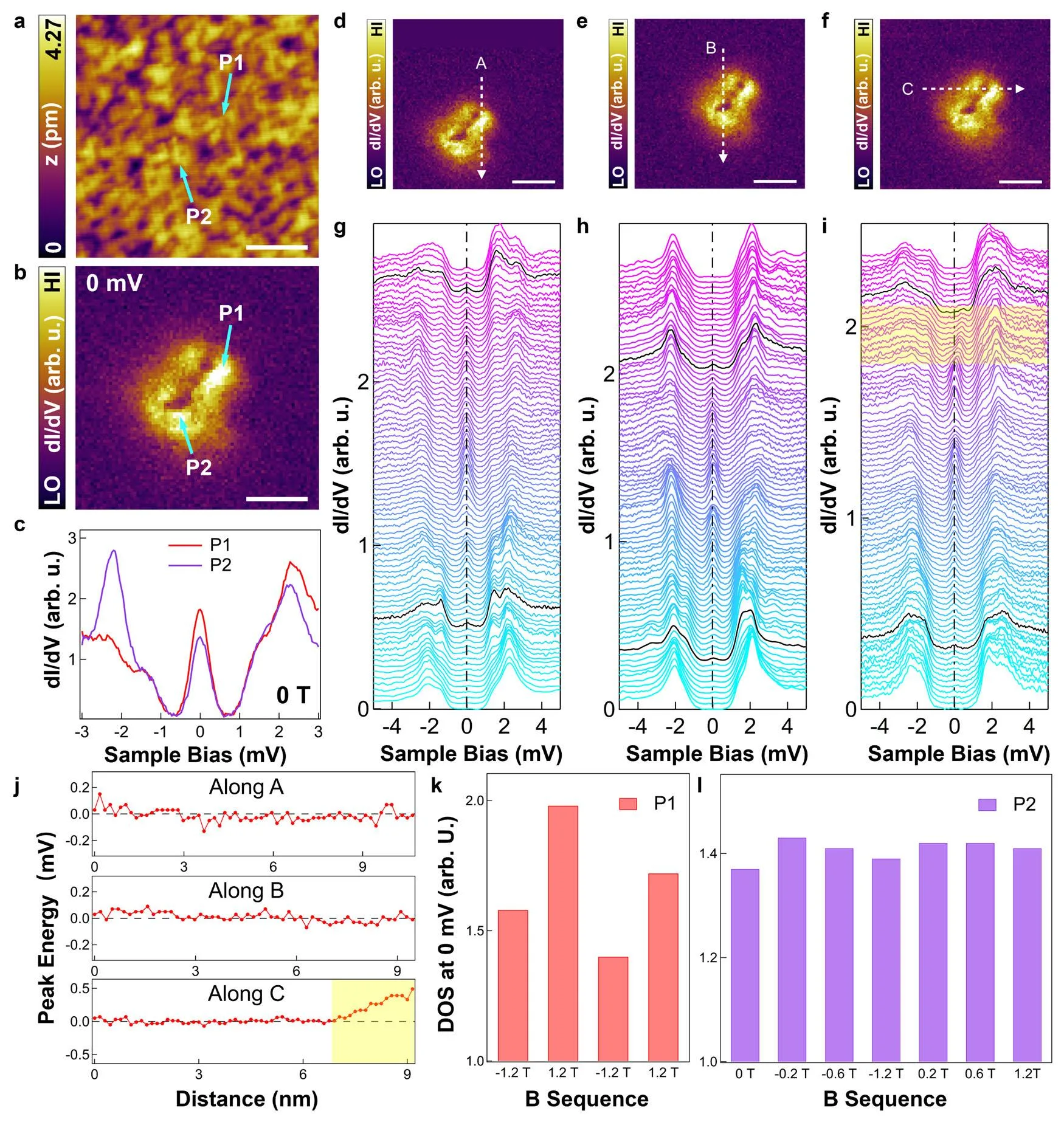
In the new study, researchers examined the surface of an iron-based superconductor, Fe(Te,Se). Using a scanning tunneling microscope sensitive to electron spin, they found near-zero-energy states at step edges and line defects. These states looked exactly like Majorana zero modes. But they turned out to be "silence from a malfunction"—topologically trivial Yu-Shiba-Rusinov states that arise from impurities.
Even in regions without visible defects, bound states with zero energy were found. Combined analysis, spatially and under magnetic field, showed that these, too, have nothing to do with Majorana fermions. It's like finding a perfectly quiet room but realizing the silence comes from a vacuum around it, not from good soundproofing. This work reminds us: without spin measurements, the race for a quantum computer risks running into a mirage.
Majorana zero modes are named after the Italian physicist Ettore Majorana, who predicted particles that are their own antiparticles and mysteriously disappeared in 1938.