Fermions are divided into leptons (electron, neutrino) and quarks (which make up protons and neutrons). They share a spin-½, which forces them to follow Fermi–Dirac statistics—a mathematical expression of the exclusion principle. When a gas of fermions is cooled, all lower energy levels are filled up to a boundary—the Fermi energy. This Fermi surface explains the electrical conductivity of metals: only electrons near the boundary can move. The pressure of degenerate fermions prevents white dwarfs from collapsing under their own gravity—stars are held up by the exclusion force.
History
The name “fermion” honors Enrico Fermi, who together with Paul Dirac in 1926 developed the statistics for particles with half-integer spin. A year earlier, Wolfgang Pauli formulated the exclusion principle by analyzing atomic spectra. The Dirac equation (1928) combined quantum mechanics and special relativity for the electron and led to the discovery of the positron by Carl Anderson in 1932. The quark model, proposed by Gell-Mann and Zweig in 1964, organized the zoo of strongly interacting particles.
How it works
The Pauli principle is a consequence of the antisymmetry of the wave function of a fermion system: Ψ(…,x_i,…,x_j,…) = −Ψ(…,x_j,…,x_i,…). When coordinates and spins coincide, the wave function vanishes. In a free electron gas at zero temperature, all levels below the Fermi energy E_F are filled, and those above are empty, according to the Fermi–Dirac distribution f(E) = 1/(e^{(E−μ)/k_B T} + 1). The degeneracy pressure of nonrelativistic fermions p ∝ n^{5/3} supports white dwarfs, while in the relativistic regime the Chandrasekhar limit restricts their mass.
In practice
Electrons are fermions. Their stubbornness prevents atoms from collapsing and creates all the diversity of chemistry. Without this rule, there would be no solid table, nor your palm.
Fun fact
The human body contains about 7×10²⁷ fermions (electrons and quarks). If the Pauli principle vanished, all these particles would clump into a single point—and you would shrink to the size of a grain of sand.
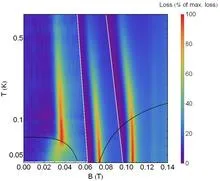
Tuning a radio receiver to a station that changes frequency as you cross a phase boundary: that is how you might picture the challenge facing the researchers. In the metal YbRh2Si2, electrons behave as "heavy" particles: their effective mass is hundreds of times that of a free electron.
A river switched in a split second does not immediately forget the intervention. The fast currents have already settled into the new channel, but slow ripples are still spreading across the water, encoding the entire history of the turn.
At the Jefferson Lab accelerator, a beam of light strikes protons, and the collisions give birth to short-lived particles — omega mesons. They live for less than a billionth of a second, but they still manage to tell us about the forces inside the atomic nucleus.
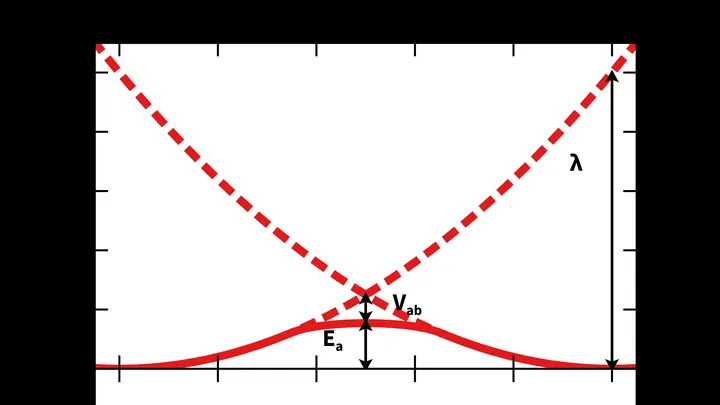
In the quantum world, particles sometimes behave like acrobats on invisible tightropes. An instanton field is a brief vortex that appears and vanishes in an instant. When a fermion (a particle like an electron) enters such a vortex, its energy does not stay put. Instead, it smoothly slides from one level to another, like a ball rolling down a hill.
In the quantum world, particles sometimes behave like acrobats on invisible tightropes. An instanton field is a brief vortex that appears and vanishes in an instant. When a fermion (a particle like an electron) enters such a vortex, its energy does not stay put. Instead, it smoothly slides from one level to another, like a ball rolling down a hill.
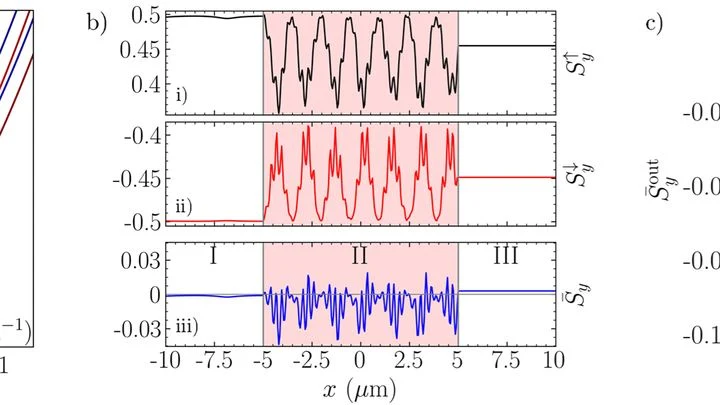
A quantum wire is like a high-speed highway where electrons race in a dense stream. Each electron has its own rotation, spin, and until now it was thought that splitting this stream into two lanes, for 'left' and 'right' rotation, without losing quantum order was nearly impossible. You'd need either strong magnets or complex tricks that waste energy.
In the first moments after the Big Bang, the universe was a searing 'soup' of particles. As it cooled, phase transitions occurred — much like water turning to ice. At one such moment, magnetic monopoles of dark matter could have been born: tiny clumps of field with a single magnetic pole.
A cloud of cold atoms is trapped between two mirrors. Light is shone through it, and the atoms start to emit collectively: this effect is called superradiance. But the atoms don't just 'glow': their spins (internal magnetic arrows) interact with light in two distinct ways.
Electrons in a solid usually either run freely (metal) or are locked in place (insulator). But sometimes strong mutual repulsion locks them into a halfway state: charges stand still, while spins, tiny magnetic arrows, continue to live their own life. This is called a Mott insulator.
In the grand symphony of magnetism, a duo long reigned: boisterous ferromagnetism and silent antiferromagnetism, where spin-soloists cancel each other out. But recently, a third voice joined the ensemble — altermagnetism.
In the conventional Heisenberg picture, spins at low temperatures are supposed to line up in a strict pattern. But there are crystals — like pyrochlore — where geometry has its own way. Each ion sits at a vertex of a tetrahedron, and the main interaction enforces a rule: two spins point inward, two outward.
In the world of magnetism, a simple dichotomy long reigned: ferromagnets, where spins point in one direction, and antiferromagnets, where they line up in a checkerboard pattern, canceling each other out. But a recent 'third player' — altermagnets — forced a rewrite of the rules.
A billiard ball strikes another, and the sum of their velocities before and after the collision obeys strict rules. The same happens in the microscopic world: energy, momentum, and charge cannot simply vanish.
The early universe was a restless place. Space trembled with gravitational waves — ripples in the very fabric of reality. In this churning cauldron, dark matter is thought to have been born. But the newborn particles had no mass: it had to come from somewhere.
Usually, the Higgs field is responsible for mass.
Spacetime is not empty: it shivers. After the Big Bang, the universe was filled with a hum of gravitational waves, like the low rumble of a giant bell. In this ripple, as it turns out, particles of dark matter, the invisible substance that holds galaxies together, can be born.
But the previous idea had a snag.
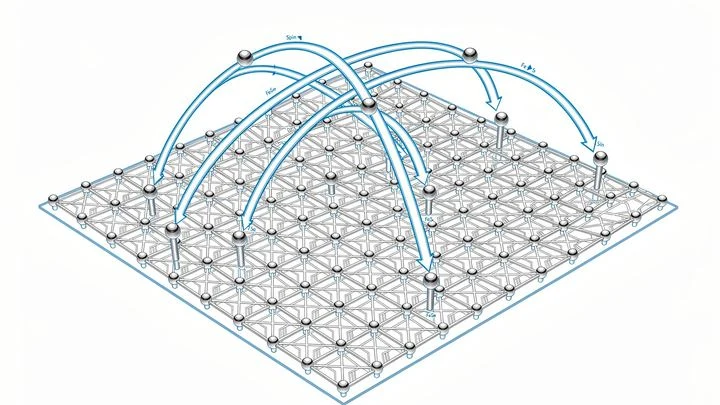
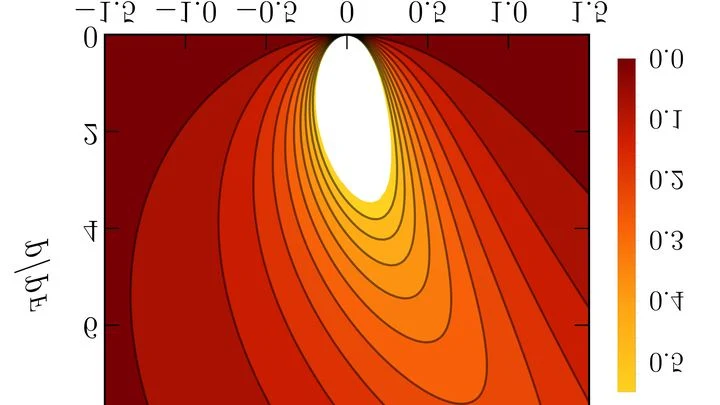
A pebble falls into a pond, and ripples spread across the water. In the quantum world, the pond is not made of water but of many identical particles, and the pebble is also a particle, just a foreign one. Such a foreign particle is called a Fermi polaron.
Textbooks divide particles into two camps: bosons love to crowd into the same state, fermions absolutely refuse. But nature allows a third option. Anyons are quasiparticles whose behavior lies somewhere in between. They can 'remember' how they were exchanged and obey a nonstandard exclusion principle.
The quantum world is full of transformations. Sometimes a system made of one type of particle starts behaving as if it harbors completely different ones. For example, in a chain of bosons, sociable particles that like to crowd into the same state, fermions from the Standard Model may unexpectedly appear, even though they usually keep to themselves.
When an electric charge moves with acceleration, it emits electromagnetic radiation, i.e., light — a familiar phenomenon in physics. However, researchers have found that when moving along a specially chosen trajectory, the radiation acquires unusual properties.
A lump of dark matter drifts through the void — invisible, almost intangible. No one knows what it's made of, but a new study suggests viewing it as a drop of quantum liquid. Two kinds of fermion particles — call them "heavy" (ψ) and "light" (χ)—exchange signals via a third mediator particle (φ), like floats tied to a single line.
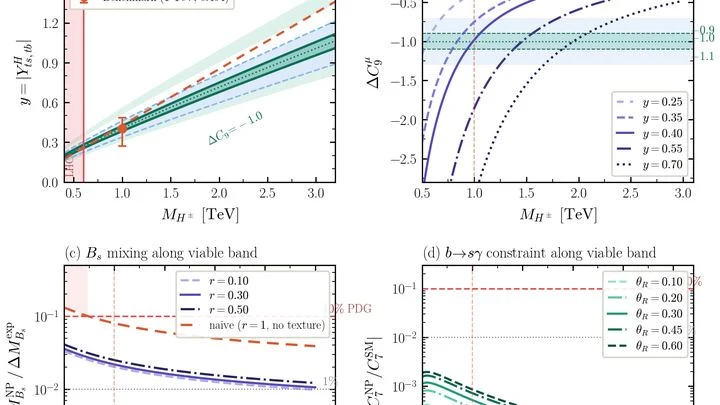
A basketball player almost always sinks the shot, but when he throws from the left corner, the ball flies wide. That's roughly how the B-meson behaves — a short-lived particle that sometimes decays into lighter ones.
On one side of the scale lies all the matter in the Universe; on the other, all the antimatter. According to the laws of physics, at the moment of the Universe's birth, the pans should have been balanced. But we see one pan tipping: around us are stars, planets, people, and almost no antimatter. This imbalance is one of the greatest mysteries.
Run a current through a spring of organic molecules, and the electrons that come out are almost all spinning the same way. This trick is called chiral spin selectivity, and it has long puzzled physicists. In light atoms, spin (the particle's intrinsic rotation) is too weakly coupled to charge motion to achieve nearly perfect sorting.
Deep underground in Japan, a huge tank of ultrapure water waits for rare visitors — neutrinos arriving from distant stellar explosions. Such guests are few and far between: over years of observation, Super-Kamiokande registers only a handful of events.
In the world of elementary particles, there's a long-standing puzzle: why are the masses of the electron, muon, and tau particle so vastly different? And why are quarks, the building blocks of protons and neutrons, also split into three generations with sharp jumps in mass?
In the first moments after the Big Bang, matter and antimatter should have been created in equal amounts. But today we see only matter — stars, planets, ourselves. Where did the antimatter go? One clue hides in nearly elusive particles: right-handed neutrinos. The usual story is that their decays create a slight bias in favor of matter.
The end of the Universe is not just the fading of light. If dark energy, the mysterious substance accelerating cosmic expansion, tears it apart in a Big Rip scenario, or if expansion reverses into a contraction that pulls everything back to a point like a big bang in reverse, a…
In the microscopic world, the Pauli exclusion principle holds sway: fermions — particles with half-integer spin, such as electrons — cannot occupy the same quantum state. This fundamental rule of the Standard Model forces electrons in atoms to occupy different orbitals, giving matter its volume and structure.
In the quantum world, light and matter constantly exchange energy. Previously, they were described statically, like frozen poses. The new approach follows the dance itself: the transitions between states, like a continuous sequence of movements.
Sunlight hits a silicon wafer, and a current flows in the circuit. That's the familiar work of a solar cell: light knocks out electrons, and a p–n junction (the boundary between two layers with different conductivities) forces them to move in one direction. But in some crystals, current arises differently — without any junctions, purely from the material's internal structure.
If you squeeze a handful of sand in your fist, it first compacts, but then starts to resist — the grains have nowhere left to go. In the depths of a neutron star, something similar happens, except instead of sand grains, you have elementary particles, and instead of your hand, you have monstrous gravity.
If you try to break a proton apart and pull out a quark, you're in for a surprise. Ordinary forces, like the electric force, weaken as particles fly apart. Here, it's the opposite. The farther a quark gets from its neighbors, the harder it's pulled back.
Quantum computers promise to solve problems that regular computers can't. But where is the line? The authors of a new study stumbled upon a surprising case: electrons paired up behave like a well-behaved orchestra. Even if you add a bit of "magic"—a special quantum resource: their behavior remains predictable.
A piece of magnetite, an ordinary iron stone, behaves strangely. At room temperature, it conducts electricity, but cool it below minus 150 degrees, and its resistance jumps sharply. This jump, discovered back in 1939, physicists could not explain for nearly a century.
A new study offers a solution.
The charmed particle D+ lives for a tiny fraction of a second before breaking apart into lighter particles, like an overloaded bridge losing its supports. Physicists at the BESIII collider caught millions of such decays and sorted them out.
In one decay mode, four pions and an eta meson are produced. The probability of this event turned out to be higher than expected: about 3 chances in 1000.
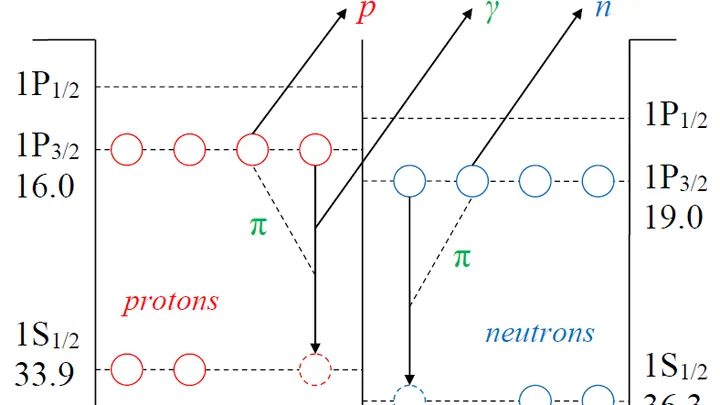
In a carbon atom's nucleus, particles occupy their own 'apartments'—like residents who cannot share the same room. Physicists call this rule the Pauli exclusion principle: two identical inhabitants of a nucleus cannot be in the same state. But what if the rule is sometimes broken?
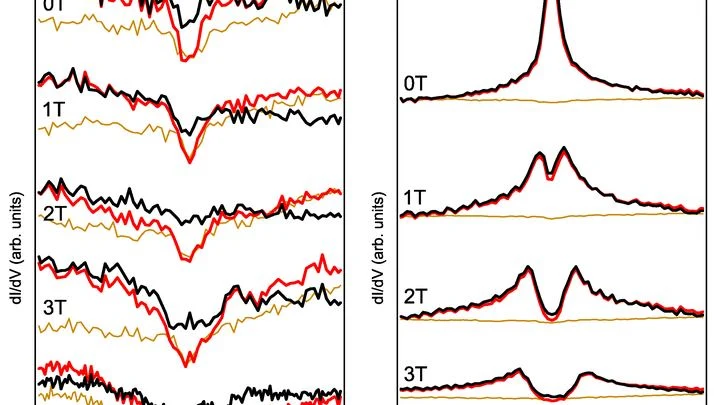
A tiny magnet, made from just two molecules, was placed on a metal surface, and it behaved like a temperamental conductor. Normally, electrons in a metal move in a coordinated way, like a crowd on an escalator. But when cooled significantly, this order breaks down, and the motion becomes unpredictable.
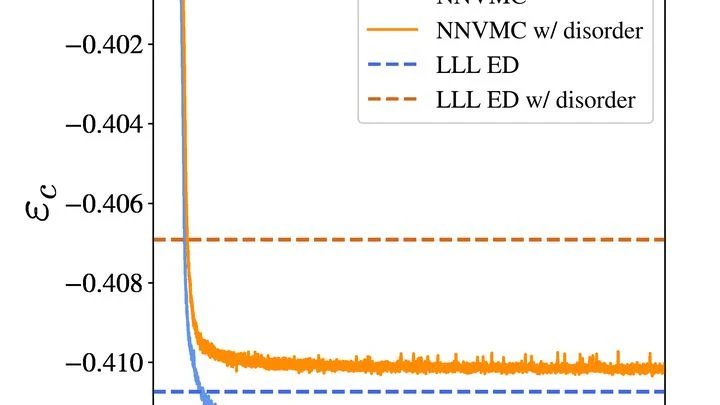
In a strong magnetic field, electrons trapped in a thin layer sometimes arrange into a regular pattern, like guests at a crowded party who find a spot where no one jostles them. This order is called a crystal, although it is not ice or salt, but the electrons themselves, frozen in place.
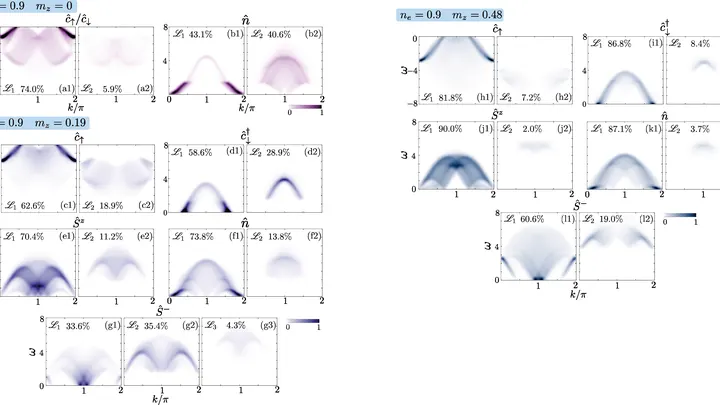
An electron in an ordinary wire is like a courier carrying both a package and the recipient's signature at once: its charge and spin are always together. But if the wire is made just one atom thick, the courier gets cramped. In such a one-dimensional tube, electrons cannot overtake each other, and their collective behavior changes beyond recognition.
The proton is not a solid ball but a seething cloud of quarks and gluons. Each particle carries its own bit of rotation, but if you add up all the bits, you don't get the full proton spin. Part of the rotation seems to hide in the cloud's slowest inhabitants: those carrying only a tiny share of the total motion.