How Weak Magnetic Fields Birthed Black Holes ✛ ✦
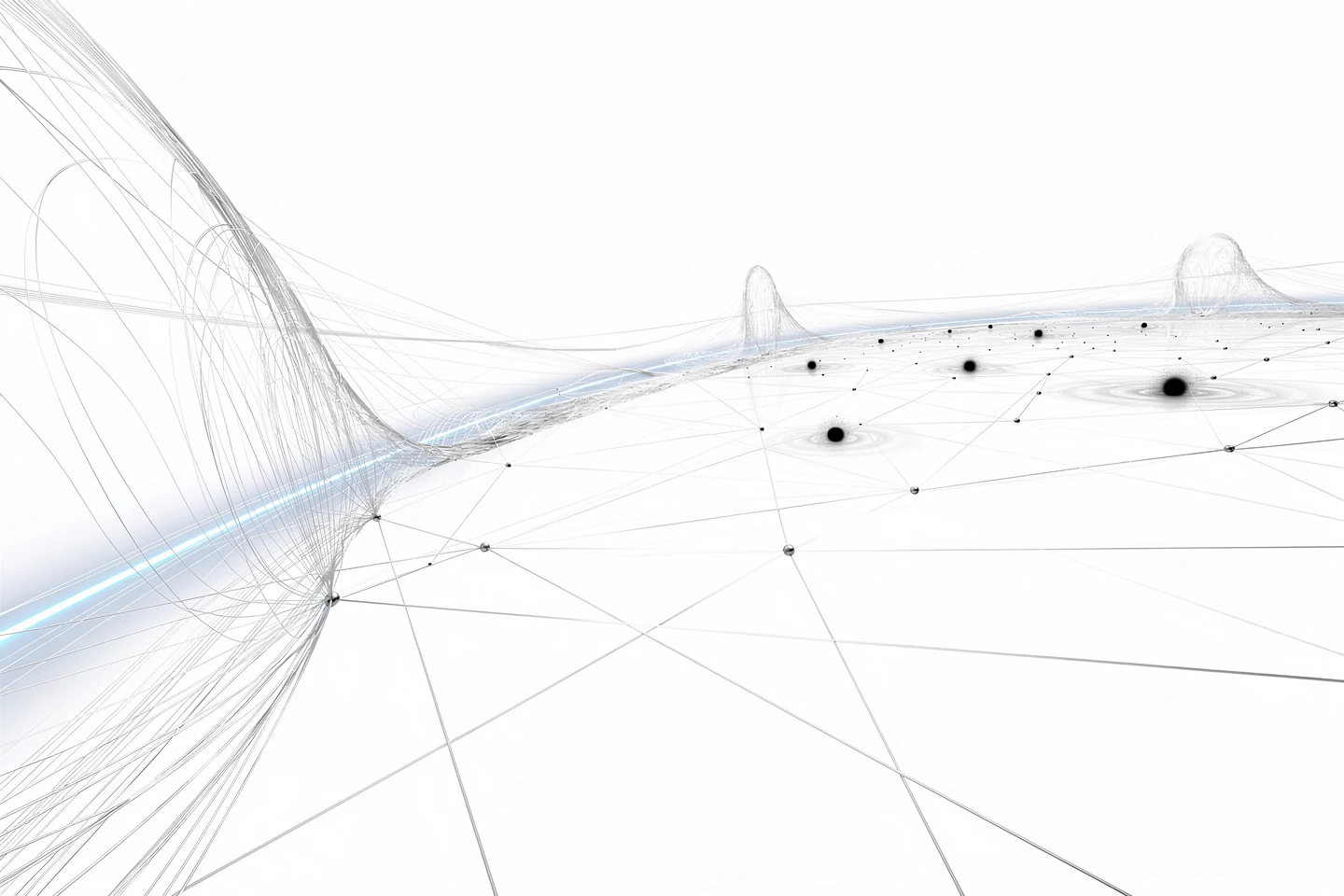
The young universe was like a churning lake. Its biggest mystery, dark matter, an invisible substance holding galaxies together. Long ago, Stephen Hawking suggested it might be made of tiny primordial black holes. Now, new research claims that gentle magnetic breezes brought them to life.
Right after inflation, a sudden ballooning predicted by Alan Guth, came a period of rapid expansion. Space was filled with hot plasma, a soup of charged particles. Within it drifted minuscule magnetic fields, billions of times weaker than a fridge magnet. But just as a light breeze on a lake creates ripples, these fields amplified the slightest overdensities. Eventually, matter collapsed into black holes.
This story fits perfectly with both the cosmic microwave background and the birth of the first elements described by George Gamow. The irony? The weakest force, magnetism, gave rise to the mightiest gravitational monsters. If these primordial black holes really make up dark matter, their collapse would have sent shudders through spacetime. The hunt is already on.
Despite its staggering mass, as much as a large asteroid, a primordial black hole would be the size of an atomic nucleus.