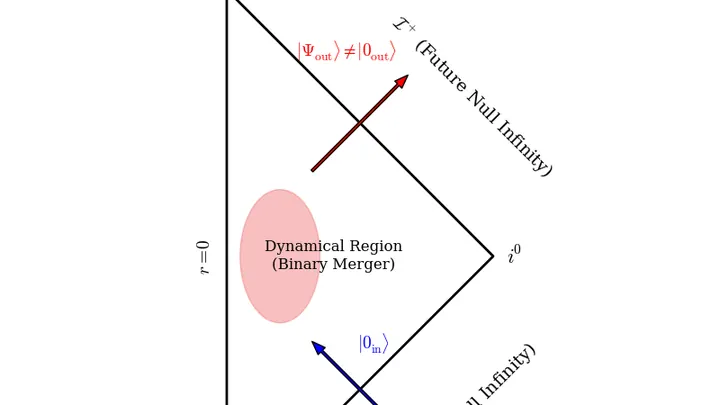
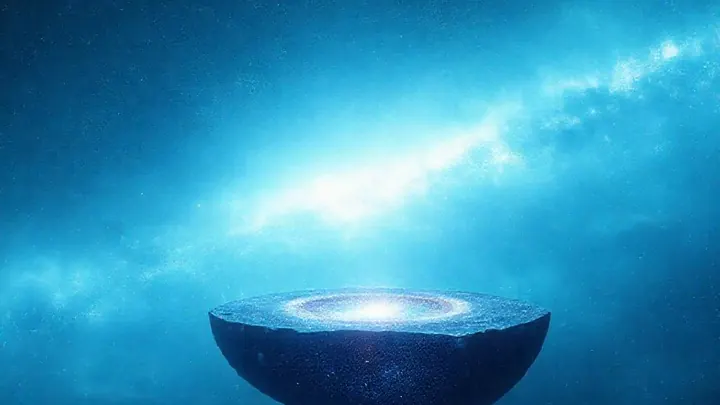
Particle creation is the process by which particles emerge from the quantum vacuum due to external influences. In quantum field theory, the vacuum is not empty but a seething sea of virtual particles constantly appearing and disappearing. When a strong external field, such as a gravitational field near a black hole or an intense electromagnetic field, provides enough energy, these virtual particles can become real, observable particles. This process is fundamental to our understanding of black hole evaporation, the early universe, and the behavior of matter under extreme conditions.
History
The concept was first proposed by Julian Schwinger in 1951 for the case of a strong electric field, and later extended to gravitational fields by Stephen Hawking in 1974, who showed that black holes emit radiation due to particle creation near their event horizons.
How it works
The mechanism relies on the uncertainty principle, which allows temporary violations of energy conservation. Virtual particle-antiparticle pairs spontaneously appear and annihilate within extremely short timescales. Normally, this happens without any observable effect. However, if an external field does work on the pair before they annihilate, separating them or providing the energy needed for them to become real, they can escape as genuine particles. The energy for this process comes from the external field itself, which is correspondingly weakened.
In practice
Particle creation is used in theoretical models of black hole evaporation and in laboratory experiments attempting to observe the Schwinger effect with ultra-intense lasers.
Fun fact
The Hawking radiation from a black hole is a direct consequence of particle creation, meaning black holes slowly 'evaporate' over astronomical timescales.
A vacuum cleaner sucks in dust even if there is more of it near the nozzle. The same happens in a tokamak: plasma particles are drawn toward the center, even though their density is higher at the edge. This phenomenon is called particle pinch, and it contradicts the usual rule that everything tends to move from dense regions to sparse ones.
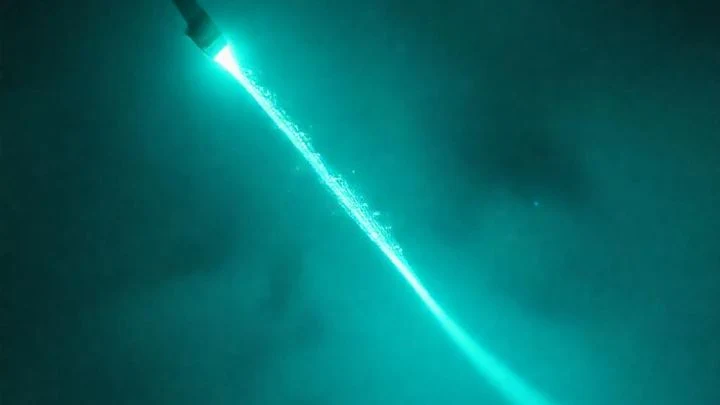
A gas target is like a funnel: the steeper its walls, the stronger the flow. But in this funnel, it is not water that flows, but ultraviolet light, born when a powerful laser pulse passes through a cloud of argon. The efficiency of this conversion is usually minuscule, about 0.001%: out of a thousand laser photons, only one turns into useful ultraviolet.
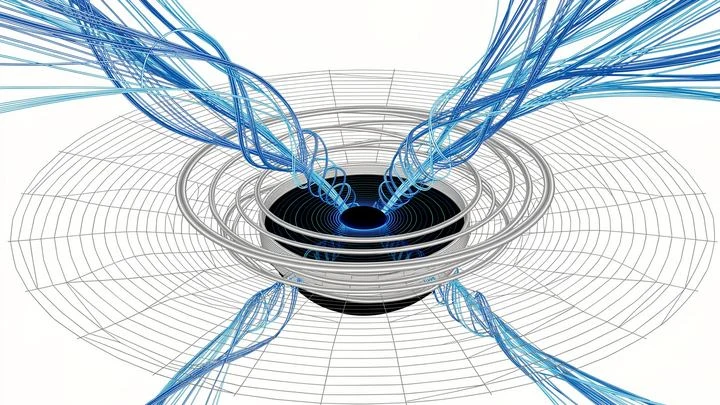
A spinning top whirls so fast that the air around it starts to rotate in unison. A black hole behaves in much the same way: if it spins, it can transfer its energy to particles that happen to be nearby. This process is called superradiance: it's like an echo in the mountains, but instead of sound, new particles are born.
A homogeneous, spherical cloud of cosmic dust begins to contract under its own gravity. At some point, by classical laws, it should collapse into a point of infinite density — a singularity.
A black hole is not just an abyss. It is a seething cauldron whose temperature rises as it evaporates. The authors of the study found that when the heat reaches a critical threshold, the hole seems to boil. It emits superheavy particles — the very ones that exist on a scale where any theory of gravity collapses.
In the first moments after the Big Bang, the universe underwent a rapid expansion — inflation. Space stretched faster than light, and quantum jitters of the vacuum turned into real particles. This is how dark matter, the invisible substance that holds galaxies together, could have been born.
In the first moments, the Universe expanded at an enormous rate. This process is called inflation, and its driving force is the inflaton field. Its energy pushed space apart, like yeast raising dough. But physicists suspect that the dough might have left 'bubbles'—superheavy particles born from the expansion itself.
A star runs out of fuel and rapidly collapses under its own gravity. According to classical ideas, it collapses into a point of infinite density — a singularity. But what if nature abhors infinities? In models of regular black holes, instead of a singularity, a dense core of unknown matter forms at the center.
The agony of a solitary black hole lasts forever. But in its final moments, as its mass evaporates according to the law discovered by Hawking, it manages to send a radio farewell signal. Not a quantum whisper, but a classical hum — if only there's a magnetic field nearby.
Imagine a green beam that, passing through an ingenious optical setup, twists into a three-dimensional funnel of light — an optical vortex. At its heart, like in the eye of a hurricane, the intensity drops to zero. It is there that photons disappear.
For a long time, the event horizon behaved like a cosmic dictator: everything that crossed its boundary vanished irretrievably from our Universe. But quantum mechanics, like a dissident's voice, whispered: information cannot simply disappear.
Quantum entanglement — a phenomenon where the states of two or more particles become interconnected regardless of the distance between them — usually links intrinsic properties such as spin or polarization. However, a new experiment has for the first time realized entanglement of the positions of two atoms in space.
In the first moments of the universe's life, there was not even a hint of dark energy — the very force that today pushes galaxies apart ever faster. But if you look deeper, down to the Planck scale (billions upon billions of times smaller than an atomic nucleus), spacetime ceases to be smooth.
A black hole is not just a vacuum cleaner. It glows faintly, emitting particles — this idea was proposed by Jacob Bekenstein, who connected the hole's temperature to its degree of disorder. Detecting such radiation in space is incredibly difficult.
Dark matter remains one of the greatest mysteries of modern physics. Back when Vera Rubin observed galaxy rotation, she proved that visible matter is insufficient to keep stars from flying apart.
Space is threaded with magnetic fields. They exist around galaxies, stars, and even in nearly empty voids — the vast empty spaces between galaxy clusters. It's usually thought that fields are amplified from weak 'seed' fields by turbulence, much like a dynamo. But the origin of the seed fields themselves has remained a puzzle.
In the search for the nature of dark matter, one of the most intriguing hypotheses traces back to the first moments after the Big Bang. Back then, quantum fluctuations of the inflation field gave rise to clumps of matter that could collapse into primordial black holes.
At the center of a galaxy, gravity condenses dark matter into a dense 'spike.' Such a dark spike resembles a funnel of invisible particles around a massive body. But if both the center and the particles are primordial black holes, the picture breaks down.
It all began not with emptiness, but with a boiling ocean of plasma. In that primordial broth, sound waves raced through the fiery matter, colliding and compressing it. Sometimes a clump grew so dense that light could no longer escape, and right out of the scorching gas, a primordial black hole was born.
A black hole resembles a safe that slowly gives up its contents, energy and information, through a faint glow known as Hawking radiation. But if the safe opens too quickly, a 'firewall' may flare up at its boundary — a region where the familiar laws of physics break down.
In the new work, physicists complicated the model of this safe.
In very dim light, photons arrive one by one, like drops from a leaky faucet — never in pairs. This effect, predicted by Roy Glauber and confirmed by Leonard Mandel, directly proves that light is made of particles.
A star contracts under its own gravity, and at some point its fate hangs on a razor-thin balance. Classical physics paints a grim picture: if the mass and the force of compression are tuned with terrifying precision, what emerges is not a black hole but a 'naked' singularity.
Two black holes circle in a slow dance, gradually drawing closer. Their motion perturbs spacetime itself, like two heavy balls rolling on a stretched sheet, making it tremble. These tremors are what we call gravitational waves.
Two floats on the waves. Throw a stone into water, and the ripples will spread, rocking both floats one after another — not simultaneously. In the quantum world, such rocking is called entanglement: particles, like floats, begin moving in sync.
A bonfire doesn't burn out all at once. If you glance at the flames at a random moment, all you see is a jumble of fire tongues, and you can never tell what exactly burned: a wet branch, an old magazine, or an armful of dry grass. But if you watch the fire hour after hour, rhythms emerge in its dance: a burst of heat, a lull, a change in color. These rhythms tell the story of what was thrown into the flames.
Emptiness can surprise you. In general relativity, there is a solution where space itself gives birth to a black hole — literally from a point. It all starts at the moment when the event horizon (the surface from which not even light can escape) appears with zero radius and immediately begins to grow.
Light cones are not about light; they are boundaries in spacetime that separate causes from effects. These cones are not rigid: a massive object curves them, like a heavy ball pressing into a stretched sheet.
A black hole is a cosmic pocket into which everything, even light, falls. But the pioneering work of John Wheeler, Stephen Hawking, and Roger Penrose showed: sometimes, due to the colossal spacetime curvature, the pocket turns inside out.
A tiny black hole, no larger than an atomic nucleus, hovers in a cloud of hydrogen. It doesn't swallow everything around it; instead, it slowly radiates away, losing mass with every moment.
The universe is not a solid monolith, but a canvas of countless quantum threads. Spacetime doesn't flow like water, but vibrates like a tapestry in the wind. For a long time, physicists only saw the overall pattern, neglecting the tremor of individual threads.
Two blindingly bright beams smash head-on. At the point of impact, a particle is born for an instant — the very one responsible for the mass of everything in the universe. That's the Higgs boson. Usually, it's produced by accelerating protons or electrons, but here the projectiles are particles of light themselves — photons.
The mystery of dark matter, first glimpsed in the stellar whirlpools by Vera Rubin, has been tormenting physics for nearly a century. One of the boldest hypotheses: primordial black holes, born in the scalding broth of the early universe.
When a balloon with a painted pattern deflates, the pattern ripples and distorts. Something similar happens to a black hole that slowly evaporates, losing energy through the radiation discovered by Stephen Hawking.
In the seething cauldron of the early universe, the vacuum, like a supercooled liquid, could boil with bubbles of a new phase. For a long time, physicists pinned their hopes on these bubbles as a source of primordial black holes (PBHs)—ideal candidates for dark matter.
Right after the Big Bang, the Universe expanded incredibly fast — this phase was called inflation. In some microscopic regions, matter randomly clumped so much that it collapsed into primordial black holes. They are tiny — the size of a proton, yet as massive as an iceberg.
The standard picture of black hole evaporation, painted by Hawking, long seemed reassuring: quantum fluctuations near the horizon produce thermal radiation, the hole slowly melts away, and the spacetime behind it remains smooth.
After the Big Bang, the Universe resembled a tightly inflated balloon: pressure prevented matter from clumping together. But hypothetical superheavy particles — sort of ‘heavyweights’ of the microcosm — momentarily made the balloon less stiff. Matter easily clumped, giving birth to black holes with masses from a billion to a billion billion tons.
A boiling cauldron with the occasional bubble of steam popping: that's what the early universe resembled. All of space was filled with a field in a false vacuum state, like water superheated above its boiling point.