Quantum Computer Learns to Play Without a False Note express
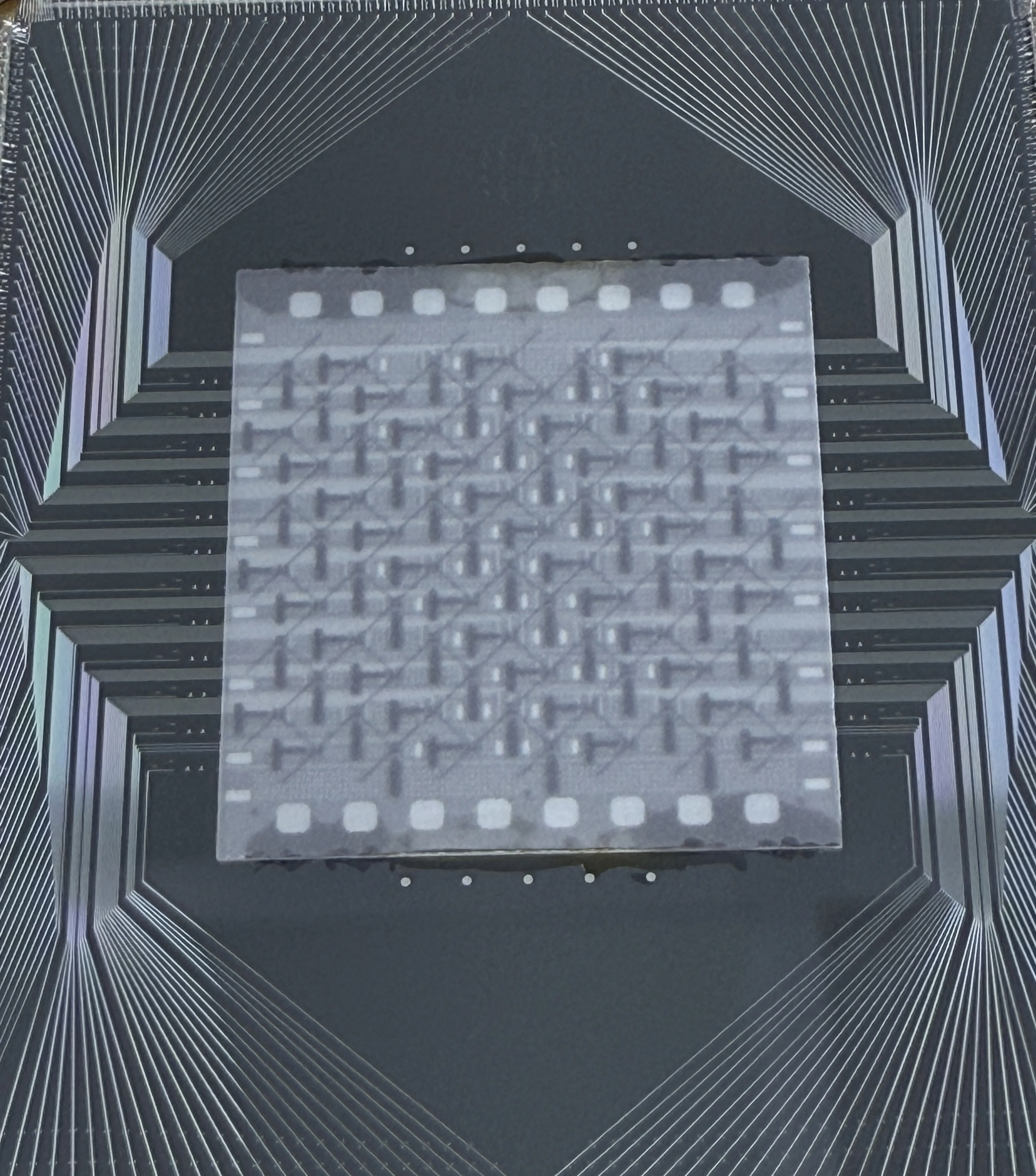
Quantum computing suffers from 'false notes' — errors that arise from the slightest inaccuracy. Now they are eliminated with the precision of tuning a concert grand piano. The idea traces back to the dreams of pioneers — David Deutsch and Peter Shor — of flawless operations.
The method works like an ideal tuner: it captures dissonances and instantly corrects parameters. Special circuits amplify the error signal, like highlighting an out-of-tune string. This is a quantum analog of spectroscopy — analyzing the 'spectrum' of glitches instead of light. Accuracy reached 99.9%, and systematic error plummeted to 0.007% (like a clock that loses a second every six months). Errors generate entropy — a measure of disorder; the new method almost eliminates it.
An unexpected result: the autonomous adjustment remained stable for 9 hours without human intervention.
Original abstract
as written by the authors arXiv:2607.01422
High-fidelity universal two-qubit gates are critical for building fault-tolerant quantum computers. In scalable superconducting processors, shortened coherence times introduce more incoherent errors in gate operations. With a constrained error budget, there is reduced tolerance for coherent errors stemming from parameter deviations. In this work, we develop a closed-loop workflow to enhance the CZ gate calibration precision. Utilizing the echoed leakage error amplification (ELEA) and the repurposed context-aware fidelity estimation (CAFE) circuits, we suppress the population leakage to non-computational states, and, for the first time, demonstrate a CZ gate fidelity exceeding $$99.9\%$$ on an 84-qubit processor, with coherent error suppressed to $$0.007\%$$. Meanwhile, we obtain a median fidelity of $$99.25\%$$ among 72 CZ gates, demonstrating that the workflow can be generalized to the calibration of parallel CZ gates. Finally, we realize automated calibration and observe enhanced stability of the CZ gate throughout 9-hour comparative monitoring experiments. Our results, realized on a completely domestic platform, establish an efficient and automated route to quantum computation with superconducting quantum systems.
Superconducting qubits operate at 0.01 Kelvin — colder than the darkest corners of space, and 300 times frostier than open space.
Science fiction writers envisioned quantum computers as the brains of starships and simulators of reality — for example, in Dan Simmons' 'Hyperion'.