The Gravitational Wave Mystery: The Dark Cauldron Didn't Boil ✛
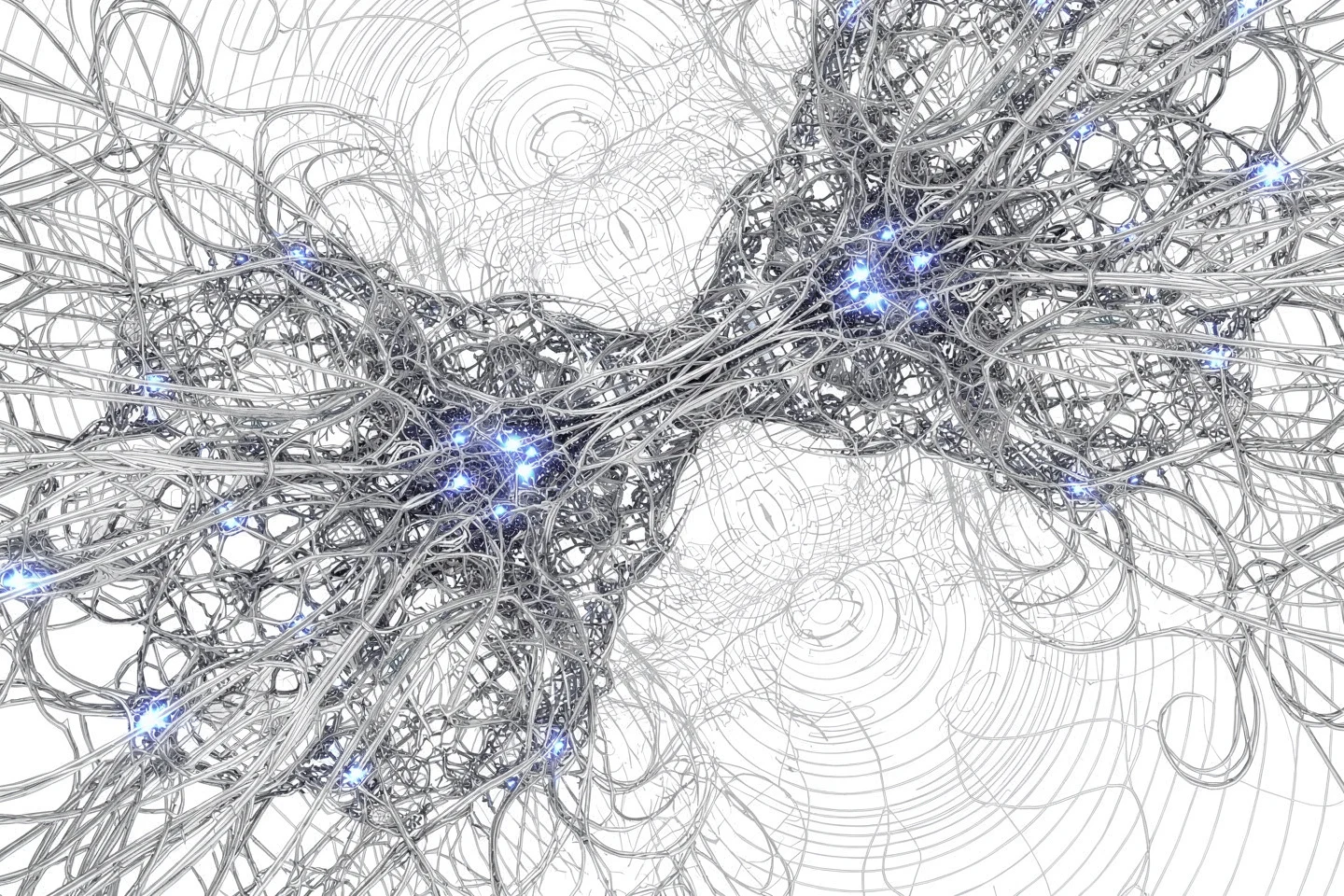
Everyone knows that throwing a stone into a pond creates ripples. Gravitational waves work in much the same way — they are ripples in space itself, born from the most powerful events in the universe. They were first directly detected by Rainer Weiss and his colleagues. Recently, astronomers have managed to pick up a faint hum of such waves coming from all directions. The key to this was pulsars — the remnants of dead stars, ultra-dense neutron stars that spin at enormous speeds and send out pulses like cosmic lighthouses. It was Jocelyn Bell Burnell who first discovered these amazing objects. Their incredibly precise rhythm reveals the slightest tremor of space.
But what gave rise to this hum? One idea takes us back to the very first moments after the Big Bang, when the universe was a scorching 'soup' of particles. Bubbles of a new phase could have been violently born and burst — something like water boiling. Scientists speculated that this 'boiling' happened in a hidden sector filled with dark matter — the mysterious substance for which Vera Rubin gathered the first solid evidence. To test this idea, they took the simplest model governed by the laws of particle physics and calculated how loud the 'hiss' of this cauldron should be. They paid special attention to entropy — a measure of disorder that affects the strength of the waves.
The results were unexpected: the simplest model produced waves that were hundreds of times fainter than what pulsars 'hear'. The boiling of the dark sector could not have been the source. More likely, the mysterious signal was born from other giants — spinning and colliding black holes lurking at the centers of distant galaxies. So, scientists will have to come up with more complex scenarios to unravel the mystery of this gravitational echo.
To spot waves from boiling dark matter, pulsars would have to detect a time shift of billionths of a second — as if a clock on Jupiter lost one tick over an entire year.