A quantum phase transition is a phase transition that occurs at absolute zerotemperature, driven not by thermal fluctuations but by quantum fluctuations. Unlike classical phase transitions (like water freezing), which are driven by temperature, quantum phase transitions are driven by changes in a non-thermal parameter such as pressure, magnetic field, or chemical composition. At the transition point, the ground state of the system changes dramatically, leading to new phases of matter with exotic properties.
History
The concept was developed in the 1970s and 1980s, with pioneering work by John Hertz, Subir Sachdev, and others. It has been extensively studied in condensed matter physics, particularly in heavy-fermion compounds and high-temperature superconductors.
How it works
In a quantum system, the ground state is determined by the competition between different terms in the Hamiltonian (e.g., kinetic energy vs. interaction energy). As an external parameter is tuned, the balance shifts, and at a critical value, the ground state undergoes a qualitative change. Near this quantum critical point, quantum fluctuations dominate, leading to universal behavior that can be described by quantum field theory. These fluctuations can also influence the system at finite temperatures, creating a 'quantum critical region' where unusual properties persist.
In practice
Quantum phase transitions are key to understanding high-temperature superconductivity, novel magnetic states, and the design of quantum materials. They also play a role in quantum computing, where controlling quantum fluctuations is essential.
Fun fact
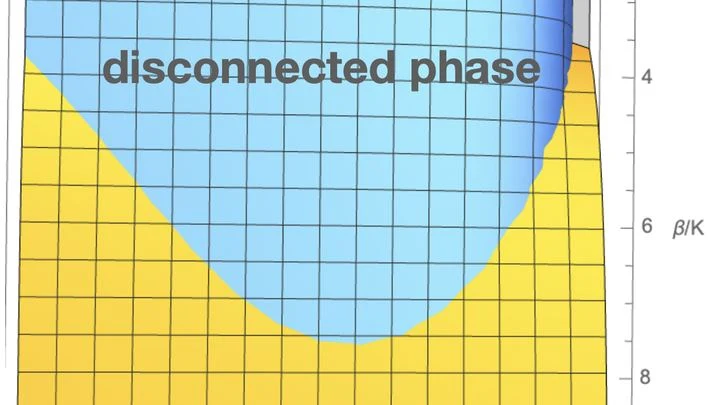
Some quantum phase transitions are believed to be 'deconfined,' where the transition is not between two different phases but involves the fractionalization of particles into new quasiparticles, a phenomenon not seen in classical physics.
Microwave plasma in a vortex is like a kitchen mixer that simultaneously heats and stirs the gas. In the reactor, the gas is swirled, and microwaves heat it to thousands of degrees, tearing carbon dioxide molecules apart. Scientists created a computer model of such a reactor to understand how pressure affects the process.
A black hole is not silent. When perturbed, it rings like a bell, and that ring is its quasinormal modes — damped oscillations. Physicists delved into the world of charged black holes in anti-de Sitter space (a universe with negative curvature, like a saddle).
Hot tea cools down, and ice cream melts — heat always flows from warm to cold, and this law seemed unbreakable. But in the quantum world, even familiar rules can be rewritten. Physicists placed a tiny mechanical resonator (a vibrating bridge the size of a microbe) in an optical cavity between two mirrors.
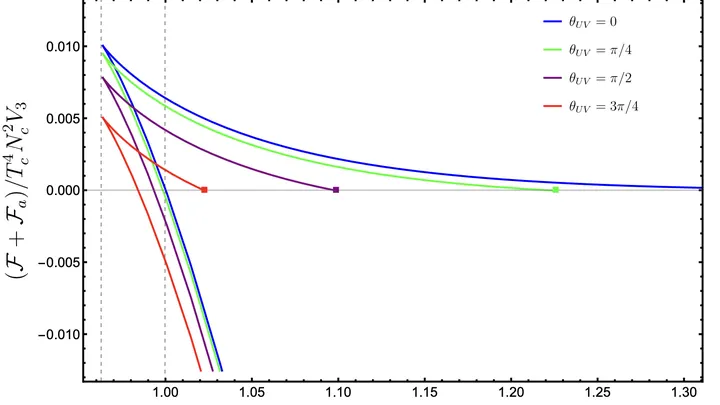
A pot of extremely thick and hot glue: that's roughly what the early Universe looked like. It wasn't ordinary glue, but a 'gluon soup': particles carrying the strong force (gluons) zipped freely through space. The temperature was so high that even quarks and gluons didn't stick together into protons and neutrons.
Over time, the Universe cooled.
In the first moments after the Big Bang, the Universe was like a supercooled bottle of champagne. In addition to ordinary matter, it concealed a dark sector — an invisible sparkling “wine” of fields and particles, candidates for dark matter.
A black hole is not a dead object. After a disturbance, such as merging with another hole, it rings like a bell. This ring is not just a sound but a complex set of damped oscillations called quasinormal modes. Their frequency and damping rate depend on the hole itself: its mass, charge, and spin.
Two-dimensional worlds never cease to amaze: here even crystal melting is not a symmetry breaking but a vortex drama discovered by Kosterlitz and Thouless. At the heart of this theater are topological сингулярности, whose energy and энтропия bargain for order. This language is common to сверхтекучести и сверхпроводимости.
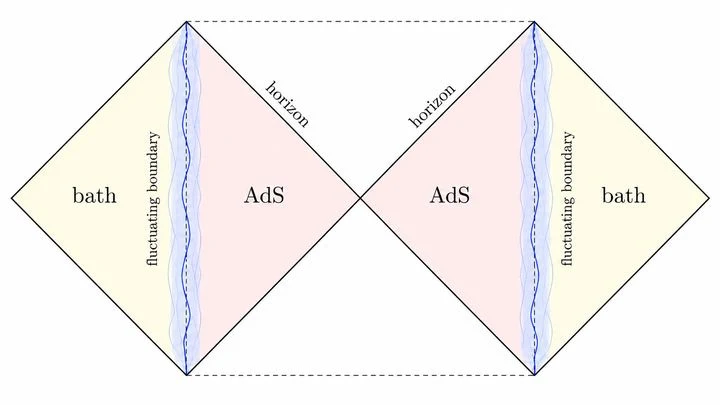
A black hole is not an eternal vacuum cleaner. It slowly evaporates, radiating energy, and along with it, as physicists believe, it should return the swallowed information. But when exactly does that start happening? The answer is given by the so-called Page curve — a graph that shows how much information the hole has already released and how much it still holds inside.
In the mountains, there is a saddle — a point where the trail from one valley crosses over into another. Standing exactly on it, you take a step and are already descending the new slope. In chemistry, such a place is called the transition state: a brief moment when atoms are frozen on the threshold of transformation.
Hot tea in a freezer doesn't freeze all at once. First, tiny ice needles dart around — forming and melting until the temperature drops enough for the ice to set solid. The early universe behaved similarly as it cooled and changed its internal structure.
If you check where an electron is every second, its quantum properties change. It's like a child playing hide-and-seek but constantly being called by name: they freeze and stop running. In the particle world, such a "caller" is a measurement. It prevents particles from freely forming a shared quantum state, or entanglement.
Hundreds of people on a dance floor stand at equal distances from each other — strict order, like in a crystal lattice. Slow music is thermal vibrations, making dancers sway slightly. If the music gets louder and faster, order collapses: everyone mixes. That's how thermal motion destroys ordered states of electrons in solids.
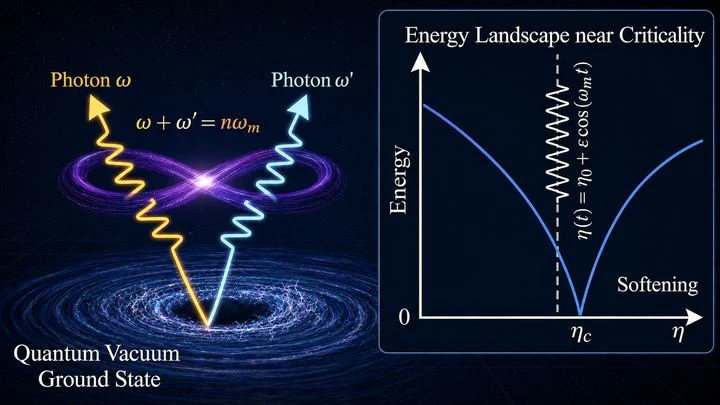
The quantum vacuum is not emptiness, but a tautly stretched string, where particles constantly appear and vanish. Abruptly changing conditions, like shifting the mirrors of a microcavity, causes the 'string' to emit real photons.
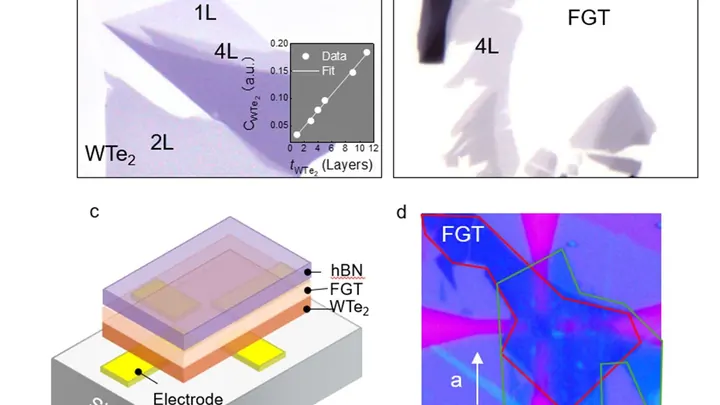
Usually, current in a metal acts like boiling water on ice: it heats the material and destroys magnetic order. But in a layered structure of tungsten ditelluride and the ferromagnet Fe3GeTe2, current behaves differently.
A liquid that flows without friction is superfluid helium-4, a strange state of matter at temperatures below two kelvins. In a large volume, the transition to superfluidity occurs at the lambda-point temperature, but in narrow channels everything changes.
A black hole that has almost stopped consuming matter is like a kettle coming to a boil: calm on the outside, but seething with invisible processes within. Physicists have peered into this boundary world, where space and time no longer follow the familiar rules.
They have described everything that happens right at the horizon: that invisible boundary beyond which even light cannot return.
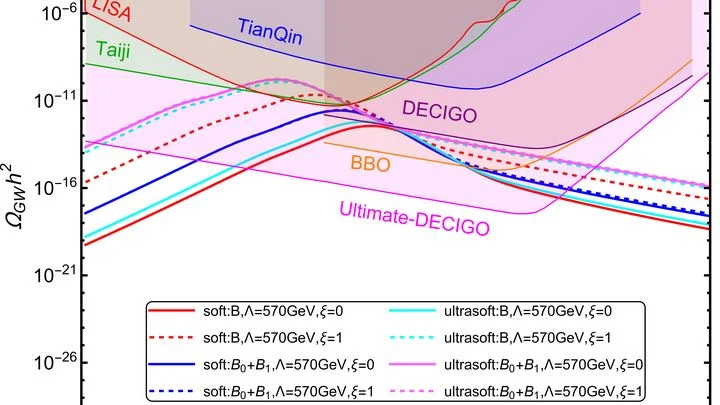
In the infant universe, right after the Big Bang, space was expanding rapidly, and the vacuum resembled a superheated liquid. When 'boiling' began, bubbles of true vacuum emerged. Expanding at the speed of light, they triggered gravitational waves — tremors of space itself that have reached us.
A crowd in a square. At first, everyone spins to their own rhythm, but suddenly the music changes, and they all start moving in sync, as one. That's roughly how electrons behave in some metals: they either cling to magnetic impurities or break away and form a collective order.