Dark Champagne: What Pulsars Revealed About the Phase Transition ✛
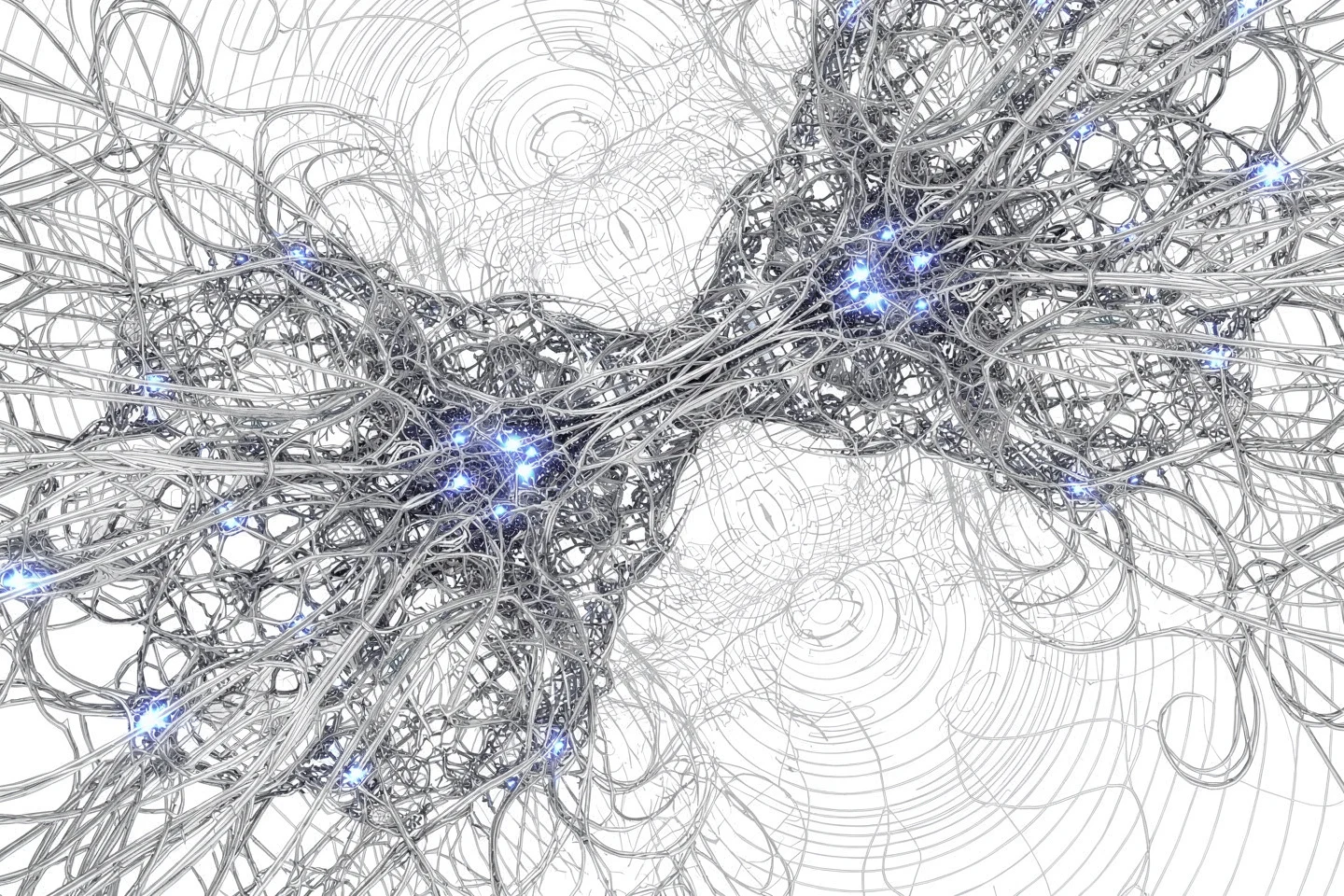
In the first moments after the Big Bang, the Universe was like a supercooled bottle of champagne. In addition to ordinary matter, it concealed a dark sector — an invisible sparkling “wine” of fields and particles, candidates for dark matter. At temperatures of tens of MeV, this wine underwent a first-order phase transition — as if from a sudden uncorking, bubbles of the new phase instantly nucleated and began to grow. Such a cataclysm should have unleashed gravitational waves — tremors in spacetime that rippled across the cosmos. Billions of years later, these would be caught by pulsars — ultra-precise rotating neutron stars, whose rhythmic pulses were discovered by Jocelyn Bell Burnell.
But how to estimate the loudness of such a “pop”? Instead of tracking every microscopic detail, physicists employed a three-dimensional effective field theory — a kind of macroscopic recipe that describes the phase transition through collective parameters, much like a sommelier judges effervescence by the size and speed of bubbles without peering at each molecule. This approach, honed within the Standard Model, allowed them to incorporate higher-order thermal corrections and quantitatively assess uncertainties up to NNLO. The calculations also included a heavy fermion — a candidate for dark matter — whose mass suppresses its involvement at low energies. The entropic contributions of both sectors were tracked separately to correctly extrapolate the signal to the present day.
The result was sobering: for typical model parameters, the amplitude of gravitational waves was orders of magnitude below what pulsar arrays observe. Even in scenarios with runaway bubble nucleation, the predictions diverge from NANOGrav data at the 2σ level. Worse, the parameter region hinted at by observations lies at the edge of computational control — there the high-temperature expansion starts to “crack,” and unaccounted effects come into play. An intriguing detail also emerged: the ordinary plasma barely participates in the motion of bubble walls, so the dark and visible sectors are hydrodynamically decoupled — as if the champagne gushes without disturbing the neighboring glass.
What does this mean for our understanding of the Universe? The simplest dark Abelian sector cannot explain the nanohertz hum. This strengthens the case for alternative sources — primarily merging supermassive black holes, but also exotica like cosmic strings. However, the work does not close the topic; it merely shows that more precise calculations and likely more complex models, where the phase transition is stronger, are needed. The methodology based on dimensional reduction is becoming a benchmark, linking Standard Model physics with cosmology. In the future — inclusion of higher-dimensional operators and perhaps non-perturbative lattice simulations, much like how Vera Rubin once confirmed the reality of dark matter through galaxy observations. The first hint of gravitational waves came from the ground-based interferometer LIGO, spearheaded by Rainer Weiss; now the arsenal has been augmented by cosmic “clocks,” and each new observation brings us closer to understanding the dark symphony of the cosmos.
To detect gravitational waves from a phase transition at 10 MeV, pulsar timing arrays measure deviations in pulse arrival times with an accuracy of tens of nanoseconds. That’s like noticing a clock on Jupiter gaining one billionth of a second over a year.