How a Tiny Addition to the Higgs Field Extends the Life of Energy Clumps express
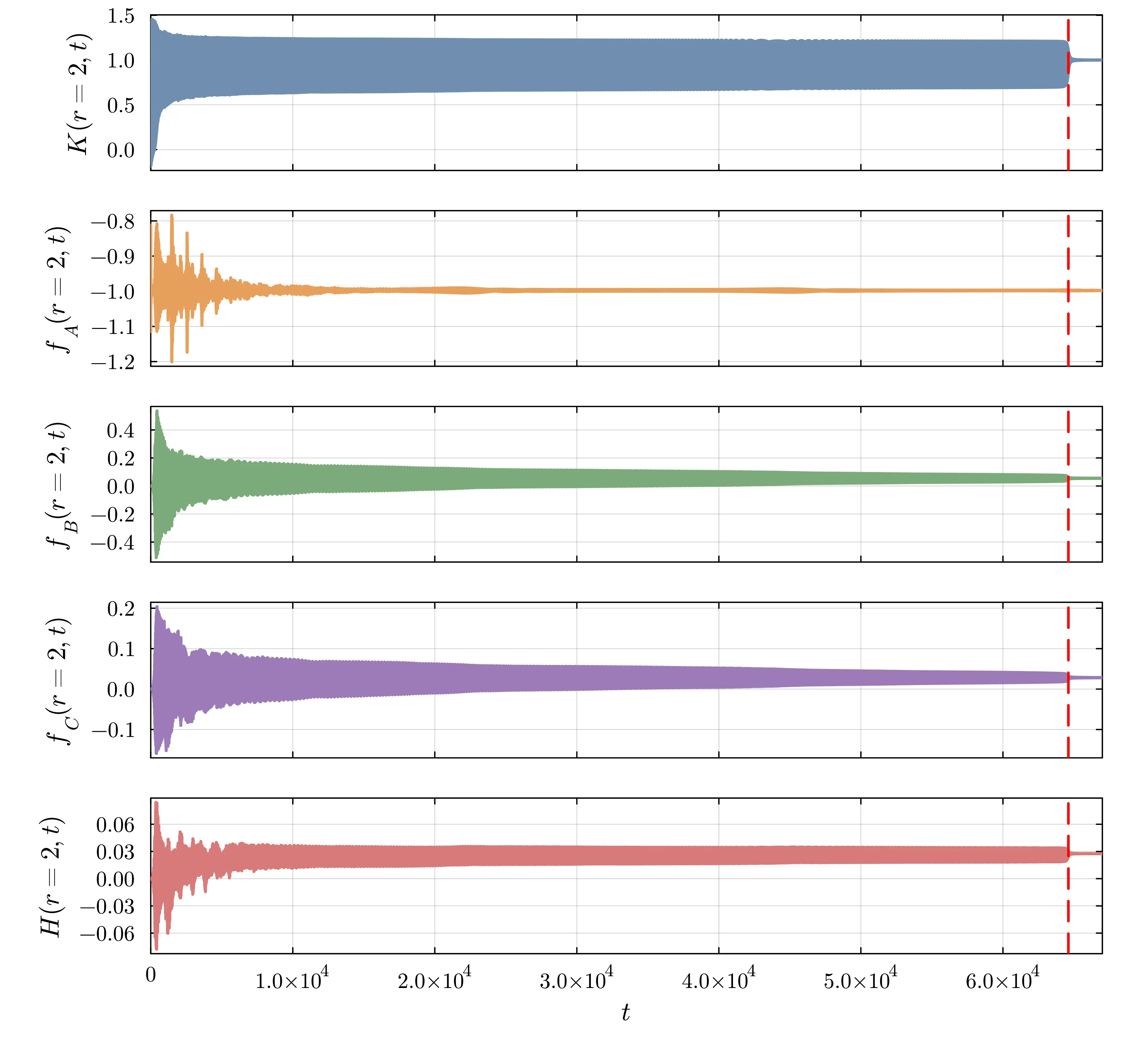
A tightly stretched string keeps vibrating after being plucked. In particle physics, there is a similar object — the oscillon. It is a clump of energy that pulses like a heart without spreading out in space. Such structures arise in the Higgs field — the very field responsible for particle masses. But usually oscillons do not live long: they quickly lose energy and disappear.
A group of physicists decided to test what happens if you add a tiny correction to the equations describing the Higgs field — the so-called dimension-six operator. This is a mathematical way of saying that the field interacts with itself slightly more complexly than usual. And here is where it gets interesting. Even such a seemingly minor detail can drastically change the fate of an oscillon. Its lifetime increases by thousands and even millions of times.
The authors based their work on the Standard Model of particle physics but focused only on the part describing bosons — the carriers of interactions. They added an operator with a coupling constant that does not contradict current experimental constraints. And with a quite realistic mass ratio of the Higgs and W boson (approximately 1.556), the oscillon becomes almost eternal. This discovery is important for cosmology: such long-lived energy clumps could have played a significant role in the early universe, influencing structure formation and even how matter was distributed. So a vibrating string, given a barely noticeable change in tension, sounds not for a moment but for an eternity.
Oscillons can form not only in the Higgs field but also in other fields, for example, during phase transitions in the early universe when forces separated from one another.