Neural Network Teaches Gravity Not to Hide express
In the vast cosmic ocean, dark matter gathers into clumps and filaments, like plankton in currents. But if gravity doesn't work exactly as Einstein said, these patterns change — barely noticeably, like ripples from an invisible wind. You can spot such ripples by comparing sky maps with computer simulations. The problem is that accurate simulations with 'non-Einsteinian' gravity are painfully slow: each variant takes hours of machine time.
The authors came up with a digital pilot — a neural network that learns from a million examples and then instantly predicts the result. Its job is to output a correction (a number showing how much the real picture differs from a simplified linear model) for any point in space. Training took time, but now a single calculation takes a fraction of a second. Accuracy is high: for most models, the error doesn't exceed one and a half percent, and for the trickiest cases it remains acceptable down to scales smaller than a megaparsec.
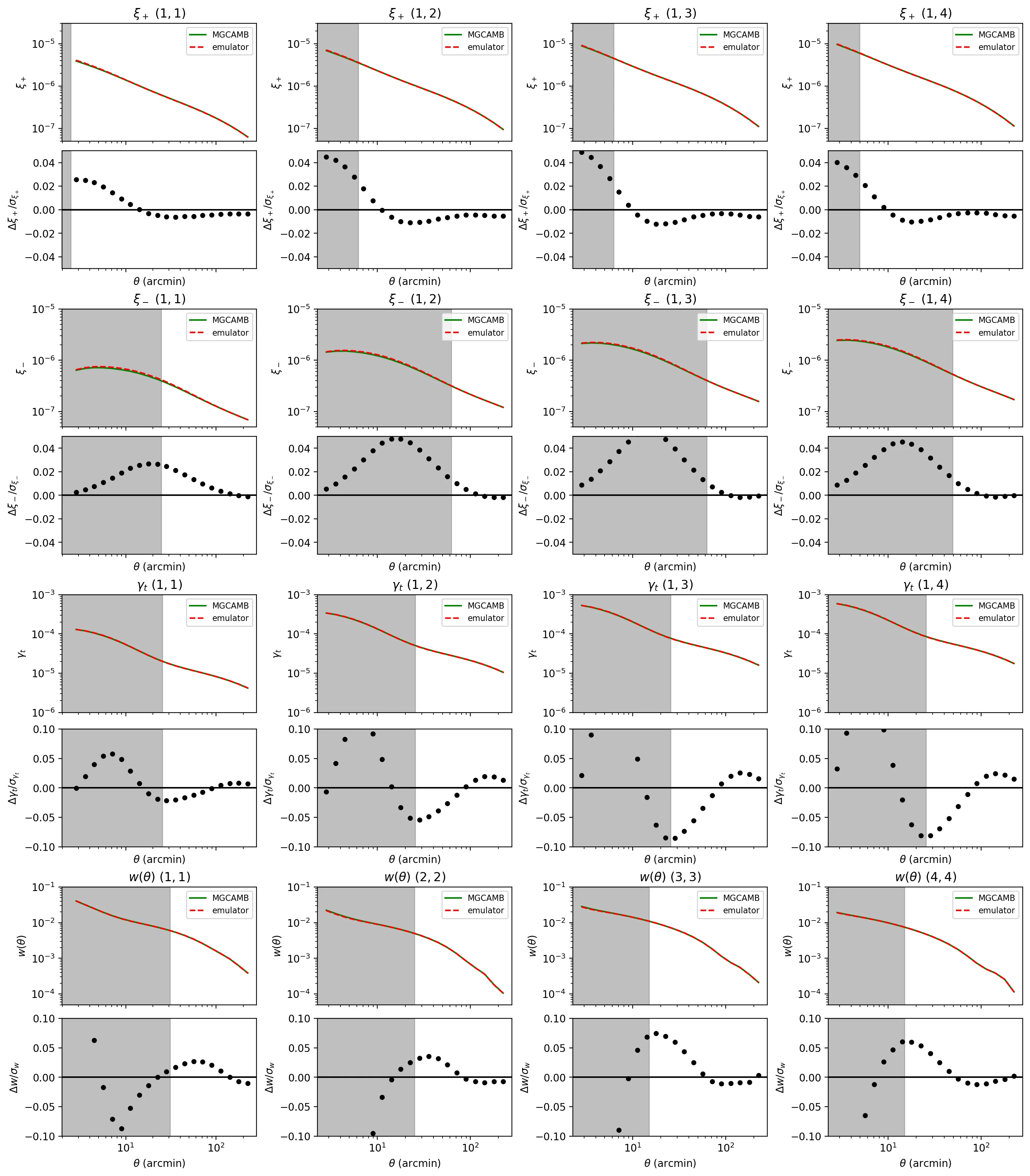
The researchers gave the emulator a tough exam. They generated synthetic data, as if a future telescope (like China's CSST or the American DESI) had observed a patch of sky, and tried to recover the original cosmological parameters. The emulator passed: all values returned to their rightful ranges, and suspicious deviations from standard gravity vanished, as they should if nature plays by Einstein's rules. This means the tool is ready for real data.
Now cosmologists can quickly run through hundreds of modified gravity models without waiting weeks for supercomputer results. The dark matter ocean is no longer opaque, a digital pilot guides us through invisible currents.
Nonlinear effects in cosmology are like a crowd in a narrow corridor: when there are few people, they walk freely (linear regime), but add density and you get jams and unexpected movements that simple formulas can't predict.
In Liu Cixin's novel 'The Dark Forest', civilizations use the laws of physics as weapons — perhaps the ability to quickly tell ordinary gravity from modified gravity might one day help detect such 'cosmic engineering works'.