Scientist

Helen Quinn

1943–present · elementary particle physics, theoretical physics
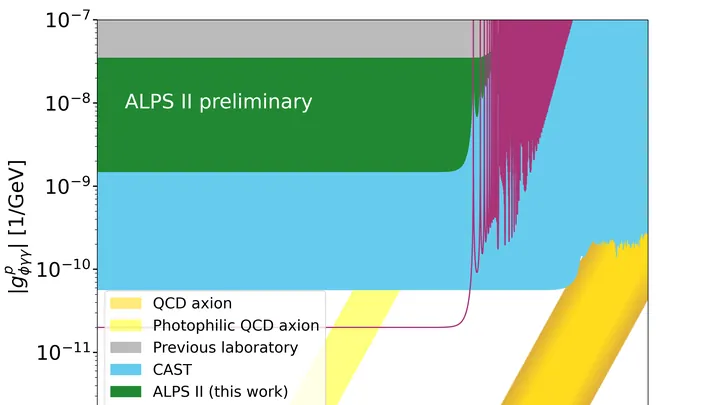
American theoretical physicist of Australian origin, best known for the joint development with Roberto Peccei of the Peccei–Quinn symmetry, which solves the strong CP problem. She made significant contributions to the understanding of fundamental symmetry breaking, axion properties, and to science education.

Biography

Helen Rhoda Quinn was born in Australia in 1943. She received her PhD from Stanford University. She worked at Harvard University, SLAC (Stanford Linear Accelerator Center). She was the first woman president of the American Physical Society (APS). She has received many awards for leadership and contributions to particle physics.

Key discoveries

💡 Helen Quinn loved mathematics from childhood, but initially thought she would become a school teacher. A turning point was meeting a famous physicist who convinced her to pursue research.
"She saw scientific questions as having no boundaries and the ability to ask them as a scientist's greatest gift."
Concepts
axiondark matterStandard Model
Scientists
Fritz ZwickyVera RubinEmilio Gino SegrèPaul DiracPeter HiggsRichard FeynmanJ. J. ThomsonMarie Curie

Related articles

Optics2024-11-293 minarXiv:2412.00271
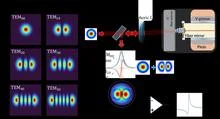
A String That Never Goes Out of Tune: Higher Modes Hold Light in the Resonator
Tuning a string: higher harmonics help hold the pitch without drowning out the fundamental note. In an optical microcavity, a tiny resonator made of two mirrors, light bounces between the reflective surfaces, and any jitter in the spacing knocks it off resonance.
One in Three Sun-Like Stars Is Born with a Tilted Disk
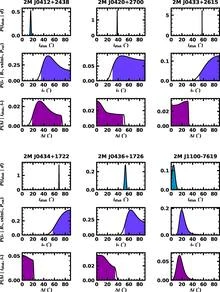
A spinning top tilted over a table, with a dusty pancake swirling around it. That is what a young stellar system looks like when the star's spin axis and the plane of its protoplanetary disk do not align. Until recently, astronomers did not know how common such a configuration is in nature.
Cosmology2025-09-112 minarXiv:2509.09472
Dark Matter Tuning Fork: How Axions Tune the Radio Sky
The ARCADE2 radiometer on a high-altitude balloon detected an excess radio emission, while the ground-based EDGES experiment found an anomalously deep trough in the hydrogen spectrum at 21 cm. Both signals do not fit the standard cosmological model and point to an unknown source of soft photons.
A Radio Receiver for the Whisper of an Invisible Field
Deep inside a cryostat, beneath layers of superconducting coils, lies a stack of hundreds of semiconductor layers. Each layer is just a few nanometers thick: gallium arsenide, then aluminum gallium arsenide. The electrons within these layers are confined to a plane, like ants on a sheet of paper.
HEP Experiment2025-12-161 minarXiv:2512.14110express
How a Sheet of Paper Decides to Wrinkle or Fold
A thin rubber film lies on a table. Someone grabs it by the middle and slowly pulls upward. The film doesn't just rise: it arches into a dome, then wrinkles run along the dome's edge, like pleats on a skirt. Pull higher — the wrinkles gather into large folds that cross the entire film. And if you start lowering it, the folds don't disappear but collapse into new shapes.
Exoplanets2026-01-061 minarXiv:2601.02665express
The Stumbling Dance of Two Planets Around TOI-4495
Two planets around the star TOI-4495 perform a stumbling dance: while the inner one completes two laps, the outer manages just one. But the rhythm is off — the inner planet speeds up and slows down, like a partner stumbling in her steps. Using the transit method, watching as the planets briefly dim the star's light, astronomers weighed these worlds.
HEP Phenomenology2026-01-081 minarXiv:2601.04576express
A Trap for Invisible Axions: A Magnetic Detector
Dark matter is five times more massive than ordinary matter, yet it emits no light. Its nature remains unknown. One candidate is the ultra-light axion particle. Axions could pierce right through the planet, barely noticing atoms.
HEP Phenomenology2026-01-091 minarXiv:2601.05472express
A Trapped Electron Catches Dark Matter Particles
Dark matter doesn't emit or reflect light, yet its gravity holds galaxies together. What it's made of is a mystery. One leading candidate is the axion, an ultra-light particle. Searching for axions is like listening for a very faint radio signal, but the receiver's own noise gets in the way.
HEP Experiment2026-01-131 minarXiv:2601.08140express
Invisible Particle Decays
In the BESIII detector, particles put on a show: they collide, are born, and decay, leaving flashes of light. But sometimes an actor can leave the stage unnoticed — through a hidden door that cameras don't see. Physicists were looking for exactly such 'quiet' decays, when a particle turns into something invisible to the instruments.
Exoplanets2026-01-131 minarXiv:2601.08938express
How a Hole in a Disk Blocks the Light
Around a young star spins a flat pancake of gas and dust — the future building blocks of planets. The star heats it with ultraviolet radiation, and gas from the disk's surface escapes into space, like water from a puddle under the sun.
Exoplanets2026-01-142 minarXiv:2601.09438express
Three Teenage Planets Around Star TOI-451
The young star TOI-451 wobbles slightly as three planets circle it. Each wobble is like the tremor of a spiderweb when a tiny spider crawls across it. Astronomers caught this tremor to learn how heavy the planets are. They watched the star for several months using telescopes on Earth. The planets kept passing in front of the star, briefly dimming its light.
Exoplanets2026-01-192 minarXiv:2601.13200express
Cosmic nurseries under fire
A young star is surrounded by a flat, rotating disk of gas and dust — the construction site for future planets. The disk lives its own life: gas flows toward the star, dust clumps together, and from outside, harsh ultraviolet light from neighboring hot stars presses down on it all, like wind blowing leaves off a path.
Exoplanets2026-01-191 minarXiv:2601.13391express
How Planets Are Born: Turbulence in the Gas Disk
Around young stars, flat clouds of gas and dust swirl: these are the birthplaces of planets. For matter in such a disk to clump together, it must be constantly stirred. But what makes the gas move chaotically when it would otherwise be calm? Part of the answer lies in the fact that the gas in the disk barely conducts electricity: it is weakly ionized.
Plasma Physics2026-01-222 minarXiv:2601.15567express
The Dense Dead End of Fusion
A fusion reactor is an attempt to hold a miniature sun in a magnetic cage. To get more energy out of it, you need to squeeze the plasma denser. But tokamaks have an invisible fence: once the density crosses a certain line, the plasma shudders and falls apart. This disruption is one of the main mysteries on the road to clean energy.
How a Drop with Nanoparticles Cracks on Glass
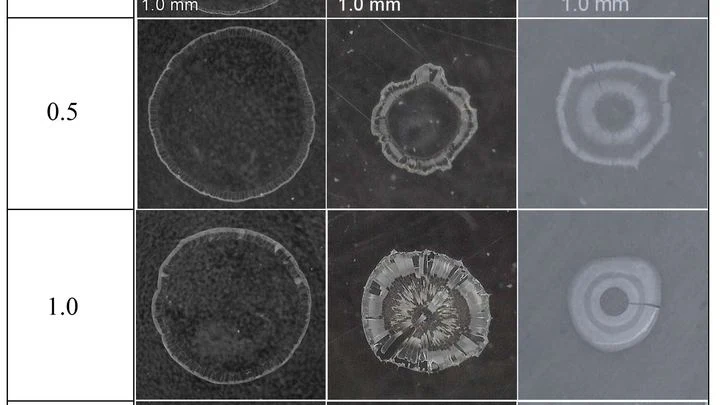
A coffee drop on a table dries and leaves a ring — coffee particles gather at the edge. But if charged nanoparticles float in the drop, the picture becomes richer: the deposit cracks like mud in a dried-up puddle. Physicists studied how the particle charge and the surface on which the drop dries change these cracks.
Quantum Physics2026-01-281 minarXiv:2601.20991express
Freezing the Moment: How Photons Stood Still for Precision
Light traveling through an optical fiber is like a runner in a narrow corridor: it can run straight, or it can weave from side to side. The direction of these "weaves" is polarization. Physicists have learned to keep the runner on a straight path: they constantly check its trajectory and gently correct it, not letting it veer off.
HEP Experiment2026-01-282 minarXiv:2601.21074express
A Trap for the Invisible: An Array of Resonators
A pot on the stove rings when the water boils. An empty copper cup can also "ring"—at radio frequencies — if a dark matter particle is born inside it. These particles are called axions, and according to one hypothesis, they fill the entire galaxy as an invisible cloud.
Geophysics2026-01-301 minarXiv:2601.22606express
Mars's Brain-Like Terrain Tells a Tale of Climate Shifts
In the northern part of Arabia Terra, there are fields that look like a giant brain: ridges and troughs wind like convolutions. On Earth, similar patterns form in cold regions when water in the soil freezes and thaws, causing stones to sort themselves into stripes. But the Martian ridges are taller — averaging 3.29 meters — while Earth's mechanisms produce less than half a meter.
Exoplanets2026-01-302 minarXiv:2601.23069express
The Carbon Diet of Young Stars
Young stars are surrounded by disks of gas and dust, like construction sites for future planets. From this material, rocky worlds and gas giants will eventually assemble. So the chemical composition of the disk directly determines what the planets will be like.
Optics2026-01-312 minarXiv:2602.00591express
A Ring That Lets Light Through
Terahertz radiation sits between microwaves and infrared light. It passes through clothing, paper, and plastic, but not through metal or water. That's why it's used in security scanners and medical imaging. To see the polarization of such radiation, you need a detector.
HEP Phenomenology2026-02-011 minarXiv:2602.01010express
Hunting the Heavy Twin of the Top Quark
The top quark is the heaviest known building block of matter, but theory predicts a stealthy twin, the T-quark, which could be several times heavier. To coax it into the open, physicists collide protons with muons — the electron's unstable relatives.
Instrumentation2026-02-032 minarXiv:2602.03233express
Light That Gives Itself Away
Light from a star is not just a stream but a wave that can oscillate in different directions. Ordinary light is like a crowd where everyone waves their arms randomly. But after reflecting off dust grains or passing through a magnetic field, some waves align in a single line, like soldiers in a row.
Exoplanets2026-02-031 minarXiv:2602.03393express
A Dancing Disk Around a Young Star
Around young stars, disks of gas and dust swirl: these are the construction sites for future planets. In the binary system HD 142527, such a disk is especially intriguing. Astronomers aimed three instruments working in the infrared range (thermal emission from dust) at it and saw a surprising picture.
HEP Experiment2026-02-051 minarXiv:2602.05388express
Axion Hunt: False Alarm at 1 GHz
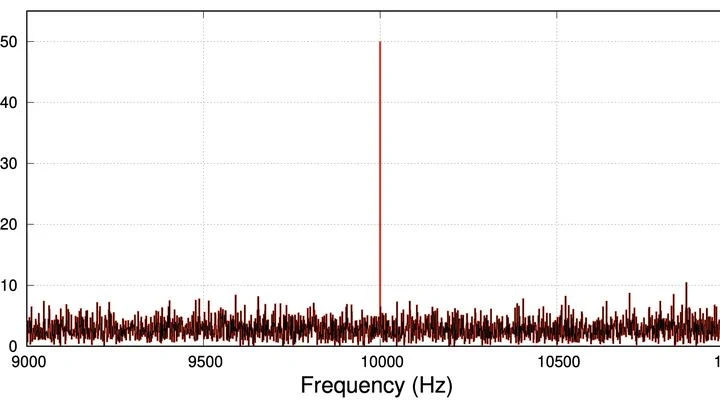
A metal resonator, chilled to near absolute zero, listens to the radio noise of the universe. Amid the chaos of thermal fluctuations and electronics, a faint peak might emerge — the trace of an axion, a particle that could make up dark matter.
Plasma Physics2026-02-072 minarXiv:2602.07329express
Why Stellarators Don't Blow Up
In a tokamak, plasma is like a crowd on a narrow street: once someone starts running, everyone takes off at once. In a stellarator with a non-circular cross-section, the street is winding, with dead ends and pockets. The crowd can't gather into a single wave — people get stuck in different corners.
Optics2026-02-072 minarXiv:2602.07657express
Polarization of Terahertz Waves: A New Compact Spectrometer
Terahertz radiation sits between microwaves and infrared light. It passes through clothing, paper, and plastic but is blocked by water and metal. That's why these waves are used in security scanners and for quality control of materials.
Exoplanets2026-02-131 minarXiv:2602.12522express
A Warm Pocket in a Cold Disk
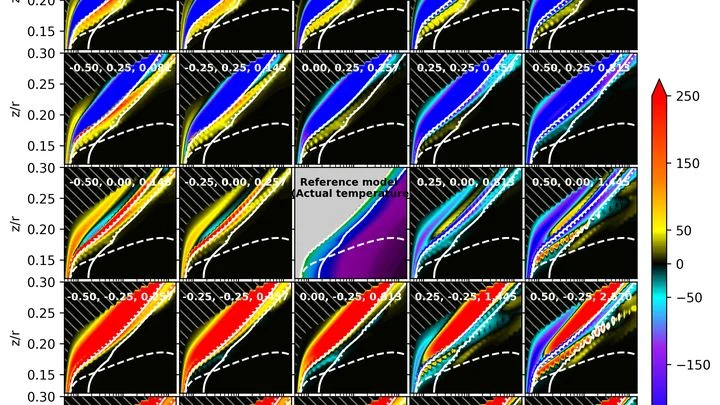
The young star PDS 66 is surrounded by a flat disk of gas and dust — the cradle of future planets. In the cold outer regions of such a disk, silicon and sulfur are usually hidden inside dust grains, but astronomers spotted a bright patch of gas at about 60 astronomical units from the star.
Optics2026-02-161 minarXiv:2602.14459express
How Light Reveals the Fibers of Tissue
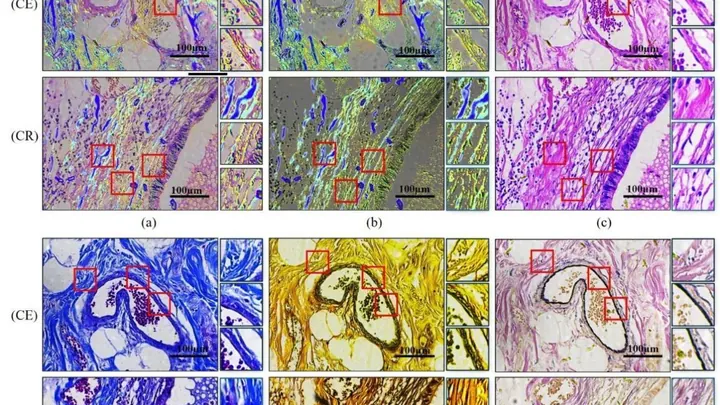
Inside our bodies, between cells, there is a support network — the extracellular matrix. It's like scaffolding made of proteins and carbohydrates that holds cells in place. When the fibers in this network change, it can be a sign of disease — for example, cancer or fibrosis. Usually, to see these fibers, tissue is cut into thin slices and stained with special dyes.
Cosmology2026-02-171 minarXiv:2602.15611express
How to Catch an Invisible Shadow
Light from the star HD 163296 passes through the surrounding gas-and-dust disk like a flashlight beam through murky water. The disk's particles scatter the light, giving it a special property — polarization: the waves begin to oscillate in a single plane, like a rope shaken strictly up and down.
Exoplanets2026-02-171 minarXiv:2602.16030express
Cosmic Kitchen: How Carbon and Oxygen Shape the Look of Disks
When a chef prepares a dish, not only the proportions of ingredients matter but also their total amount. Two pies with the same sugar-to-flour ratio but made from different batch sizes will turn out differently. So it is with disks around young stars: carbon and oxygen are the key 'spices,' and their absolute amounts change the look of the cosmic 'kitchen' no less than their ratio.
HEP Experiment2026-02-202 minarXiv:2602.18392express
Underground Hunt for Invisible Matter
Deep in the Italian Apennines, under a thick layer of rock, sits a crystal that catches every decay of radioactive americium. Americium emits gamma rays with an energy of 59.5 kiloelectronvolts, like a very sharp bell that always sounds the same.
Exoplanets2026-02-232 minarXiv:2602.19941express
A Dust Ring Where Giants Are Born
Around the young star MWC 480, a flat disk of gas and dust whirls, like a giant carousel where, instead of horses, you have building blocks for planets. Radio telescopes peered into this disk at different wavelengths, from millimeter to centimeter, and saw exactly where the dust accumulates and how large the grains are.
Exoplanets2026-02-231 minarXiv:2602.20346express
Cosmic Disks Flicker Like Candles
Around young stars, flat clouds of gas and dust swirl — the building material for future planets. Starlight reflects off these clouds, and astronomers see them as faint disks. But sometimes bright spots or dark bands appear in such disks. Fresh observations with the Subaru Telescope show these patterns can change within a matter of months.
HEP Experiment2026-02-271 minarXiv:2602.24089express
The Invisible Arrow in Particle Decay
When an electron and a positron collide at the BESIII collider, they produce a short-lived particle — the charmed baryon Λc+. Inside it, like in an overstuffed box, another particle quickly emerges: the Λ hyperon. This hyperon has its own rotation, its spin, and physicists have for the first time been able to measure how much that rotation is aligned with the particle's direction of motion.
q-bio.OT2026-03-013 minarXiv:2603.06657
The Two Leaks of Aging: Why Some Breakdowns Fix Themselves and Others Need a Specialist
In a house where people live, something is always breaking: a faucet drips, a door creaks, a light bulb burns out. The residents tighten the valve themselves, grease the hinges, screw in a new bulb. This is routine repair, it is visible, and you can do it with your own hands. But there are breakdowns of another kind: a crack in the foundation, corrosion inside a wall, a leak behind the drywall.
Stellar2026-03-062 minarXiv:2603.06230express
Weighing the Dust Around Young Stars
Dust grains in the disk around a young star stick together, grow, and will eventually become planets. But to know how much planet-building material each disk holds, you need to measure its mass and size. You can't weigh a distant cloud directly: you have to infer it from the dust's radiation.
Quantum Gases2026-03-101 minarXiv:2603.09357express
Solitons on a Magnetic Rope
Magnetic waves in an ultracold gas behave like elastic cords. Two or three such cords can twist into a single knot that breathes: it contracts and expands, but never unravels. For the first time, scientists assembled such knots in the lab and confirmed that their breathing matches calculations exactly. The gas consisted of two atomic species that do not mix, like oil and water.
Neural Network Hears Polarization
In particle scattering experiments, the target is often polarized: nuclei are aligned so that their spins point predominantly in one direction. The degree of this alignment affects the collision outcomes.
HEP Experiment2026-03-112 minarXiv:2603.10943express
Hunting the Invisible: How to Catch Axions
In deep cold, at a temperature just two degrees above absolute zero, a copper cavity the size of a saucepan listens to the silence of the universe.