A Quantum Compass for 3D Vision express
A camera looks at two distant sparks. They're so close together that they merge into a single fuzzy blob. It seems impossible to tell them apart — the classic limit of optical microscopy has been reached.
But quantum mechanics hints that the light field still holds a secret about where each spark sits. The information hasn't vanished: it's just hidden in the structure of the blob itself. The authors tackled the three-dimensional case and mathematically squeezed out the quantum precision limit for estimating the full distance between two incoherent sources. It turns out that even when one spark dims against the other, the precision doesn't drop to zero. It holds thanks to a second-order tensor — a quantity that describes how the blob shifts with tiny displacements. This tensor, like a built-in compass, points to the best direction for measurement. If the point spread function (the blob's shape) has mirror symmetries, you can find the optimal orientation of the two sources almost by eye, just by looking at the symmetry axes.
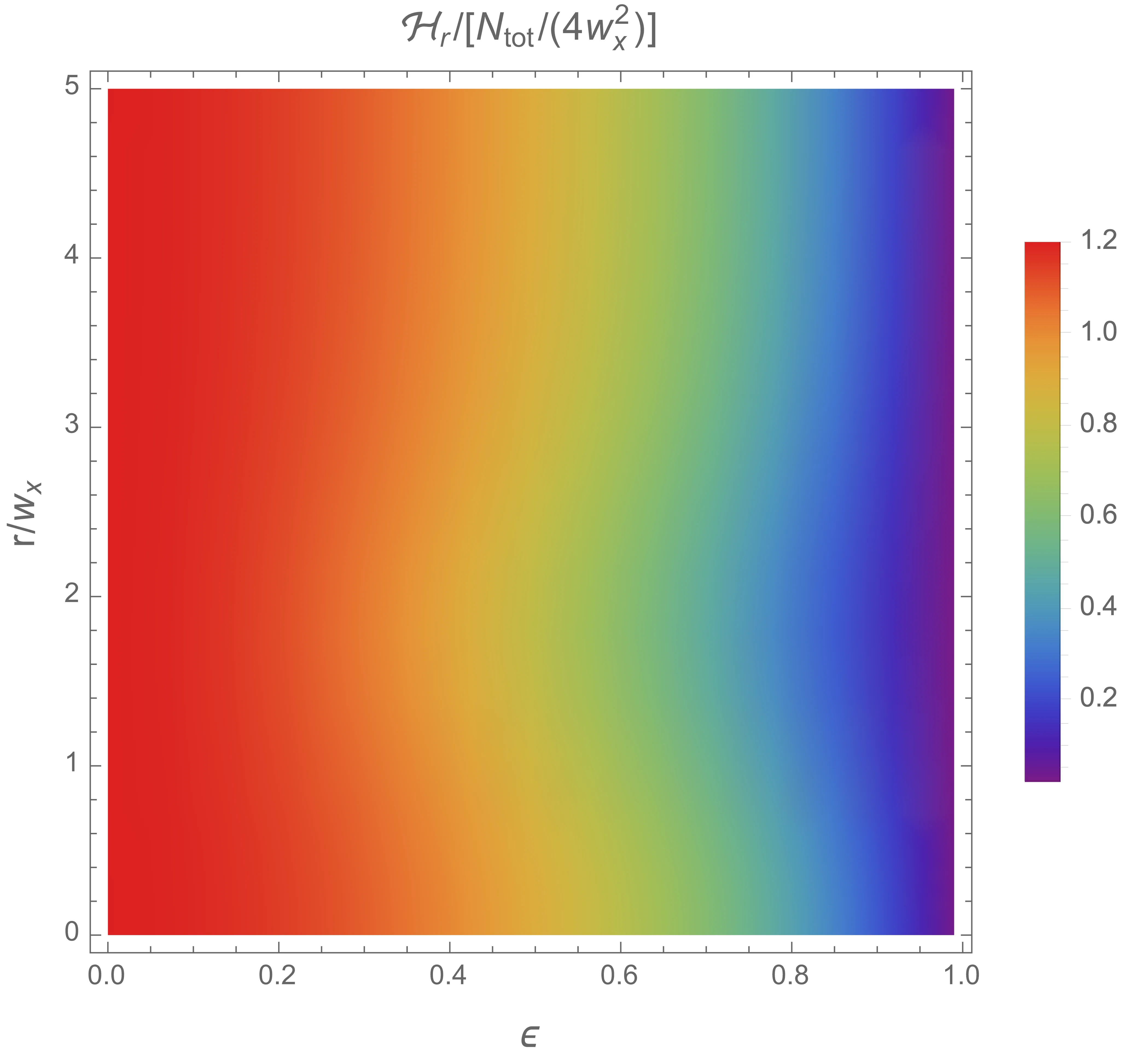
For the most common three-dimensional Gaussian blur, the response tensor turned out to be directly proportional to the inverse matrix of the blob's spatial uncertainty. In simpler terms, the more elongated the blob is in a given direction, the more precisely you can measure distances along that axis. The geometry of the blur and quantum precision are directly linked, with no extra assumptions.
So abstract geometry turns into practical advice: without changing the optics, just by physically rotating the system, you can squeeze out maximum resolution. The idea is as simple as turning a pair of binoculars, but it's backed by rigorous quantum calculations. And then two sparks that seemed indistinguishable regain their depth — the camera sees a three-dimensional distance where there was only a flat blob before.
Original abstract
as written by the authors arXiv:2608.04876v1
Quantum superresolution reveals that the vanishing of separation sensitivity in conventional imaging below the Rayleigh limit does not necessarily indicate a fundamental loss of information in the optical field. However, the quantum limit for estimating the physical distance between two incoherent point sources in three-dimensional imaging systems and its dependence on the spatial structure of the point-spread function remains largely unknown. In this work, we derive the quantum-limited precision for estimating the full distance between two incoherent point sources with arbitrary intensity imbalance in a three-dimensional spatially invariant imaging system. We show that the distance information remains finite in the sub-Rayleigh regime and is governed by the second-order displacement-response tensor of the point-spread function. The eigensystem of this tensor determines the optimal relative orientation between the two sources, and reflection symmetries of the point-spread function can further provide a simplified means of identifying the optimal orientation. This geometric structure is coordinate invariant and provides a direct strategy for improving resolution by physically rotating an anisotropic imaging system to align its optimal principal response direction with the source displacement. For a general three-dimensional Gaussian point-spread function, the response tensor is proportional to the inverse spatial covariance, establishing a direct connection between quantum-limited distance precision and the geometry of Gaussian distribution.
The classic resolution limit, named after Rayleigh, was long considered a wall. But quantum optics showed it's more like a curtain, behind which many details remain.
In Aldous Huxley's novel "Eyeless in Gaza," characters discuss the limits of perception — perhaps quantum super-resolution would have been just the tool to turn a blurry blob into a meaningful picture.