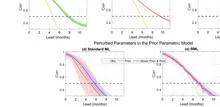
Root mean square error (RMSE) is a standard measure of how far predictions are from actual values. It is calculated by taking the differences between predicted and observed values (the errors), squaring them to remove negative signs, averaging those squares, and then taking the square root. The result is in the same units as the original data, making it intuitive: an RMSE of 3 meters means typical prediction errors are around 3 meters.
History
The concept has roots in least-squares methods dating back to Gauss and Legendre in the early 19th century, though the specific term 'RMSE' became common with the rise of statisticalforecasting in the 20th century.
How it works
For each data point, compute the error (predicted minus actual). Square each error, sum them all, divide by the number of points to get the mean squared error, then take the square root. Squaring gives more weight to large errors, so RMSE is sensitive to outliers. It is always non-negative, and a value of zero means perfect predictions.
In practice
Used everywhere from weather forecasting to machine learning to evaluate model accuracy—for example, comparing different climate models' predictions of temperature against observed records.
Fun fact
RMSE is always larger than or equal to the mean absolute error (MAE), because squaring emphasizes big mistakes, so the difference between them tells you how much your errors are driven by outliers.
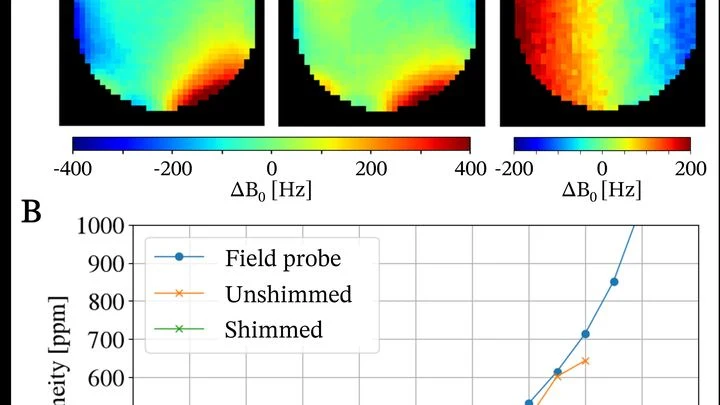
An MRI scanner is a big magnet that aligns hydrogen atoms in the body and then picks up their response signal. Such machines usually take up an entire room and cost as much as a nice house. Engineers from several labs decided to build a scanner that fits in a suitcase and released all the plans as open source.
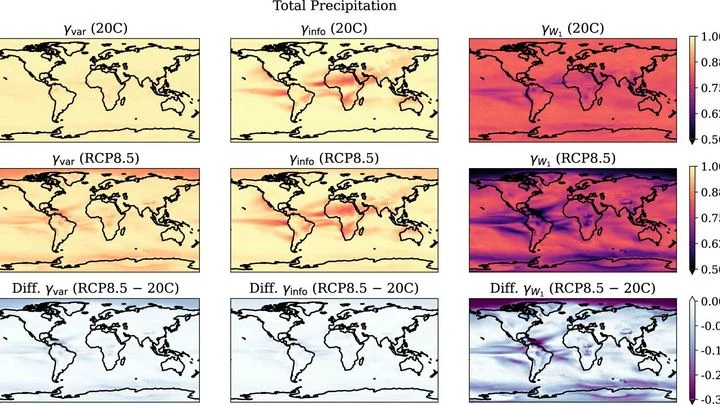
In winter, one part of town gets three times as much snow as the neighborhood next door. One year is a scorcher, the next is a cold snap. That's the whims of weather. But over decades, a different, slow shift emerges: winters, on average, get milder. Telling the two apart is the central challenge for climate scientists.
A camera looks at two distant sparks. They're so close together that they merge into a single fuzzy blob. It seems impossible to tell them apart — the classic limit of optical microscopy has been reached.
But quantum mechanics hints that the light field still holds a secret about where each spark sits.
Light escaping a massive body loses energy: its waves stretch, and its color shifts toward the red. This is gravitational redshift, known since the work of Einstein.
In 1998, mathematician David Boyd noticed something strange. He was studying the Mahler measure of polynomials, a quantity that gauges the "complexity" of their roots, and found that for a family of curves, it always equals a special rational number times the derivative of an L-function.
An array of radio telescopes is like a camera missing several lenses. Ever since Karl Jansky picked up the radio hiss of the Milky Way, astronomers have been trying to piece together a whole picture from fragmentary signals. But the antennas are spaced apart, and the mathematically “developed” image — the dirty map — ends up smeared.
Code-writing assistants often behave like a chef who, to boil a single egg, rereads the whole cookbook. When asked to make a tiny fix, they reopen dozens of files and retrace long-familiar connections. This is unnecessary work — energy going to waste.
The MethaneSAT satellite scans for leaks of метана — a gas that's invisible but packs a powerful planetary warming punch. Its "nose" is a спектрометр, a device that spots the subtlest color changes in light passing through the atmosphere — the telltale sign of methane.
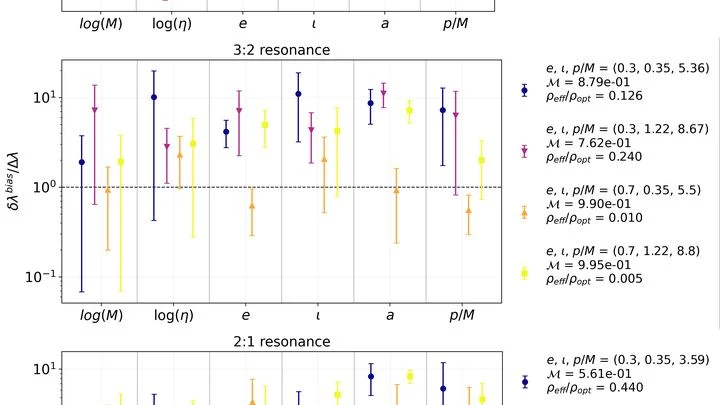
A figure skater glides across the ice, gradually moving toward the center. Their trajectory isn't a perfect spiral: sometimes they catch the rhythm of the music and add an extra turn, slightly changing their speed. That's roughly how a small black hole behaves when it falls into a supermassive one.
A quantum computer is like an orchestra where each musician plays their part, but one wrong note can ruin the entire symphony. To prevent this, you need a listener who instantly catches the false note without interfering with the performance.
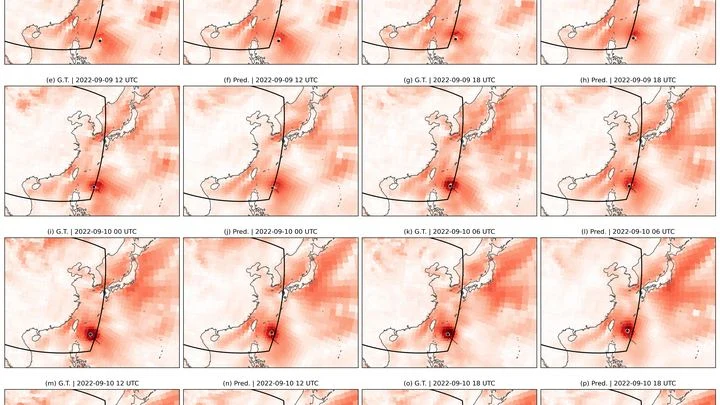
The atmosphere is a chaotic system, and a detailed global forecast requires monstrous computing power. StretchCast sidesteps this by working like the human eye: it creates 'sharp vision' over a selected region with an ultra-fine grid, while seeing the rest of the world blurry, but sharp enough to capture global connections.
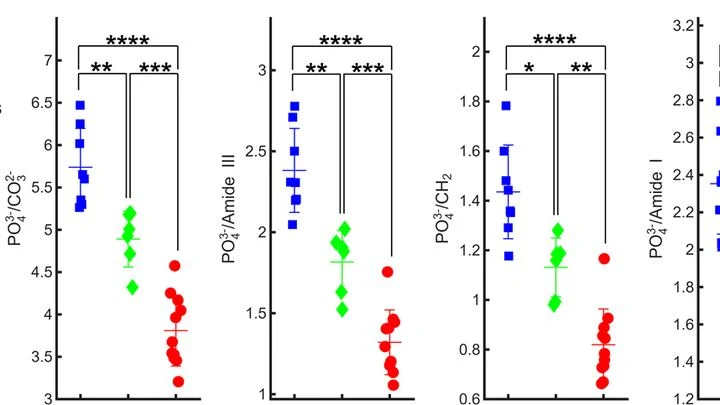
A finger is illuminated with a laser beam, and some of the light returns after traveling inside. That's how Raman spectroscopy works: molecules in bone and skin alter the color of the reflected beam differently, leaving their chemical fingerprints. But skin, muscle, and fat are noisy: their signal drowns out the bone's, like a crowd's chatter overpowering a single singer.
Water swirling into a vortex eventually stops being smooth: foam and spray appear. Mathematicians describe such flows with equations, but there's a puzzle — sometimes the solution 'explodes,' becoming infinite, and no one knows why. Stochastic modeling doesn't help here; we need a precise tool.
In a regular battery, the electrolyte is liquid, and charged particles (ions) move freely. In the solid-state version, they squeeze through atomic 'corridors', like pedestrians in narrow passages. For a battery to work quickly, you need a material with high ionic conductivity.
Solar flares — sudden energy releases on the Sun — can knock out satellites and power grids. Previous models often either cried wolf or missed a real blow. The fix: attach a reliability estimate to every prediction.
Cream, gel, blood, or construction mortar: they all both flow and spring back. To understand how such a material will behave, engineers and doctors usually squeeze or rock it with a special instrument. That is slow and damages the sample.
A group of researchers proposed a different path.
A quantum computer is like an orchestra where each qubit is a musician, and a measurement is the conductor's attempt to hear who played what. But the hall is noisy: the signal fades like sound through a thick wall, and the conductor himself sometimes mixes up the notes.
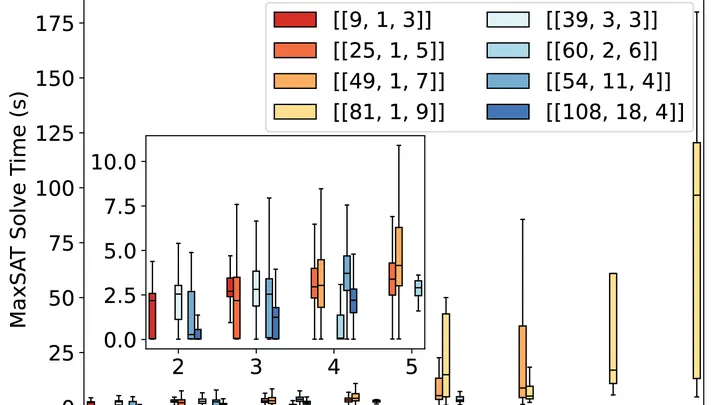
A quantum computer is like an orchestra where each musician plays their own part but sometimes hits a wrong note. To keep the music from turning into cacophony, you need a conductor who corrects mistakes in time. In quantum computing, the role of the conductor is played by error-correcting codes.
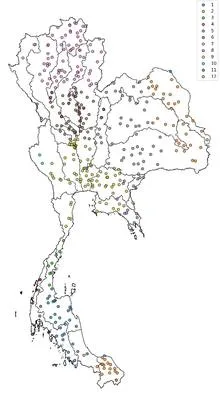
Tuning an old radio receiver requires patience: you slowly turn the dial, catch a crackle, turn it again, until a voice emerges through the static. In much the same way, a reinforcement learning agent searched the ocean for two patches whose temperature difference best predicts rains in Thailand.
Galaxies in the Universe are not scattered randomly: neighboring ones move in the same direction, like a school of fish, while distant ones each go their own way. Where the boundary between 'together' and 'apart' lies has been unclear until now.
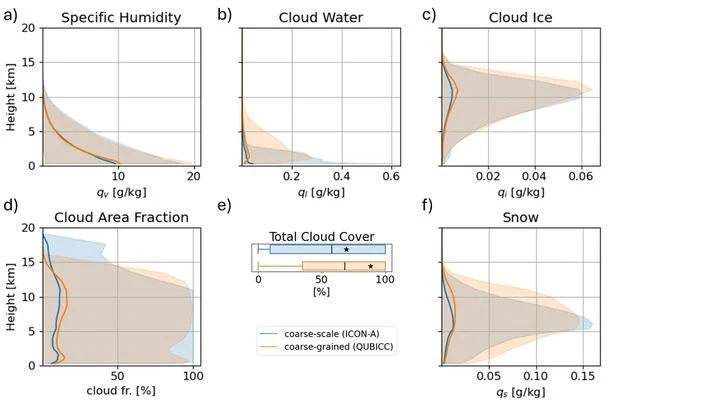
Climate forecasting is like a complex recipe: one wrong pinch and the whole dish is ruined. So it is with clouds — small but decisive. Climate models divide the sky into 50–100 km cells and don't see individual clouds. It's like throwing pepper by the handful when the recipe calls for a pinch.
On the night of March 9–10, 2024, a cloud of plasma ejected by the Sun raced away from the star. It had already passed a distance of five solar radii when a ground-based array of 352 antennas in California's Owens Valley caught a brief radio signal from it.
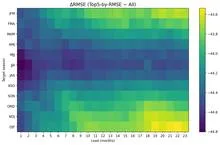
A team of forty forecasters prepares an El Niño forecast two years ahead. Each works with the same model but slightly different initial conditions and settings, so their outputs diverge. Typically, forecasting centers average all forty opinions, assuming each member is equally useful.
Imagine an interpreter who gets distracted by every rustle in the hall. The more rustles, the more errors in the translation, even though the meaning of the speech hasn't changed. The same happens with data: if measurements are unevenly spaced, standard analytical tools start "hearing" changes that never occurred in the underlying process.
An interpreter at an important negotiation keeps a draft of their speech at hand but checks against the live conversation as they go: if what is said diverges from the prepared text, they adjust the translation on the fly.