A Quiet Amplifier for a Weak Signal express
The coil in an MRI picks up radio signals from hydrogen atoms, like an antenna catching a distant radio station. But the signal is weak, and if the amplifier itself is noisy, the image comes out grainy. In low magnetic fields (which are cheaper and more compact than strong ones), such amplifiers are scarce and pricey.
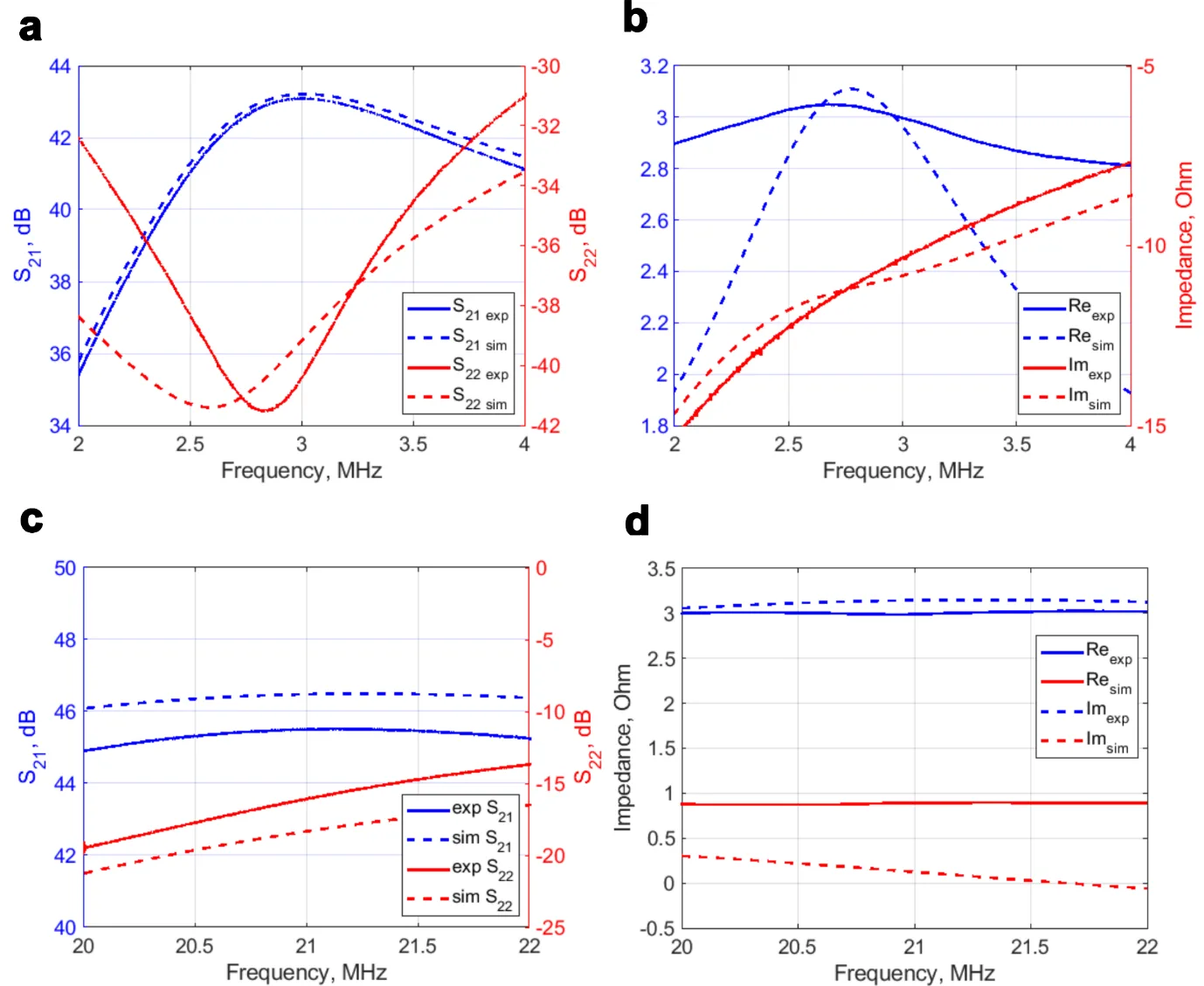
Engineers built an amplifier from ordinary bipolar transistors — the kind that cost pennies and are sold at any electronics store. The circuit is designed so that the amplifier adds almost no noise (less than 1.3 decibels) and has a low input impedance of 3 ohms. This is important: the coils in an array stop "shouting over" each other, and each one hears only its own section of the body.
The amplifier was tested at frequencies of 3 and 21.2 MHz and in a real scanner with a field of 0.5 tesla. The images came out sharp, and the signal was strong. Compared to a commercial amplifier for these frequencies, the homemade one performed better in terms of noise and was several times cheaper.
This approach paves the way for affordable MRI machines for clinics that can't afford superconducting magnets. After all, a low field is not only cheaper but also safer for patients with implants.
At 0.5 tesla, the signal frequency from hydrogen is about 21 MHz, which is close to the shortwave radio band where amateur radio operators work.