An amplifier is a device that increases the power, voltage, or current of a signal, typically by using an external energy source to boost the input. In electronics, amplifiers are essential for processing weak signals from sensors, antennas, or microphones, making them strong enough for further processing or transmission. In physics, amplifiers also play a role in sustaining oscillations, as in lasers or radio transmitters, where they provide the gain needed to overcome losses.
History
The first practical amplifier was the vacuum tube, developed by Lee De Forest in 1906 with his Audion tube, which enabled early radio and telephone systems. The transistor, invented in 1947 by John Bardeen, Walter Brattain, and William Shockley, revolutionized amplification by making it smaller, more efficient, and more reliable.
How it works
An amplifier works by taking a small input signal and using it to control a larger flow of energy from a power supply. In a transistor-based amplifier, for example, a small voltage or current at the base or gate modulates a larger current between the collector and emitter or source and drain. The key parameter is gain, the ratio of output to input, which can be tuned to achieve the desired amplification without introducing excessive distortion or noise.
In practice
Amplifiers are used in virtually every electronic device, from audio systems and medical instruments to communication networks and particle detectors, where they boost faint signals to measurable levels.
Fun fact
In quantum computing, parametric amplifiers can amplify signals without adding significant noise, approaching the quantum limit set by the Heisenberg uncertainty principle.
A superconducting detector usually works like an honest ruler: absorb a photon, get a pulse whose amplitude is strictly proportional to the energy. This mode is convenient, but it has a ceiling: a weak signal easily gets lost in the amplifier noise.
Now imagine a swing.
A regular battery releases heat smoothly: what you store is what you get. The power is fixed once and for all, like a faucet that pours water in a single stream. But sometimes you don't need a steady flow; you need a short, powerful burst: to instantly heat a part, trigger a reaction, or dump excess heat.
Catching light one particle at a time is like hearing a whisper in a roaring factory. An electron-multiplying camera (EMCCD) can do exactly that: it turns a single photon hitting a pixel into an avalanche of electrons that can be measured. These cameras are mounted on telescopes to spot a barely visible planet next to a dazzling star.
Hit a table, and the sound quickly fades. Elastic waves in solids usually behave like ripples on water: they spread from the source and die out. But there is a way to make them freeze in place — by creating a 'flat band' in the frequency spectrum. This is a range where waves lose their speed and pile up, like cars in a traffic jam.
Traditional hearing aids resemble a chef who cooks from a recipe blindly. They analyze the sound chaos from the microphone and amplify speech based on it. In a noisy café, this approach often errs. The new system behaves like an experienced cook: first processes the signal, then samples the result.
Cleaning speech from noise is like tuning an old TV: twist the contrast knob too far, and faces become unnatural. Researchers separately adjusted the 'volume' and 'time shift' for each frequency of sound, as if splitting it into a rainbow — a method known as spectroscopy. It turned out the key knob is volume, not phase synchronization.
When a massive star explodes as a supernova, its outer layers are blasted into space at thousands of kilometers per second. A shock wave forms — a giant invisible bulldozer that sweeps up interstellar gas and dust. In this maelstrom, particles can be accelerated to energies comparable to that of a flying tennis ball compressed into a single proton.
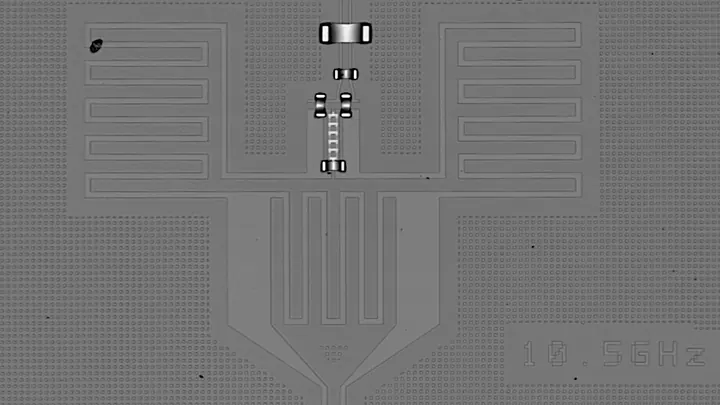
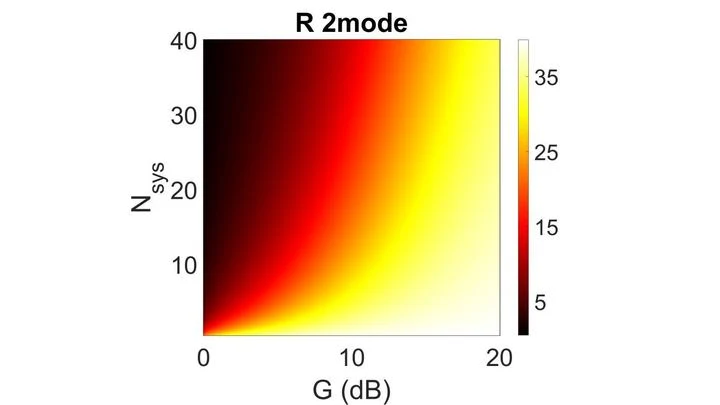
A whisper in a noisy room is nearly indistinguishable. A conventional amplifier adds its own noise and drowns out the weak sound. A quantum amplifier works differently: it amplifies the signal while adding almost no extra noise, like a perfect ear. But even such an ear has its own problems.
A molecular amplifier is like a door latch: a weak signal opens the way for a strong one. In living cells, such amplifiers work constantly, but they almost always burn fuel. Can you amplify a signal without expending energy?
A laser flash lasting 50 femtoseconds is like a shot that lasts one billionth of a second. In that time, light travels only 15 micrometers — less than the thickness of a human hair. But if you send such a flash through an amplifier, it starts to stretch like a rubber band and loses its sharpness.
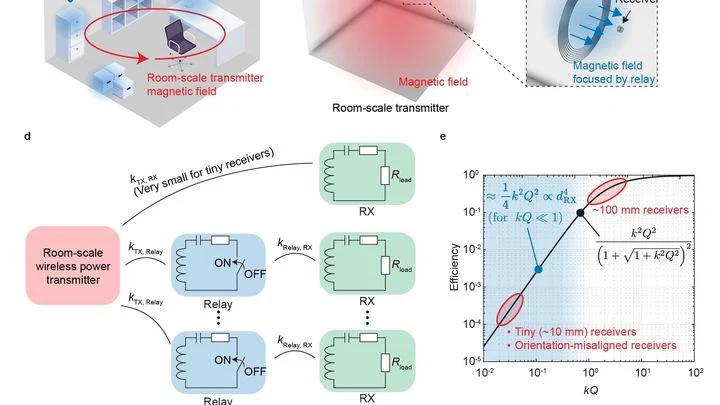
Think of wireless charging in a room as a pool where energy-water is everywhere, and tiny sensor-floats barely bob. Their induction coils are too small to efficiently scoop from this diffuse electromagnetic field. Unlike radio waves, the energy here doesn't travel at the speed of light: it lingers in the near field, waiting to be harvested.
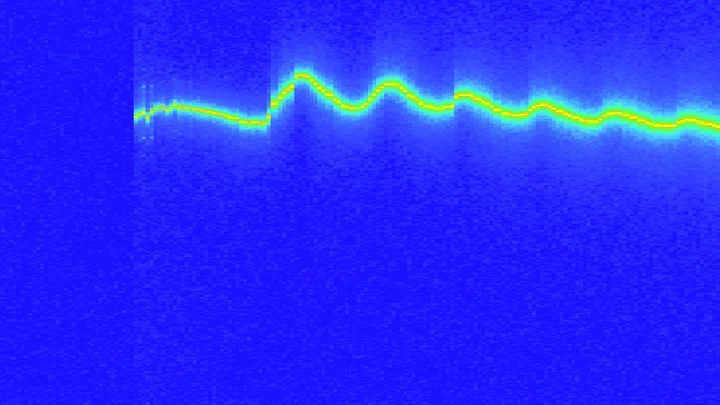
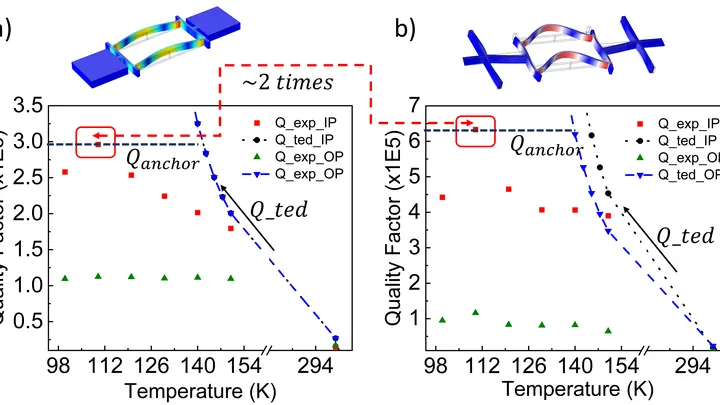
A tiny diamond bridge vibrates so strongly that it starts to 'sing' at many frequencies at once. Previously, such vibrations would dampen themselves: the harder the resonator swung, the harder it was to add energy. Physicists found a loophole in this rule.
They used light to drive the diamond. Light pushes on the bridge, making it tremble.
A quantum bit (qubit) is like a barely discernible whisper in a hum of voices. A regular amplifier makes the whisper louder, but along with it, the hum as well, making it harder to hear the essence. Physicists have created a clever device that generates two identical signal-whispers at different frequencies — the original and its echo.
Sound in a solid is waves of compression and rarefaction rippling through atoms, like ripples across a spring mattress. If you place obstacles with just the right spacing, waves at certain frequencies can't pass: they bounce back. Such a periodic structure is called a phononic crystal, and it works for sound the way a multilayer mirror works for light.
A tiny particle floats in a laser beam like a speck of dust in a flashlight's glow. Water molecules constantly jostle it — randomly, from all sides. Usually these bumps are a nuisance: the particle twitches, and precise measurements turn into a lottery. But physicists have figured out how to turn the interference into an advantage.
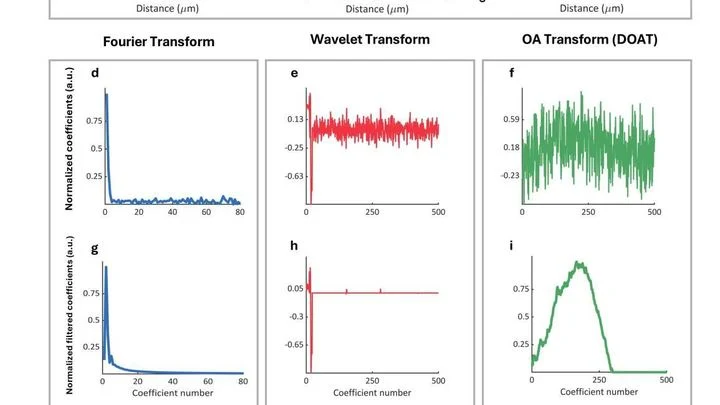
A laser beam hits the skin, and tissues respond with a barely audible ultrasonic echo. From that echo, doctors can see blood vessels and tumors without making a single incision. But before the picture appears on the screen, the signal has to be cleaned of noise, just as a cook skims the foam off a broth to make the soup clear.
An ordinary free-electron laser is like a musical instrument with a single string: it can play only one note until you change its design. To get a different wavelength, you have to retune magnets or accelerate electrons harder. That's expensive and bulky.
A quantum computer is like an orchestra, where each qubit is a musician and the control signals are the conductor. If the conductor waves the baton imprecisely, the musicians fall out of sync. In a real device, signals pass through power amplifiers, like loudspeakers that add noise and distortion.
A laser beam is trapped between two mirrors, one of which trembles under an invisible force. Each vibration of the mirror changes the phase of the light, and from these changes you can infer the force. But the light itself pushes on the mirror, which is quantum backaction, and it imposes a fundamental limit on measurement accuracy.