Laser Corkscrew Accelerates Electrons express
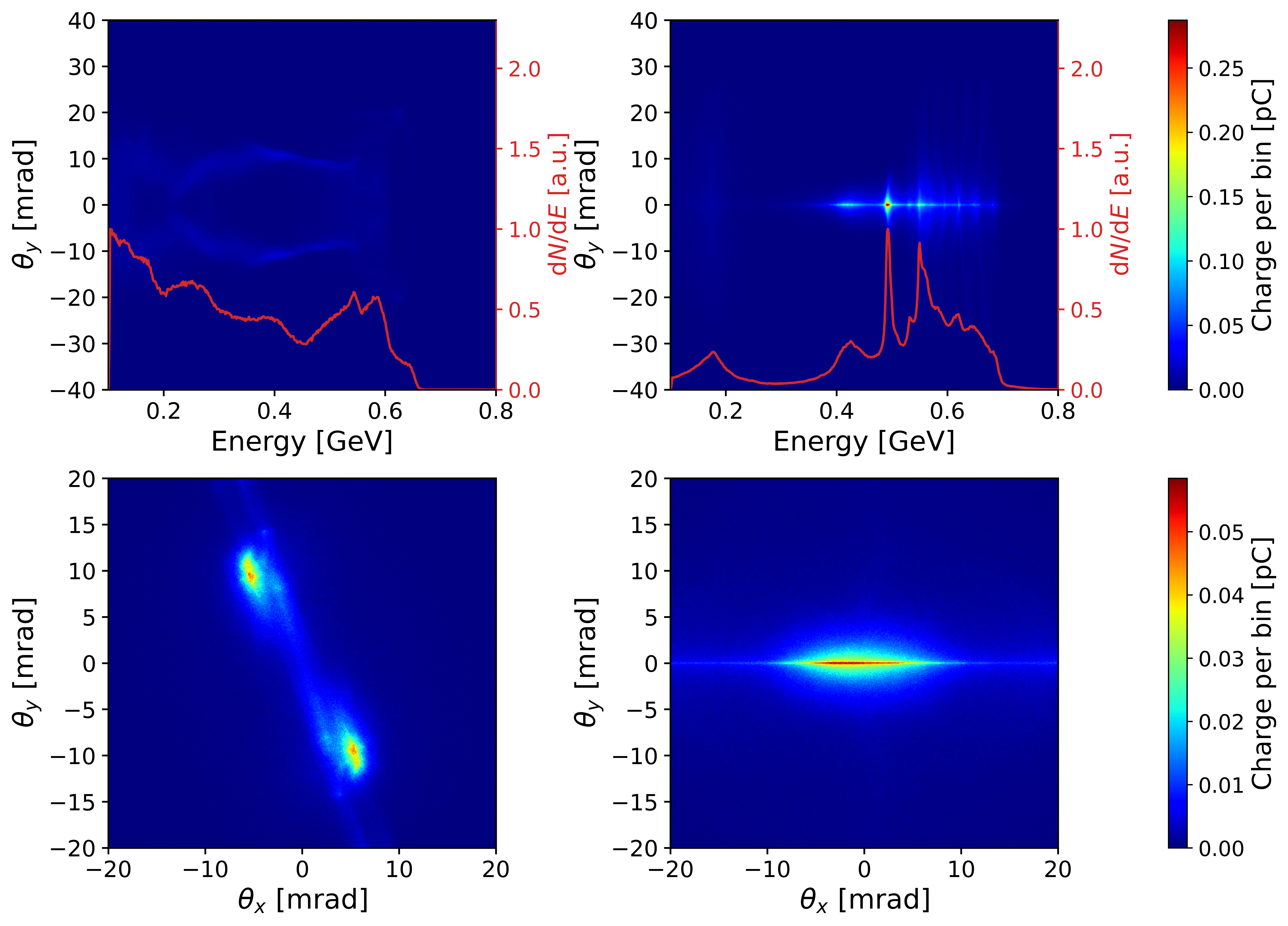
A regular laser beam travels straight, like the light from a flashlight. But light can be twisted into a spiral, like the thread of a corkscrew. Such a beam carries orbital angular momentum: it doesn't just illuminate, it also spins anything it encounters. Physicists directed this twisted light into a plasma to accelerate electrons.
In a plasma, the laser creates a wave — a wake similar to the one trailing a speedboat. Electrons catch this wave and get accelerated. With a twisted laser, the wake also twists. In the experiment, the electron beam split into two rays flying at different angles and with different energies. This means electrons were captured at different points in the helical wake.
Computer simulations showed that electrons don't fly straight but along helical lines, like along the threads of a screw. By controlling the twist of the laser, one can change the beam's shape. Such compact accelerators could be useful in medicine and materials science.
Light with orbital angular momentum can spin microscopic particles like a tiny tornado.