When you spin on a chair with your legs stretched out and then pull them in, you start spinning faster. This is because you have "rotational stubbornness" — angular momentum. The farther the mass is from the axis of rotation, the stronger the "stubbornness," but if it's pulled in, the rotation speeds up. Ice skaters use this for fast pirouettes!
History
The concept of angular momentum dates back to Kepler's law of areas (1609), which was explained by Newton and later expressed as conservation of angular momentum. Leonard Euler in the 18th century developed the mathematical apparatus for rotational motion. Henri Poincaré in the late 19th century explored the connection between conservation laws and symmetries. In quantum mechanics, angular momentum was quantized and given an interpretation in terms of operator eigenvalues. In black holes, its role is described by Kerr solutions, and in black hole thermodynamics, by the works of Bekenstein and Hawking.
How it works
In classical mechanics, angular momentum is conserved in the absence of an external torque. For a rigid body, it is expressed as L = I ω, where I is the inertia tensor. In quantum mechanics, there are operators for orbital (L̂) and spin (Ŝ) angular momentum with discrete values, e.g., L = ħ√(l(l+1)). In general relativity, a rotating black hole is described by the Kerr metric, where the spin parameter a = J/Mc introduces frame-dragging effects. Conservation of angular momentum is tied to the isotropy of space through Noether's theorem, and for black holes, to the generalized laws of mechanics.
Fun fact
Do you know why a bicycle doesn't fall when it moves? The wheels are spinning, and their angular momentum helps maintain balance. Even a falling cat, by twisting, uses its angular momentum to land on its feet!
Surf doesn't roll onto the shore as an even front. It comes in tongues of foam that merge and split apart. Magnetic fields inside materials behave much the same way: they breathe in waves, and until now nobody had seen them whole.
In 1934 Jean Leray proved that the Navier–Stokes equations always have solutions "in a generalized sense". Whether a solution stays smooth or can break down into a singularity he could not tell, and nobody could for ninety years. In 2000 the Clay Institute made the question one of its seven Millennium Prize problems.
A thrown stone arcs through the air, but a planet around the Sun follows a closed curve. Why an ellipse, and not a circle or a spiral? Kepler's first law provides the answer, but its usual proof requires heavy computation. This work offers a shorter path — through a single simple ratio of velocities.
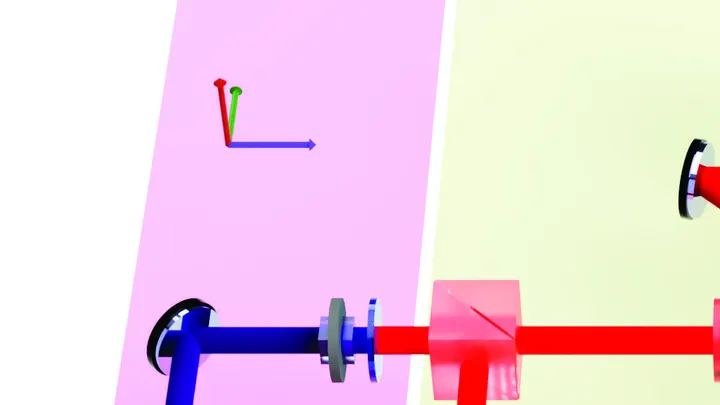
A regular laser beam travels straight, like the light from a flashlight. But light can be twisted into a spiral, like the thread of a corkscrew. Such a beam carries orbital angular momentum: it doesn't just illuminate, it also spins anything it encounters.
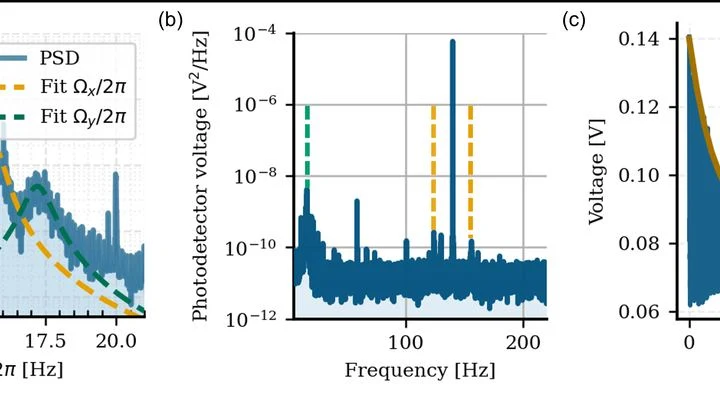
A magnetic top that doesn't fall. A tiny sphere of yttrium iron garnet hovers in midair, held by invisible forces. This isn't a magic trick but a Paul trap — an alternating magnetic field that rapidly changes direction and keeps the sphere from falling, like a juggler tossing balls.
The sphere trembles but doesn't fall.
In a ring accelerator, a beam of electrons circles millions of times. If the electrons are twisted like strands in a rope, their vortex motion should persist. But along the way, random jolts from imperfect magnets can disturb them.
Scientists have described how vortex motion changes under such perturbations.
Toss a handful of sand onto a table — the grains scatter equally in all directions. But if a magnet is hidden under the table and the sand is iron, the trajectories get trickier: an invisible structure overlays the chaos. That's roughly how molecular motion works inside a living cell.
The neck of an hourglass is the narrowest point where grains of sand change sides. In quantum gravity, there is a similar object: an instanton (an instantaneous solution connecting two states of space). It acts like a tunnel through which the geometry of the universe flows from one form to another.
Two stars circle each other, gradually drawing closer. Their dance loses energy, and that energy escapes into space — in the form of gravitational waves, and sometimes other fields.
The Kerr-NUT black hole is not just a cosmic vacuum cleaner. It's a solution to Einstein's equations where the hole has mass, rotation, and a strange NUT parameter. This parameter behaves like a magnetic charge for gravity: seemingly invisible, yet it alters the properties of surrounding space.
An electron is not just a point. It is a probability cloud, smeared out in space. When such a cloud collides with a powerful laser pulse, it can emit a high-energy photon — a gamma quantum. And this photon can be not just ordinary but twisted, like a corkscrew, carrying orbital angular momentum.
A pair of black holes circles in a dance, gradually drawing closer. They lose energy and spin — a process known as angular momentum radiation. In standard Einstein theory, only gravitational waves carry away angular momentum.
A spinning top that makes a hundred turns per second suddenly starts losing speed dramatically — much faster than any known top. That's exactly what pulsar J0435+3233 is doing. It's a dead star, crushed to the size of a city, but whirling at a furious rate.
A tiny magnetized sphere floats in a vacuum, held by invisible fields. It starts to spin around the axis of the magnetic field, just like a top that's been given a gentle nudge. That's precession. But when the sphere becomes really small, quantum laws come into play.
In 1915, Albert Einstein and Wander Johannes de Haas demonstrated that when an iron rod is magnetized, it twists slightly — the angular momentum of electrons is transferred to the crystal lattice.
A superfluid flows without friction, like water that never stops. But when you spin it, it doesn't just rotate: each tiny vortex remembers exactly how it was spun. This 'trace' is not a metaphor but a real geometric imprint, which physicists call the Berry phase (the phase acquired by a wave as it travels along a closed path).
A regular object moves along a predictable path, like a ball. In the quantum world, a particle is smeared into a probability cloud. To find order in this fog, scientists have recast Schrödinger's equation in the language of flowing water.
A lone fold runs across a taut sheet — a sharp drop in height that doesn't spread out but moves as a whole. Physicists call such a fold a 'kink'. If you give the sheet a sharp tug in one spot, ripples will travel across it. But in some media, these ripples don't disperse; instead, they gather into a clump and tremble in place for dozens or hundreds of cycles. Such a clump is an oscillon.
A tellurium crystal resembles a tiny spiral staircase: its atoms are twisted into a helix. When heat runs through such a crystal, it is carried not by electrons but by sound waves — vibrations of the lattice itself. These waves don't just push back and forth; they also rotate around their axis like a spinning top.
A rubber band stretches and snaps back. A steel spring compresses and expands. Elasticity seems like a property of simple things — a piece of metal or a drop of gel. But the authors of this work looked deeper.
They showed that the electron's spin, its own tiny rotation, can also be elastic.
A hot spoon in a cup of tea — heat runs along the metal from the hot end to the cold one. Textbooks describe this process as atoms jiggling and passing on their jolts to each other. But atoms don't just jiggle: they also spin, like tiny tops. Until now, physicists had no common language to describe both motions at once.
The authors of the work built such a language.
Light isn't just straight rays; it's electromagnetic waves that can twist through space like a pair waltzing. Physicists call their total twist orbital angular momentum, and for a long time it was thought to obey the conservation law — a fundamental principle that follows from the symmetries of nature discovered by Emmy Noether.
Imagine a balance scale with identical weights, yet one pan always tips lower. In the world of elementary particles, this imbalance is called CP violation: particles and their mirror twins (antiparticles) behave slightly differently.
An ordinary camera captures light reflected from objects and builds a picture from it. But if the object is hidden behind an obstacle or does not reflect light, radio waves come to the rescue: they pass through walls and fog, and a computer reconstructs the image from scattered signals.
Quantum sensors are like an orchestra where musicians play in unison: their entangled states let them pick up signals that ordinary instruments can't. But as soon as you start accumulating the signal, the nonlinear interaction, like a conductor who suddenly starts beating time erratically, ruins the music.
Two metal plates in a perfect vacuum attract each other. Even Richard Feynman compared emptiness to a boiling foam: particle pairs are born and immediately vanish, creating the Casimir effect. If the plates are asymmetric, they also start to twist — that's a vacuum motor.
But rotation doesn't require oddly shaped parts.
The pulsar in the Crab Nebula blinks like a lighthouse: every 33 milliseconds it sends out a radio pulse, and it does so with the precision of atomic clocks. But sometimes its rotation stumbles: the star suddenly speeds up slightly, as if something inside it is shifting.
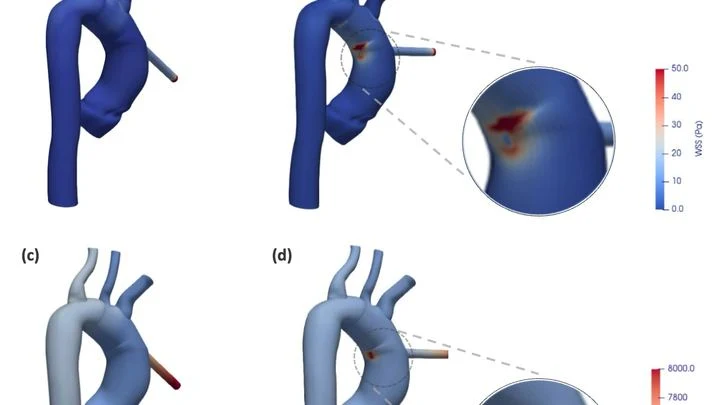
A surgeon inserts a tube into the aorta to reroute blood around the heart. The jet from the tube hits the vessel wall like a garden hose blasting a flowerbed, dislodging particles that can then travel to the brain.
Scientists built computer models of aortas from four individuals: a child, a teenager, an adult, and an elderly person.
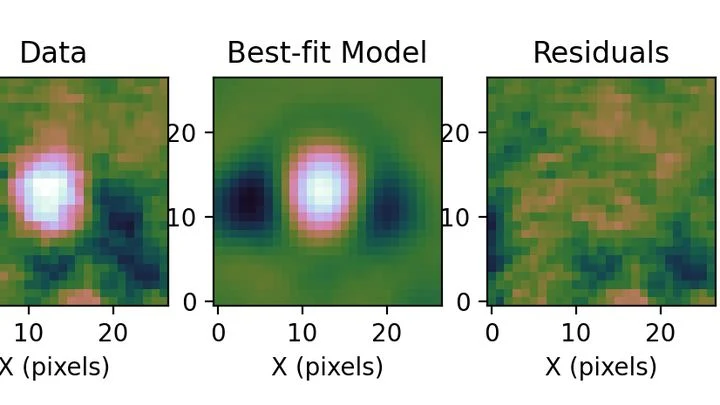
Using the Keck telescope and spectroscopy (light analysis that reveals rotation speed), astronomers measured 32 objects: from giant planets to brown dwarfs — bodies heavier than planets but lighter than stars that never ignited.
An ordinary top spun on a table slows down smoothly: friction with the air and the surface gradually eats away its energy. But if a top levitates in a magnetic field and barely touches anything, its rotation can behave surprisingly capriciously.
Spacetime at ultra-short distances resembles a digital screen: it's not smooth but made of tiny 'pixels.' This minimum length was calculated by Max Planck, and Heisenberg's uncertainty principle explains why the world cannot be continuous: precise measurement always…
Inside a living cell, a tiny carbon spinning top whirls — a molecule billionths of a meter across. An ordinary top falls quickly, but this one behaves differently: it can spin in both directions at once, like a quantum coin perpetually frozen mid-fall. This superposition of motions is key to its strange selectivity.
A century ago, quantum mechanics gave the world a neat picture: a particle rotating around a point can only have certain discrete amounts of angular momentum, integer multiples of Planck's constant. This rule seemed as solid as the law of gravity, and it followed from simple algebraic arguments.