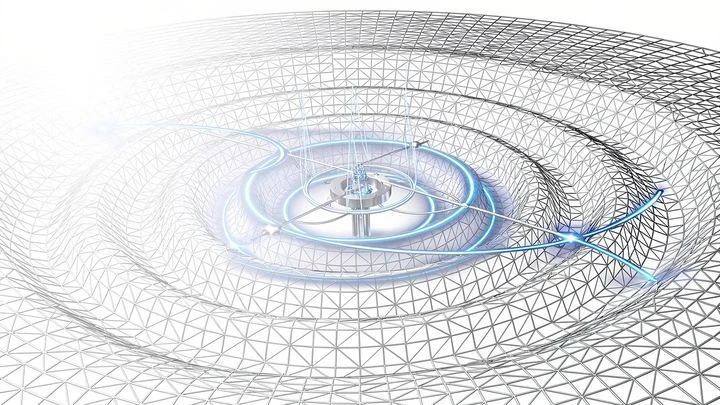
Laser-plasma acceleration is a technique that uses intense laser pulses to create a plasma — a gas of charged particles — and then harnesses the electric fields within that plasma to accelerate electrons to high energies over distances thousands of times shorter than conventional accelerators. While a traditional linear accelerator might need kilometers to reach gigaelectronvolt energies, a laser-plasma accelerator can achieve the same in just centimeters. This is possible because the plasma can sustain electric fields of tens of gigavolts per meter, far beyond what metallic cavities can handle. The technique has opened the door to tabletop particle accelerators that could fit in a university lab rather than a national facility.
History
The concept was proposed in 1979 by Toshiki Tajima and John Dawson, who suggested using a laser-drivenplasma wave to accelerate particles. The first experimental demonstrations of high-quality electron beamscame in the early 2000s, with major breakthroughs in 2004 when several groups produced monoenergetic beams.
How it works
A powerful, ultra-short laser pulse is focused into a gas jet or a capillary. The pulse ionizes the gas into a plasma and, through its radiation pressure, pushes electrons away from its path, creating a 'bubble' of positive charge behind it. Electrons that are injected into this bubble are then accelerated by the strong electric field at the bubble's rear. The process is akin to surfing: the electrons ride the plasma wave created by the laser. Recent advances have focused on stabilizing the acceleration process, improving the quality of the electron beam, and increasing the repetition rate of the laser system.
In practice
Laser-plasma accelerators are used to produce compact sources of high-energy electrons and X-rays for medical imaging, materials science, and fundamental physics research, and they are being explored as drivers for future free-electron lasers.
Fun fact
The electric field in a laser-plasma accelerator can be more than a thousand times stronger than that in a conventional particle accelerator, which is why it can shrink a kilometer-long machine to the size of a room.
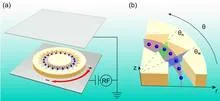
In a ring-shaped channel between two toothed rings, microspheres are suspended: some with a radius of 8 micrometers, others 14. The discharge is switched on, and the particles start moving. The small ones go one way, the large ones the other. It is like a shopping mall where escalators for people of different heights run in opposite directions.
In the basement of the laboratory, an 8 tesla magnet hums. Inside it, like a bell in a bell tower, hangs a hollow copper cylinder tuned to a single note. If an axion, a dark matter particle, flies by, the cylinder responds with a faint ring. The trouble is that ordinary copper muffles this ring: at high frequencies, current flows only through a thin skin of the metal, and losses grow.
A gas target is like a funnel: the steeper its walls, the stronger the flow. But in this funnel, it is not water that flows, but ultraviolet light, born when a powerful laser pulse passes through a cloud of argon. The efficiency of this conversion is usually minuscule, about 0.001%: out of a thousand laser photons, only one turns into useful ultraviolet.
The blue glow in water around a nuclear reactor is light born when a charged particle outruns light in that medium. The effect was discovered by Pavel Cherenkov in 1934, with the theory provided by Igor Tamm and Ilya Frank.
A laser pulse slams into a gas cloud and knocks electrons out of it, leaving behind a bubble: a cavity almost devoid of particles. This bubble races through the plasma at nearly the speed of light, and its walls drag along the electrons trapped inside, much like a speedboat tows a water skier.
For three days straight, a laser blasted a jet of gas, and every second it produced a beam of electrons with the energy of a tiny lightning bolt. Previously, such beams could only be produced in huge halls where the accelerator takes up an entire building. Now the whole setup fits in a room and ran without a glitch for 72 hours.
When a laser beam hits a gas, it tears electrons from atoms and accelerates them to nearly the speed of light. As these electrons fly through the plasma, they emit X-rays, like a glowing trail from a fast particle. In the new work, physicists made a single laser pulse create not one but two such trails in succession.
Inside a solar flare, magnetic field lines snap like stretched rubber bands and reconnect — releasing in minutes enough energy to power humanity for millions of years. In the lab, this process, magnetic reconnection, could long be triggered but not stopped. Now physicists have a switch.
A regular laser beam travels straight, like the light from a flashlight. But light can be twisted into a spiral, like the thread of a corkscrew. Such a beam carries orbital angular momentum: it doesn't just illuminate, it also spins anything it encounters.
A shooter aims at a target, pulls the trigger, and hears two shots: one loud, one quiet. That's how the new setup works, except instead of bullets, there's an electron bunch, and instead of shots, there are two flashes of light. One flash is X-ray, the other is terahertz. They fly to the same point with perfect timing.
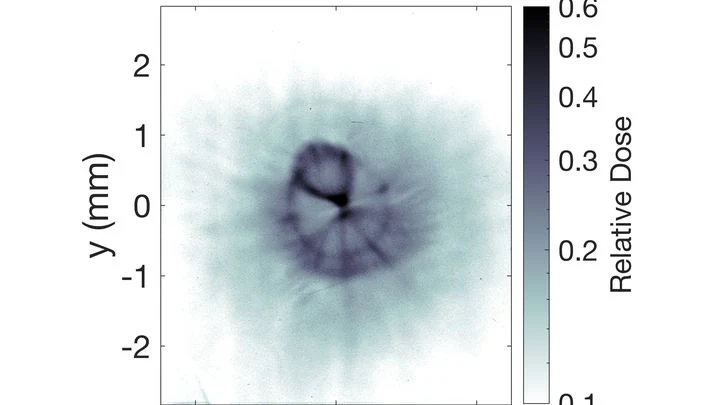
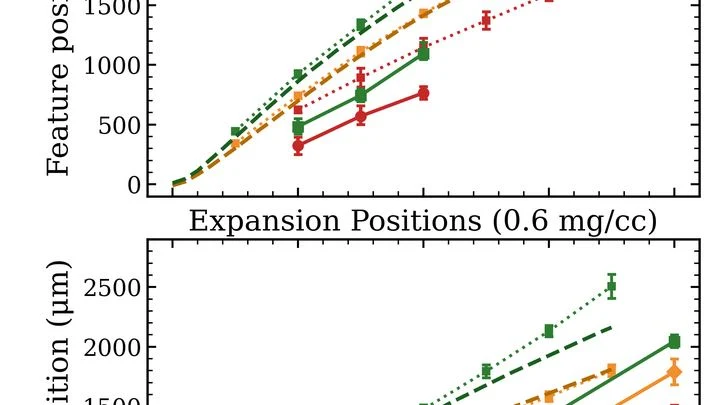
A copper plate the size of a coin vaporizes under the laser's strike in billionths of a second. The hot copper cloud slams into cold helium like a jet of steam into frosty air. The images show a distinct bubble with thin filaments at the edges — the plasma doesn't expand uniformly but breaks into fibers as thin as a human hair.
In a ring accelerator, a beam of electrons circles millions of times. If the electrons are twisted like strands in a rope, their vortex motion should persist. But along the way, random jolts from imperfect magnets can disturb them.
Scientists have described how vortex motion changes under such perturbations.
To probe deeper into the workings of the universe, physicists accelerate electrons and smash them together. An ordinary electron is like a spinning top that wobbles randomly. For delicate experiments, you need particles whose spins all point in the same direction: this is called polarization.
The flash lasts a thousandth of a second, but in that instant it releases as much energy as the Sun emits in a day. Such signals, fast radio bursts, have been caught by telescopes since 2007, and their source remains a mystery. A new study offers an elegant answer: it's all about a cosmic amplifier.
In the vast clouds of rarefied gas that fill the space between stars, something is always churning. Supernova explosions, colliding streams — all of it shakes the plasma. And in this rippling, as it turns out, hides the mechanism that gives birth to magnetic fields.
Plasma is a gas in which electrons are stripped from atoms.
In the constellation Aquila, about 40,000 light-years away, one of the most powerful natural accelerators in the Galaxy is at work. It's the microquasar GRS 1915+105—a pair consisting of an ordinary star and a black hole.
A factory laser that cuts and welds metal on production lines has been made to work as a particle accelerator for the first time. Physicists took a standard ytterbium laser, its heart is a crystal the size of a palm, and turned its flashes into a tool for accelerating electrons to nearly the speed of light.
Space is full of invisible sprinters — particles racing nearly at the speed of light. They are caught in the solar wind, near neutron stars, and even in the intergalactic void between galaxies. But what accelerates them where there are no shock waves or magnetic reconnections?
A child on a swing: too strong a push and they fly off. Roughly this is how powerful light tears electrons out of an atom. It would seem that the stronger the push, the more certain the destruction. But in the quantum world it is different: when the field strength crosses a certain threshold, the atom suddenly freezes.
The Universe speaks two fundamental languages — gravity and light. Under normal conditions, they do not mix: gravitational waves glide through matter without a trace, while photons dance in mirror labyrinths.
Usually, isotopes are separated by exploiting the difference in nuclear weight. That difference is tiny, like sorting grains of sand that differ by one hundredth of a millimeter. The new method ignores weight and instead looks at the nucleus's rotation: its spin.
The laser hits the molecules twice with a short pause in between.
A garden hose shoots a thin, powerful jet. If you sweep it across the yard, you can water the whole bed without flooding the path. That's roughly how the new approach to treating deep tumors works: instead of a broad radiation field, you take a narrow beam of electrons accelerated to nearly the speed of light and scan it across the tumor like a jet of water.
A laser hits a target of thin wires, and within tens of femtoseconds (billionths of a billionth of a second) knocks out a stream of protons. These protons fly into a converter made of lithium and deuterium, where neutrons are born.
Near black holes and neutron stars, plasma churns like water in a boiling kettle. But this 'kettle' has no walls — only magnetic fields that twist and tear. At the tears, thin sheets form where magnetic field lines reconnect, giving particles a kick like a surfer catching a wave.
When water boils in a kettle, waves of steam ripple through the kitchen. A similar process happens in space, in plasma — gas so hot that electrons are stripped from atoms. Around black holes and neutron stars, this plasma isn't just hot: its particles zip around at nearly the speed of light.
A laser strikes a tiny glass grating, and electrons passing through it are accelerated. You can't see inside, so you judge what's happening by the energy of the electrons after acceleration, like judging the shape of a stone by the splash it makes.
Scientists built a digital twin: a computer model that mimics the behavior of the real accelerator.
A laser flash lasting 50 femtoseconds is like a shot that lasts one billionth of a second. In that time, light travels only 15 micrometers — less than the thickness of a human hair. But if you send such a flash through an amplifier, it starts to stretch like a rubber band and loses its sharpness.
Diamond is the hardest natural material, and working with it usually feels like a sculptor using a jackhammer: rough, with cracks and chips. But electronics demands jeweler-like precision, because diamond conducts heat superbly, withstands high temperatures, and can work in quantum devices.
A powerful laser strikes a tiny target, and it instantly turns into a cloud of scorching gas — plasma. Within this cloud, magnetic fields spontaneously arise. Like invisible hands, they prevent heat from freely escaping the hot core.
Deep in the constellation Aquila lies a nebula that looks like an expanding bubble. It is inflated by a tiny star the size of a city — a pulsar that makes several rotations per second and loses rotational energy. Usually, such bubbles shine exactly as brightly as their pulsar is powerful.
Inside large particle accelerators, there are hollow metal chambers where beams are accelerated. Over time, grime settles on their walls, like in an old pan. This grime prevents the accelerator from running at full power.
To restore the accelerator's strength, plasma, a glowing gas of argon or neon with a bit of oxygen, is sent into the chamber.
Modern X-ray light sources are like an orchestra without a conductor: electrons in the beam fly every which way, and the radiation comes out blurry. The new idea is to make electrons line up in neat rows with a spacing of a few nanometers. Then the light they emit becomes coherent, like a laser beam.
Plasma is a gas in which electrons are stripped from atoms, and it conducts electricity. In space, such gas is often so rarefied that particles rarely collide, and its behavior is described by the equations of motion for each particle. The computer method Particle-in-Cell (PIC) does exactly that: it tracks millions of particles and the electric fields they create.
A laser pulse racing through plasma is like a runner carving a path through a crowd. It shoves electrons aside, leaving behind a rarefied channel, just as the crowd parts for a sprinter. In this channel, the crest of the light wave moves slightly faster than light in a vacuum, and it is this speed that determines how efficiently the pulse transfers energy to particles.
A laser strikes a target, and a cloud of plasma, accelerated to hundreds of kilometers per second, shoots into the chamber. The chamber isn't empty: it's filled with a tenuous gas that plays the role of the cosmic medium. The plasma slams into this gas like a speedboat hitting still water, shoving it aside.
A short laser pulse strikes the air, and a tiny lightning bolt flashes at the point of impact. It lives longer than you'd think: the bright glow is visible for half a millisecond, and a faint one for nearly twenty milliseconds.
A tiny speck of silver is born in a laser beam and immediately starts to grow — faster than you can blink. An ordinary microscope can't keep up with that speed, so until now no one had seen exactly how a nanoparticle appears and gains size. Now scientists have a tool that captures this 'movie' frame by frame.
Light from an ordinary lamp is chaos: photons scatter in all directions with no order. But if you make many atoms emit light simultaneously and in sync, you get a short, powerful flash, like applause that turns individual claps into a single burst. Such coordinated emission is called superradiance.
A heavy ion beam in an accelerator is like a crowd of people shoving each other with elbows: the more people, the wider the crowd. Charged particles repel each other, and at currents above a few microamps the beam spreads and loses its shape.