Bouquets of Magnetic Threads in the Heart of a Neutron Star ✛
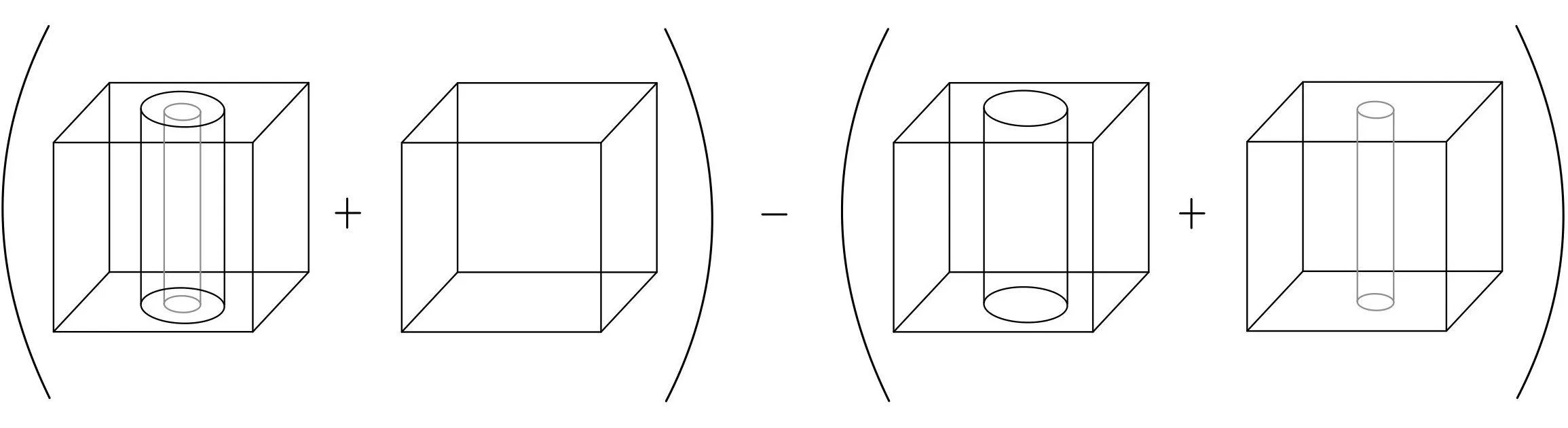
A neutron star is an object the size of a city but with a mass greater than the Sun's. In its core, neutrons form a superfluid that flows without friction, while protons form a superconductor that conducts electricity without loss. In a superfluid, quantized vortices arise: tiny whirlpools that cannot stop. In a superconductor, the magnetic field penetrates as thin filaments called flux tubes. Previously, these two phenomena were studied separately, but now scientists have, for the first time, placed them in a single model and allowed them to interact.
The authors built a two-dimensional model and numerically minimized the system's energy. They found that with attractive couplings, a vortex can hold between 6 and 9 flux tubes. The binding energy per unit length is approximately 0.13 MeV/fm, a very small quantity, but significant on stellar scales. They also confirmed that flux tubes without a vortex can form clusters: at short distances they repel, at intermediate distances they attract. This helps explain how vortices latch onto magnetic filaments, which affects the star's rotation and may account for mysterious glitches in its period.
A dense bouquet of nine flux tubes around a single vortex creates a magnetic flux several times larger than that of a single flux tube, although topologically it consists of nine separate flux quanta. The spacing between flux tubes in a cluster is about 220 fm, which is thousands of times smaller than the size of an atom.